
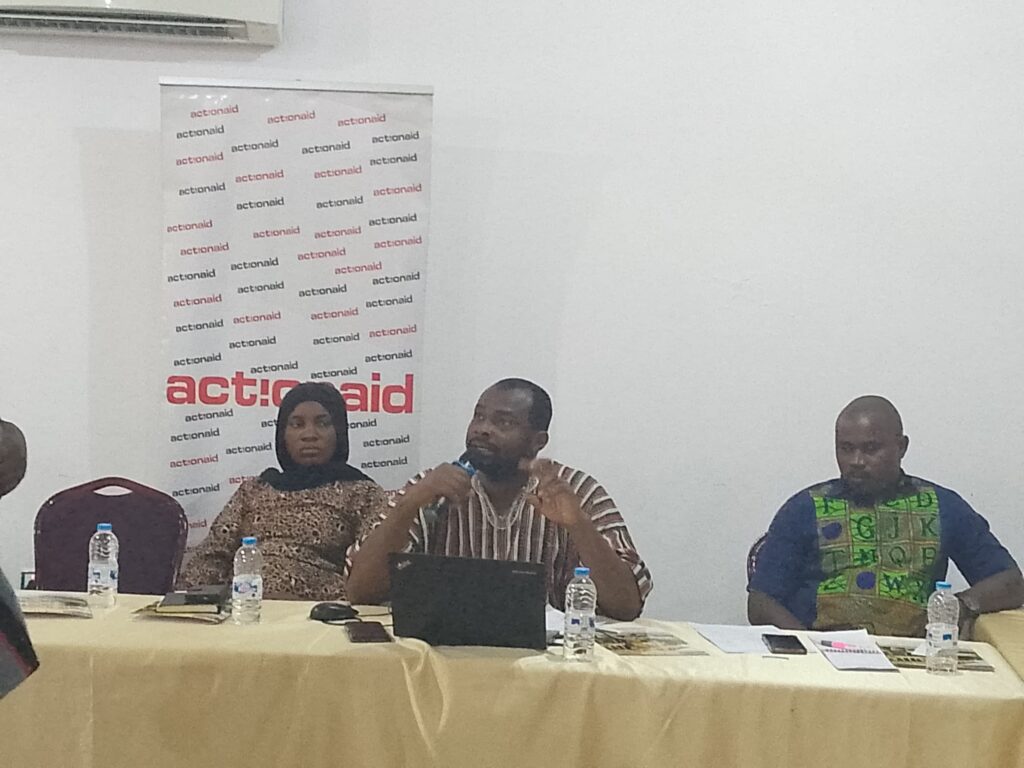
- ActionAid Ghana's Women's Rights and Advocacy Manager, Ms Eugenia Ayishetu Ayagiba, raised concerns over gender gaps and issues of inclusivity in the Feed Ghana Programme.
- The programme is aimed at supporting smallholder women farmers, but Ayagiba said it has failed to adequately address their needs and challenges.
- The organisation is calling for reforms to make the programme more inclusive and responsive to the needs of smallholder women farmers.
- A research study by the University for Development Studies also supported the gender analysis, saying that women are key factors in Ghana's agricultural sector and must be fully integrated into policy frameworks.
- The study found that the policy has moved from gender-blind to gender-aware and partially responsive, but there is a need for it to become gender-transformational for greater impact.
The Feed Ghana Programme, launched by the government to support smallholder farmers, has been hailed as a step in the right direction, but ActionAid Ghana's Women's Rights and Advocacy Manager, Ms Eugenia Ayishetu Ayagiba, has raised concerns over gender gaps and issues of inclusivity in the programme. At a post-harvest conference organised by ActionAid Ghana, Ayagiba underscored the need for reforms to make the programme more inclusive and responsive to the needs of smallholder women farmers.
Ayagiba said that although the programme acknowledged gender issues, many of its provisions did not adequately address the realities of smallholder women farmers. She identified access to land as a major constraint, explaining that in many communities, land ownership remained largely patriarchal, limiting women's ability to do sustainable farming. She also raised concerns about access to mechanisation, saying that many women farmers could not afford tractor services while operational guidelines for mechanisation centres were unclear.
Ayagiba described the Feed Ghana Programme as a step in the right direction, in spite of the challenges. She said it demonstrated the government's awareness of gender issues in agriculture, but added that it needed to move towards being more responsive and ultimately transformational with clear budget allocations that can be tracked.
Research Study Supports Gender Analysis
A research study by the University for Development Studies, presented by Professor Joseph Abazaami, supported the gender analysis, saying that women are key factors in Ghana's agricultural sector and must be fully integrated into policy frameworks. The study examined critical issues such as access to land, credit, mechanisation, and unpaid care work, which continued to affect women's participation in agriculture.
The study found that the policy has moved from gender-blind to gender-aware and partially responsive, but there is a need for it to become gender-transformational for greater impact. Professor Abazaami said that the study's findings show that women are crucial to Ghana's agricultural sector and must be fully integrated into policy frameworks.
Need for Sustainable Practices
Programmes Director at CORD Ghana, Ms Esther Nyamekye Opoku, expressed concern that women's contributions to agriculture, including indigenous knowledge and agro-ecological practices, were not adequately recognised under the programme. She emphasised the need to promote sustainable practices such as composting, biochar production, and agroforestry as part of efforts to build climate resilience.
Opoku said that the programme must move beyond just providing subsidies to farmers and focus on building their capacity to adapt to climate change. She added that women's participation in agriculture must be prioritised, as they are critical to the sector's success.
What This Means
The Feed Ghana Programme has been hailed as a step in the right direction, but ActionAid Ghana's concerns over gender gaps and issues of inclusivity must be addressed. The programme must move beyond just acknowledging gender issues and provide real solutions to address the challenges faced by smallholder women farmers.
The government must also prioritise women's participation in agriculture, as they are critical to the sector's success. This means providing them with access to land, credit, mechanisation, and other resources necessary to do sustainable farming.
Ultimately, the Feed Ghana Programme must become gender-transformational for greater impact. This means making significant changes to the programme to ensure that it is more inclusive and responsive to the needs of smallholder women farmers.
As the government implements the programme, it must also prioritise building the capacity of farmers to adapt to climate change. This means promoting sustainable practices such as composting, biochar production, and agroforestry.
The success of the Feed Ghana Programme will depend on its ability to address the challenges faced by smallholder women farmers. If the programme fails to address these challenges, it will not be able to achieve its goals of increasing agricultural productivity and improving food security in Ghana.
In conclusion, the Feed Ghana Programme has the potential to make a significant impact on Ghana's agricultural sector, but it must be implemented in a way that addresses the challenges faced by smallholder women farmers. The government must prioritise women's participation in agriculture and provide them with the resources necessary to do sustainable farming.



0 Comments
Leave a Comment
No comments yet. Be the first to share your thoughts!