
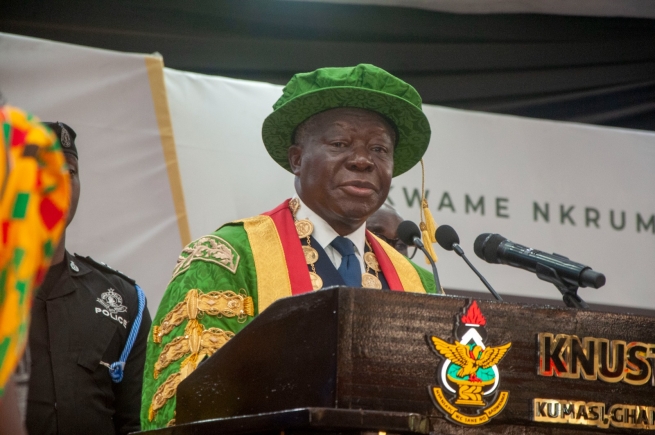
- Otumfuo Osei Tutu II, Asantehene and Chancellor of KNUST, has appealed to the government to ensure the first phase of the university's teaching hospital is commissioned before the close of 2026.
- The King emphasized the project's status as a critical national investment, essential for both advanced medical training and broader public healthcare provision.
- This appeal follows recent parliamentary approval of budgetary allocation, aimed at reviving the long-stalled healthcare infrastructure project.
- Upon completion, the facility is expected to significantly alleviate pressure on the Komfo Anokye Teaching Hospital (KATH) and enhance medical education.
Kumasi, Ghana – In a significant pronouncement underscoring national development priorities, Otumfuo Osei Tutu II, the Asantehene and esteemed Chancellor of the Kwame Nkrumah University of Science and Technology (KNUST), has issued a compelling appeal to the government. Speaking at the 59th Special Congregation in Kumasi over the weekend, His Majesty urged for the expeditious completion and commissioning of the first phase of the KNUST Teaching Hospital by the end of 2026. This call highlights a renewed push to bring to fruition a vital healthcare infrastructure project that has faced protracted delays.
The Asantehene's address, while acknowledging recent parliamentary approval of the necessary budgetary allocation for the project's revival, carried a distinct tone of urgency. His remarks reflect years of persistent public concern regarding the prolonged dormancy of this critical healthcare facility. The King's intervention signals the high-level attention and commitment required to navigate the remaining hurdles and ensure the timely delivery of this national asset.
The Strategic Importance of the KNUST Teaching Hospital
Framing the hospital's development, the Asantehene articulated its significance far beyond that of a mere campus clinic. He posited it as a foundational element of Ghana's broader developmental agenda, representing a substantial national investment. The project is designed to bridge the crucial gap between high-level academic research conducted at KNUST and the tangible healthcare needs of the Ashanti Region and the wider nation.
Upon its eventual completion, the state-of-the-art facility is anticipated to achieve several pivotal objectives. Foremost among these is the alleviation of considerable pressure currently borne by the Komfo Anokye Teaching Hospital (KATH), which serves as the primary tertiary healthcare provider for a vast population in the region. Furthermore, the KNUST Teaching Hospital is set to become a premier training ground, offering invaluable practical experience for the university's aspiring medical students and healthcare professionals.
“While we are grateful for the progress made thus far, we respectfully appeal that the timeline for the completion of the university hospital be adhered to as originally scheduled,” the Asantehene stated. He further emphasized, “The timely delivery of this important facility will ensure it begins serving its intended purpose, benefitting countless citizens.” This direct appeal underscores the King's expectation for accountability and adherence to project timelines.
A History of Delays and Renewed Hope
The journey of the KNUST Teaching Hospital project has been marked by a series of challenges, primarily stemming from funding bottlenecks that have stalled its progress over many years. Large-scale public infrastructure projects in Ghana often contend with such complexities, including shifts in government priorities, budgetary constraints, and procurement issues, contributing to prolonged construction periods.
However, recent months have witnessed a renewed impetus, following the latest fiscal interventions and the crucial parliamentary endorsement of funds. This development has injected new life into the project, leading to increased activity at the construction site. The Asantehene's recent remarks serve as a powerful reminder of the nation's collective aspirations for this facility and the need to capitalize on this renewed momentum.
Beyond its profound impact on advanced medical training and research, the King underscored the humanitarian imperative driving the project. The hospital is envisioned to provide specialized tertiary healthcare services to thousands of residents in the surrounding communities. These populations currently face significant barriers to accessing advanced medical care due to geographical distances and the limited capacity of existing facilities.
The Asantehene’s Influence and National Development
As Chancellor of KNUST, Otumfuo Osei Tutu II holds a unique dual authority, blending his traditional leadership role with a significant educational mandate. His appeals on matters of national development, particularly those concerning education and health, carry immense weight and often serve as catalysts for government action. His proactive engagement reflects a long-standing tradition of Asante Kings advocating for the welfare and progress of their people and the nation at large.
By setting a definitive milestone for the executive, the Chancellor articulated a clear expectation: “I will be waiting on the president to commission the first phase of the project by the close of the year.” This statement is not merely a request but a powerful call for decisive action and accountability from the highest echelons of government. It places the project firmly on the national agenda, signaling its critical importance.
The commissioning of the hospital's first phase by 2026 would represent a monumental achievement for public health infrastructure in Ghana. It aligns with global sustainable development goals, particularly SDG 3, which advocates for good health and well-being. A functional teaching hospital at KNUST would not only enhance Ghana’s capacity to produce skilled medical professionals but also improve health outcomes for millions.
Looking Ahead: Collaboration and Commitment
The successful completion of the KNUST Teaching Hospital demands sustained collaboration among various stakeholders: the government, the university administration, traditional authorities, and the local communities. The Asantehene’s intervention serves as a unifying call, emphasizing that the project transcends political cycles and represents a long-term investment in Ghana’s human capital and healthcare resilience.
As construction progresses, vigilance will be crucial to ensure efficient resource management and adherence to quality standards. The 2026 deadline, now firmly articulated by the Asantehene, provides a tangible target for all parties involved. Its realization will not only deliver a much-needed healthcare facility but also reinforce confidence in the government's commitment to public welfare and infrastructure development.
Ultimately, the KNUST Teaching Hospital stands as a symbol of aspiration and progress for Ghana. Its timely completion will significantly enhance the nation's healthcare landscape, foster cutting-edge medical research, and solidify KNUST's position as a hub of excellence in science and technology. The nation watches keenly as efforts intensify to meet this crucial deadline and unlock the full potential of this transformative project.






0 Comments
Leave a Comment
No comments yet. Be the first to share your thoughts!