
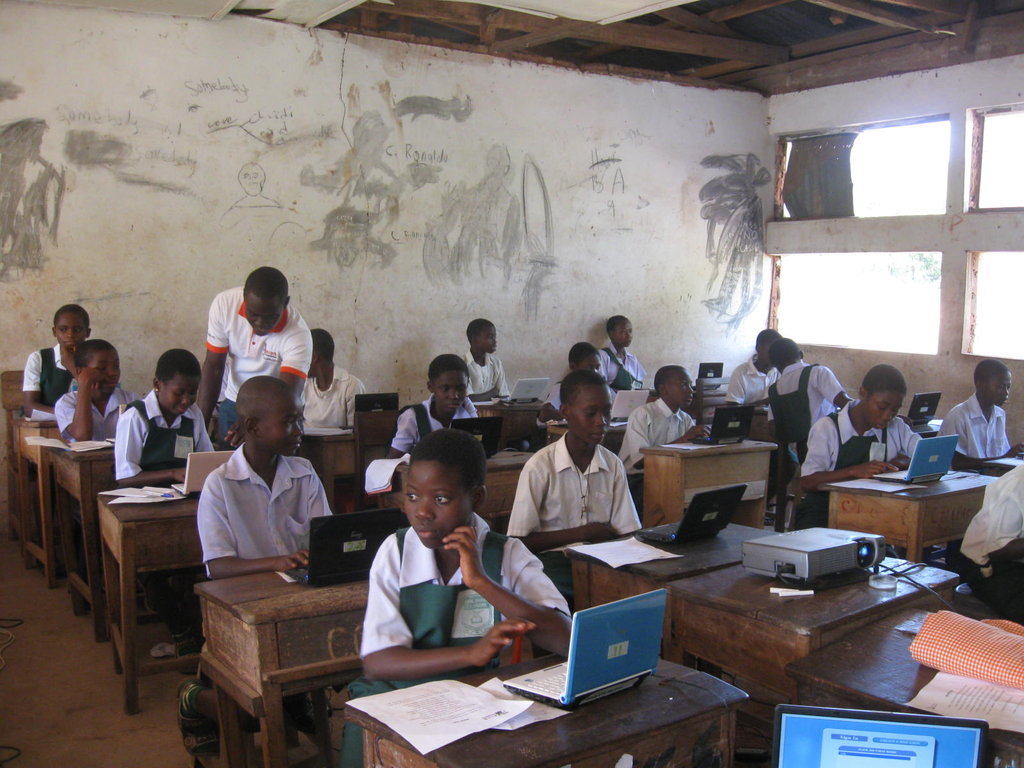
For decades, the story of education in Ghana has often been a tale of two realities. In major urban centers like Accra and Kumasi, students increasingly have access to the world at their fingertips—smartboards, high-speed Wi-Fi, and digital libraries. Meanwhile, just a few hundred kilometers away, many rural classrooms have struggled to provide even basic textbooks, let alone a reliable internet connection. However, a sweeping new educational initiative is finally beginning to rewrite that narrative, promising to bridge the digital divide and bring remote schools into the 21st century.
The ambitious project, which recently began rolling out across several districts in the hinterlands, isn’t just about dropping a few computers into a dusty room and walking away. It is a comprehensive, three-pronged approach designed to create sustainable, long-term change. By combining high-speed internet access, modern computer laboratories, and—crucially—purpose-built housing for teachers, the initiative is tackling the root causes of educational inequality in rural Ghana.
The True Cost of the Digital Divide
To understand the magnitude of this intervention, one must first look at what students in remote communities have been missing. The modern global economy runs on digital literacy. From applying for university admission to landing a corporate job, navigating the internet is no longer a luxury; it is a fundamental survival skill.
For years, many rural graduates found themselves at a severe disadvantage when competing with their urban peers. A student from a remote village might excel in textbook mathematics but struggle to format a basic Word document or conduct online research simply because they had never touched a keyboard. This gap hasn't just stifled individual potential; it has robbed the nation of untold talent and innovation. By bringing connectivity to these marginalized areas, the new initiative is opening doors that have historically been locked tight.
A Three-Pronged Strategy for Success
The first pillar of the initiative is connectivity. Utilizing satellite broadband and expanding fiber-optic networks, the project is lighting up internet access in communities that previously struggled to get a standard cellular signal. This connectivity allows students to access virtual libraries, interactive educational software, and global news, shrinking the world and bringing it directly into their classrooms.
The second pillar involves the physical hardware: building and equipping modern computer labs. These aren't hand-me-down machines; the labs are being fitted with robust, energy-efficient desktops capable of running modern software, learning to code, and handling graphic design. To combat the frequent power fluctuations that plague many rural areas, the labs are being paired with solar power backups, ensuring that a sudden blackout doesn’t interrupt a crucial lesson.
But perhaps the most innovative aspect of this project is its third pillar: teacher housing.
Why Teacher Housing is the Game Changer
Historically, one of the biggest hurdles to rural education hasn't just been a lack of equipment; it has been a lack of educators. The government frequently posts newly trained teachers to remote districts, only for those teachers to request transfers back to the city after a few months. The primary reason? A severe lack of decent, comfortable accommodation.
Teachers posted to remote areas often find themselves living in substandard conditions, renting out spare rooms with no running water or electricity. It is difficult to inspire the next generation when you are struggling with your own basic living conditions.
By integrating modern, comfortable teacher housing into the digital initiative, the project is dramatically increasing teacher retention. Educators are now provided with secure, well-lit, and connected homes right on or near the school compound. This means teachers are more likely to stay, build strong relationships with the community, and dedicate extra time to helping students master the new technology. A comfortable teacher is an effective teacher, and this holistic approach proves that infrastructure must support the humans who operate it.
Voices from the Ground
The impact is already being felt on the ground. Headmasters in the pilot districts are reporting a surge in student attendance. The excitement of interacting with computers has turned the school into a hub of curiosity.
"Before, explaining the internet to the children was like explaining snow," shared one local educator involved in the early rollout. "We had to draw computer screens on the chalkboard and point to where the 'Start' button would be. Today, they are typing, clicking, and seeing the world for themselves. It has completely changed how they view their own potential."
Students, too, are dreaming bigger. Where career aspirations were once limited to what they could see in their immediate surroundings, the digital window has introduced them to software engineering, digital marketing, and global journalism.
Looking Ahead
While the initiative is still in its early stages, its blueprint is one of the most promising educational developments the country has seen in recent years. The challenge moving forward will be maintenance—ensuring that the computers are repaired when they break down and that the solar panels are kept in good condition.
If this momentum is maintained, the initiative won't just bridge the digital divide; it will obliterate it. By equipping rural students with the same tools as their urban counterparts and supporting the teachers who guide them, Ghana is making a bold statement: talent is evenly distributed, and now, finally, opportunity will be too.




0 Comments
Leave a Comment
No comments yet. Be the first to share your thoughts!