
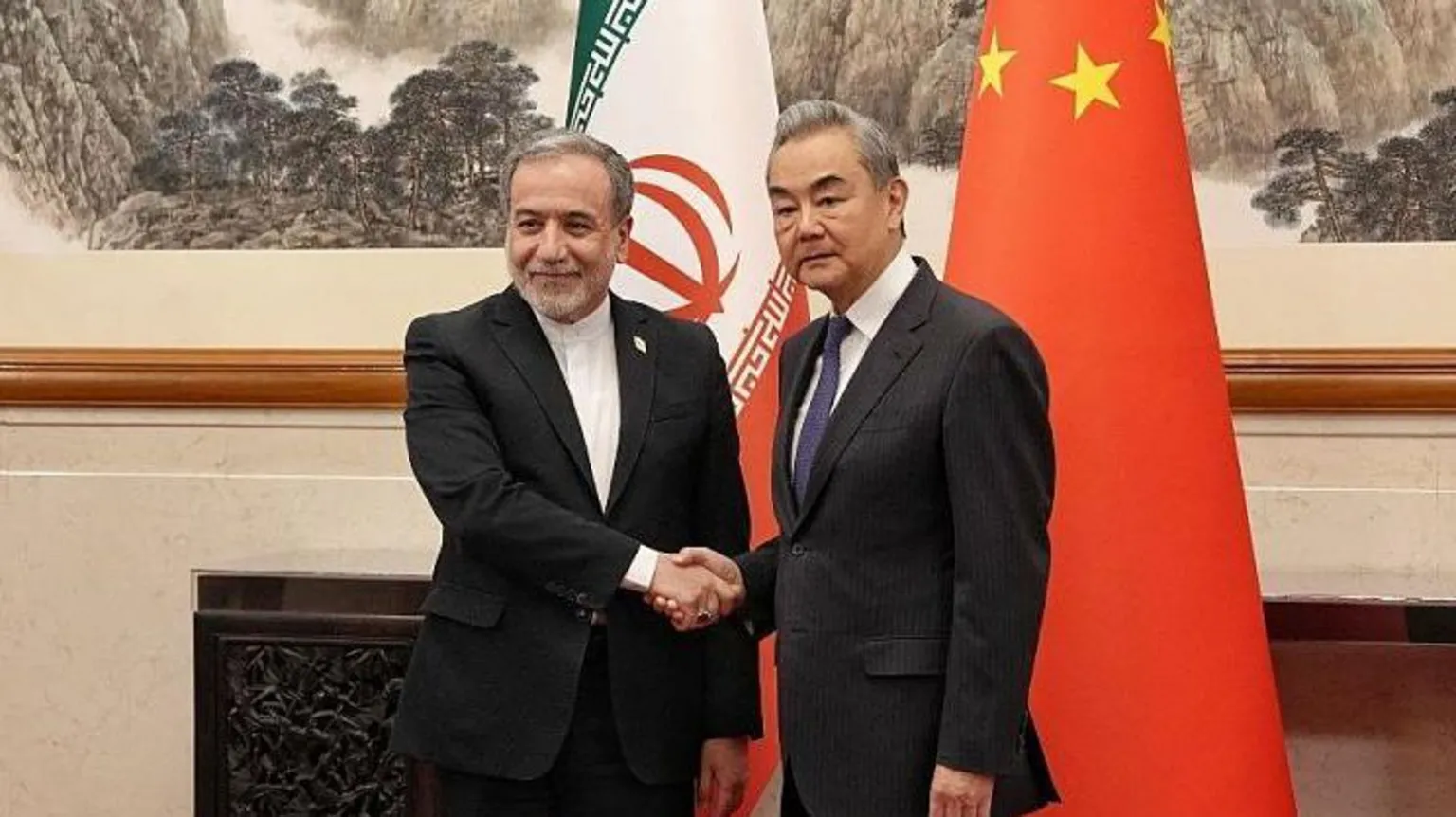
- Chinese Foreign Minister Wang Yi calls for the reopening of the Strait of Hormuz 'as soon as possible' in talks with Iranian counterpart Abbas Araqchi.
- The meeting comes ahead of a summit between US President Donald Trump and Chinese leader Xi Jinping, where the leaders are expected to discuss the Iran war and the reopening of the strait.
- China has been a major buyer of Iranian oil, importing 1.38 million barrels of crude per day in 2025, despite US sanctions.
The ongoing conflict in the Middle East continues to pose a significant challenge to global stability, with the Strait of Hormuz at the center of the crisis. The waterway, which connects the Persian Gulf to the Gulf of Oman, has been largely impassable since the Iran war began, with blockades imposed by both Iran and the US.
China's call for the reopening of the Strait comes as a key player in the conflict, with Beijing having repeatedly urged the US and Iran to hold talks. Chinese Foreign Minister Wang Yi met with Iranian counterpart Abbas Araqchi in Beijing on Wednesday, where he emphasized the need for a lasting ceasefire and the importance of persisting with negotiations.
Background: China's Role in the Conflict
China's involvement in the conflict has been a subject of much interest, particularly given its significant trade ties with Iran. Despite US sanctions, China has continued to be a major buyer of Iranian oil, importing 1.38 million barrels of crude per day in 2025. This has raised concerns over China's commitment to upholding US sanctions, with some analysts arguing that Beijing's actions are undermining the effectiveness of the embargo.
However, China's actions are also seen as a deliberate attempt to challenge US dominance in the region. By continuing to trade with Iran, China is sending a message to the US that it will not be intimidated by sanctions. This has significant implications for the global balance of power, with some analysts arguing that China's actions are a sign of a more assertive foreign policy.
The Strait of Hormuz: A Critical Waterway
The Strait of Hormuz is a critical waterway for global trade, with much of the world's oil passing through it. The strait's significance was highlighted in 2019 when Iran seized a British oil tanker, sparking a confrontation with the UK. The incident highlighted the risks of conflict in the region, with the potential for oil supplies to be disrupted.
The current conflict has seen the Strait of Hormuz largely impassable, with blockades imposed by both Iran and the US. This has significant implications for global oil supplies, with prices rising in response to the disruption. China's call for the reopening of the Strait is therefore seen as a critical step in restoring stability to the region.
Looking Ahead: The Implications of China's Call
China's call for the reopening of the Strait of Hormuz is a significant development in the conflict, with implications for global stability and trade. The call comes ahead of a summit between US President Donald Trump and Chinese leader Xi Jinping, where the leaders are expected to discuss the Iran war and the reopening of the strait.
The outcome of the summit is likely to have significant implications for the conflict, with China's call for a lasting ceasefire and the reopening of the Strait seen as a key step in restoring stability to the region. The meeting between Trump and Xi is expected to be a critical moment in the conflict, with the two leaders set to discuss a range of issues, including the Iran war and the reopening of the strait.





0 Comments
Leave a Comment
No comments yet. Be the first to share your thoughts!