
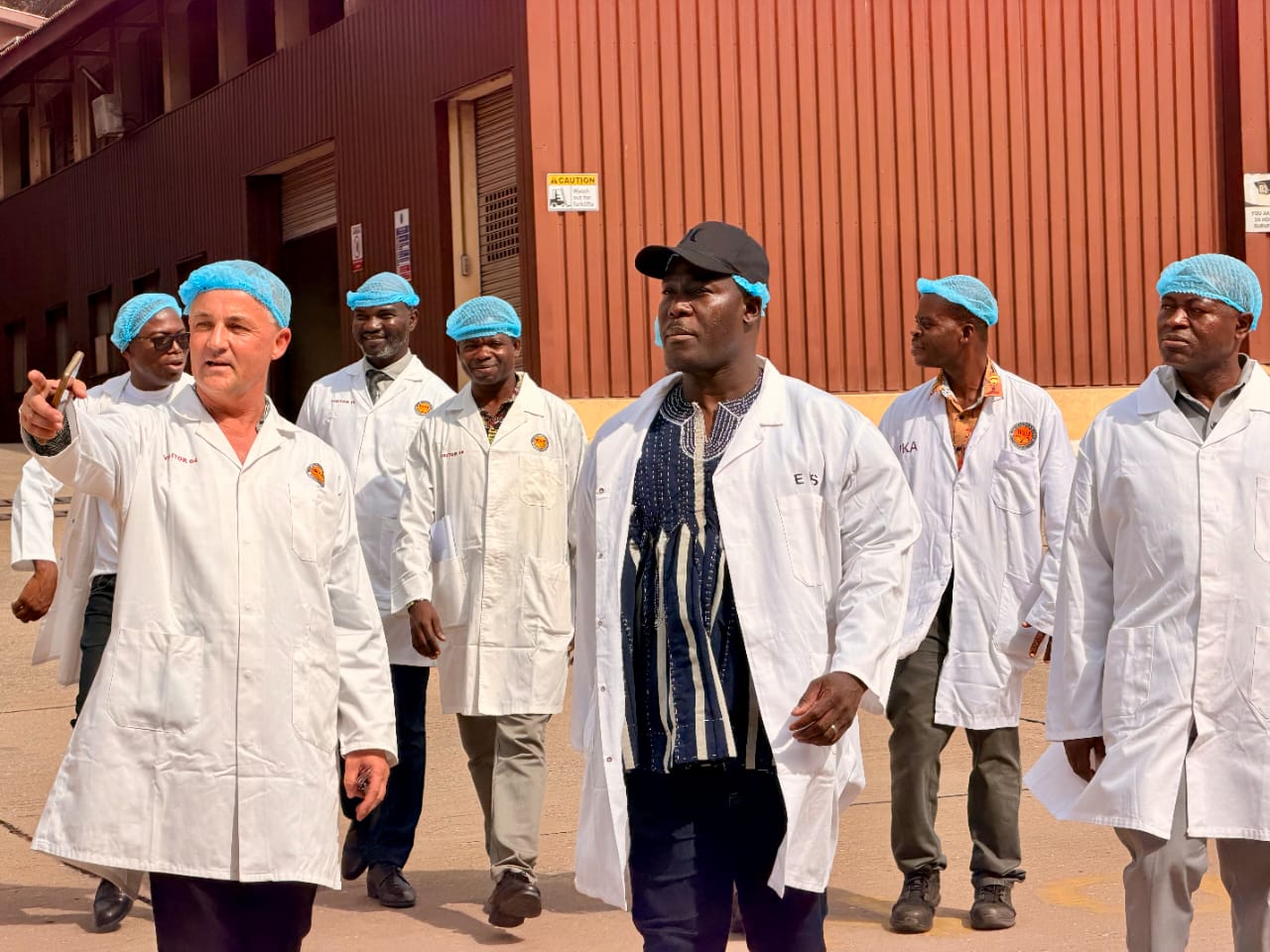
- Cocoa Marketing Company (CMC) Managing Director, Dr. Wisdom Kofi Dogbey, conducted an assessment visit to West Africa Mills Company (WAMCO). The visit aimed to evaluate the firm’s preparedness for the government’s directive to process a minimum of 50 percent of Ghana’s cocoa locally.
- This policy initiative, announced by President John Dramani Mahama, is designed to enhance the cocoa value chain, stimulate domestic employment, and foster robust economic growth through increased in-country processing.
- The assessment focused on WAMCO’s processing capacity, existing infrastructure, and operational readiness to meet the new, elevated requirements and quality standards associated with the reform.
- WAMCO, a significant entity in Ghana’s cocoa processing landscape, reiterated its commitment to expanding production in alignment with the national vision, detailing efforts to upgrade facilities and improve efficiency.
Ghana’s ambition to transform its cocoa industry from primarily an exporter of raw beans to a significant producer of value-added cocoa products has taken a crucial step forward. The Managing Director of the Cocoa Marketing Company (CMC), Dr. Wisdom Kofi Dogbey, recently undertook a strategic visit to the West Africa Mills Company (WAMCO) in an effort to gauge the readiness of local processing firms. This assessment is directly linked to the government’s pivotal directive requiring at least 50 percent of Ghana’s cocoa output to be processed within the country.
The visit forms an integral part of broader national efforts to align key industry stakeholders with this transformative reform. It also incorporates elements of CMC’s own strategic initiative, dubbed ‘Project Elevate’. This ambitious project is specifically designed to facilitate the conversion of raw cocoa beans into semi-finished products, thereby expanding Ghana’s export portfolio and capturing a larger share of the global cocoa value chain.
A National Vision for Value Addition
The directive, initially articulated by President John Dramani Mahama, represents a significant policy thrust aimed at strengthening the entire cocoa value chain. Its core objectives are multi-faceted: to boost local employment across the sector, generate substantial economic growth, and drive national industrialization through increased in-country processing. This initiative targets firms such as Cocoa Processing Company (CPC), WAMCO, and other private processors as crucial engines for its successful implementation.
For decades, Ghana, alongside Côte d'Ivoire, has stood as a global leader in cocoa bean production. However, a substantial portion of this raw material has historically been exported with minimal processing, limiting the nation's economic gains. The global cocoa market is estimated to be worth over $100 billion annually, yet Ghana captures only a fraction of this due to its focus on primary production rather than value addition. This new directive seeks to redress this imbalance, unlocking greater economic potential within the country.
Increasing local processing offers a myriad of benefits. Beyond higher export revenues for semi-finished products like cocoa liquor, butter, powder, and cake, it creates numerous direct and indirect jobs. These include roles in processing plants, logistics, packaging, and ancillary services, thereby stimulating local economies and improving livelihoods. Furthermore, it fosters industrial growth, encourages technological transfer, and builds local expertise in a sophisticated manufacturing sector.
Assessing Operational Preparedness
During his comprehensive assessment at WAMCO, Dr. Dogbey meticulously evaluated various critical aspects of the company’s operations. His focus areas included current processing capacity, the state of existing infrastructure, and the overall operational readiness to meet the demanding new requirements. He emphasized the paramount importance of ensuring that all processing facilities are adequately prepared to handle both significantly increased volumes of cocoa and the rigorous quality standards that are intrinsic to this reform.
“It is crucial that we prepare our processing facilities to handle the increased capacity and quality standards that will come with this reform,” Dr. Dogbey stated, highlighting the dual challenge of scaling up production while maintaining international competitiveness. This commitment to quality is vital for Ghana’s processed cocoa products to command premium prices in discerning global markets.
The engagement with WAMCO executives was extensive, covering a range of strategic discussions. Key topics included setting ambitious production targets, analyzing pricing dynamics in both local and international markets, forecasting demand trends for semi-finished cocoa products, exploring necessary technology investments to modernize operations, and ensuring adherence to stringent quality certifications. These discussions are pivotal for a seamless and successful transition towards higher local processing volumes.
WAMCO's Commitment and Industry-Wide Collaboration
WAMCO, recognized as a pivotal player in Ghana’s cocoa processing landscape, unequivocally reaffirmed its steadfast commitment to scaling up production. This commitment is in full alignment with the government’s overarching vision for industrial transformation within the cocoa sector. The company’s management provided insights into their ongoing strategic initiatives, which include upgrading certifications to meet international benchmarks and implementing operational efficiency improvements designed to cater to the anticipated surge in demand for semi-finished cocoa products.
Dr. Dogbey passionately underscored the imperative for collective action and synchronized efforts across the entire cocoa value chain. He stressed that successful implementation of this ambitious reform hinges on the active participation and collaborative spirit of all stakeholders. This includes not only government entities and large processing firms but also cocoa farmers, researchers, financial institutions, and international partners.
“This is not just a government initiative; it is a collective responsibility that requires the active participation of all stakeholders,” he reiterated. This statement emphasizes that the success of the 50 percent processing directive will be a testament to Ghana’s ability to mobilize national resources and expertise towards a shared economic goal. Such collaboration is vital for overcoming potential challenges such as infrastructure bottlenecks, energy costs, and securing consistent financing.
Historical Context and Future Outlook
Ghana’s journey in cocoa dates back over a century, establishing itself as a cornerstone of the national economy. Historically, the focus remained on raw bean production due to colonial economic structures. Post-independence, various governments have recognized the need for value addition, but sustained large-scale processing has remained an elusive goal. This latest directive by President Mahama and the subsequent actions by CMC represent a renewed, intensified push towards realizing this long-held national aspiration.
The Cocoa Marketing Company's visit to WAMCO therefore signifies a significant milestone in CMC's broader strategic framework. This framework aims to substantially drive cocoa value addition and concurrently expand Ghana's footprint in global export markets for processed goods. By actively strengthening partnerships with domestic processors and meticulously aligning its operations with national policy objectives, CMC is poised to amplify the cocoa sector’s contribution to Ghana’s Gross Domestic Product and overall economic prosperity.
As the entire industry diligently prepares for this transformative transition, the explicit commitment articulated by both the government and key stakeholders like WAMCO and CMC projects a distinctly positive outlook. This collective resolve bodes well for the future trajectory of Ghana’s cocoa processing sector, bolstering its potential for enhanced competitiveness within complex and demanding global markets. The successful execution of this policy could serve as a model for other primary commodity-producing nations seeking to maximize their economic returns through strategic value addition.






0 Comments
Leave a Comment
No comments yet. Be the first to share your thoughts!