
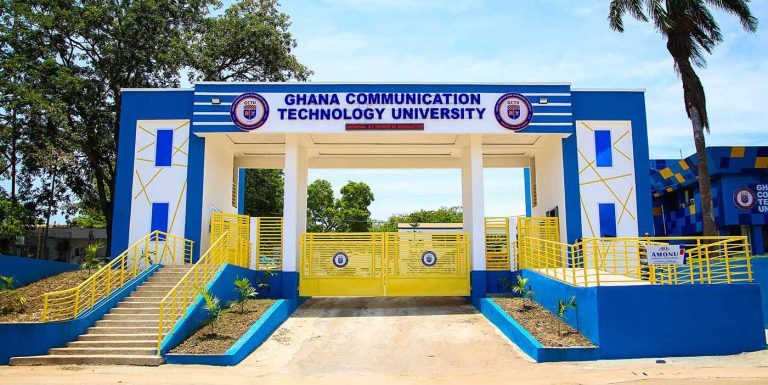
The Ghana Communication Technology University (GCTU) is currently embroiled in a high-stakes governance dispute that has divided the institution’s labor unions and faculty. At the heart of the crisis is a controversial letter issued on February 3, 2026, by the Chairman of the University Council, which sought to end the tenure of the Vice-Chancellor, Professor Emmanuel Ohene Afoakwa, effective today, February 28, 2026. While a coalition of joint unions—including UTAG, GAUA, SSA, and TEWU—has petitioned the Minister for Education to dissolve the Governing Council over what they term "unilateral and unlawful actions," a dissenting faction of "Concerned UTAG Members" has formally disassociated itself from these demands, calling for the protection of the council's statutory integrity.
The Joint Unions argue that the Council Chairman’s decision to terminate the Vice-Chancellor’s appointment was made without the deliberation or approval of a duly constituted Council meeting. According to their petition, this act violates the Ghana Communication Technology University Act, 2020 (Act 1022) and the University’s own statutes. The unions have described a persistent pattern of "unilateral conduct, intimidation, and interference" by the Chairman since the Council was appointed in June 2025. They contend that this atmosphere of uncertainty is detrimental to the university’s stability, especially as it coincides with the peak of the 2025/2026 academic admissions and the start of lectures for fresh students.
In a sharp counter-narrative, the group of "Concerned UTAG Members" addressed a letter to Education Minister Haruna Iddrisu, describing the call for dissolution as an illegitimate move that does not reflect the collective voice of the faculty. This faction maintains that the February 3 letter from the Council Chairman was merely a lawful administrative notification regarding the "expiry of the Vice-Chancellor’s secondment tenure," rather than a dismissal. They argued that the emergency meeting held by UTAG-GCTU on February 10 was procedurally void and lacked the broad endorsement required to demand the reconstitution of a statutory body like the University Council.
The internal rift has created a "house divided" scenario at a time when the Vice-Chancellor has publicly declared 2026 as the university's "Year to Scale Up." While Prof. Afoakwa has focused on infrastructure projects—including an eight-storey academic facility nearing completion this February—the leadership struggle threatens to overshadow these developmental gains. The dissenting faculty members have warned that allowing union pressure to override statutory authority would set a "dangerous precedent" for university governance in Ghana. They are urging the Ministry to ignore the joint unions' strike notice and uphold the current Council's mandate to ensure institutional peace.
As the deadline set by the Joint Unions for ministerial intervention passes, the threat of industrial action looms over the Tesano campus. The Ministry of Education now faces the difficult task of mediating between two entrenched sides: one demanding the head of the Council Chairman for alleged governance breaches, and another demanding the protection of the Council against "union misrepresentation." With the Vice-Chancellor's tenure officially reaching its disputed "end date" today, the coming week will be critical in determining whether GCTU will move forward with its expansion plans or descend into a prolonged period of administrative instability and labor strikes.


0 Comments
Leave a Comment
No comments yet. Be the first to share your thoughts!