
- The United Nations General Assembly adopted a Ghana-spearheaded resolution recognizing the transatlantic slave trade as a profound injustice.
- The resolution formally declares slavery and the transatlantic slave trade as an egregious crime against humanity, advocating for reparative justice.
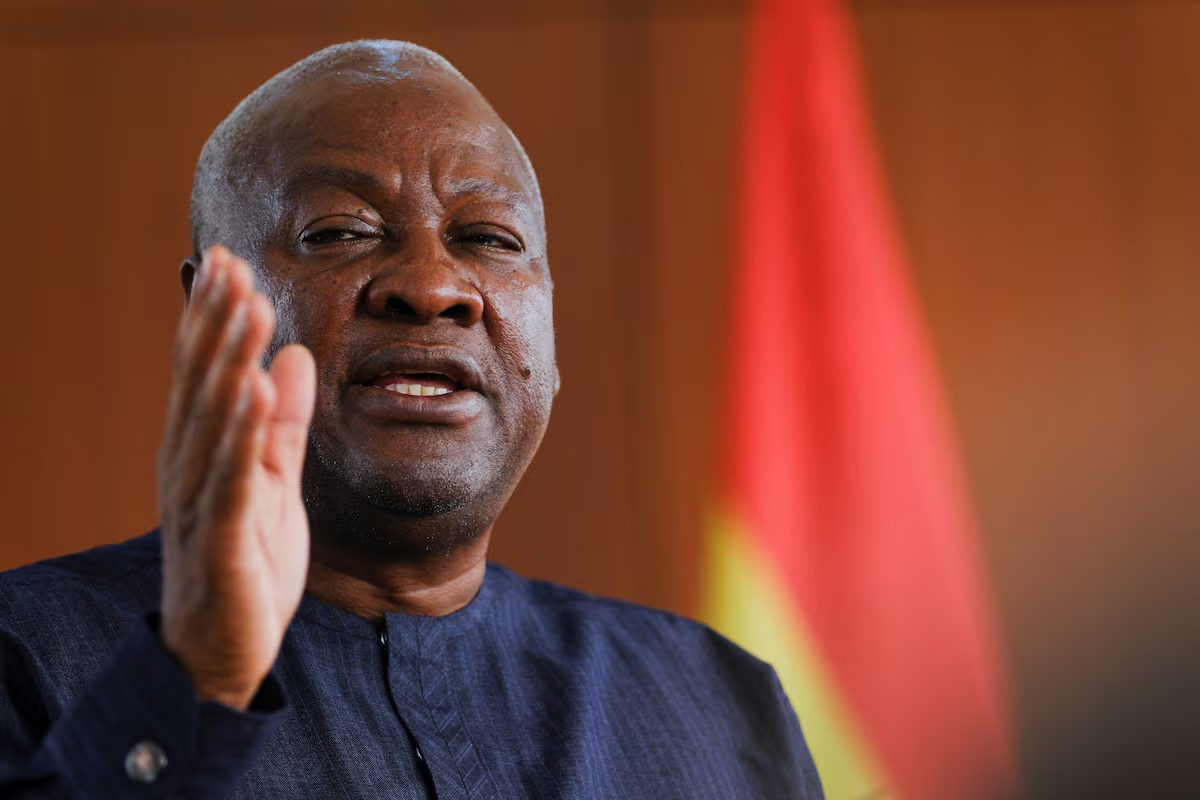
- President John Dramani Mahama lauded the development as a defining and proud moment for Ghana, Africa, and the global African diaspora.
- It signifies growing international consensus and momentum towards confronting historical atrocities and their enduring legacies of systemic inequality.
President John Dramani Mahama has described the recent adoption of a landmark resolution by the United Nations General Assembly concerning the transatlantic slave trade as a moment of immense pride and historical significance for Ghana, the African continent, and people of African descent worldwide. Speaking upon his return from the UN, President Mahama underscored the resolution's importance as a significant step towards acknowledging and addressing one of the most egregious injustices in human history.
“This is a proud moment for Ghana. It is a proud moment for Africa. It is a proud moment for people of African descent wherever they are in the world,” President Mahama stated, reflecting the profound impact of the diplomatic achievement. His comments follow the formal approval of a resolution, championed by Ghana, which unequivocally declares slavery and the transatlantic slave trade as among the gravest injustices against humanity, explicitly calling for reparative justice.
Adopted after a conclusive vote, the resolution represents a major diplomatic victory for Ghana, showcasing its sustained efforts on the international stage. This development also reflects a growing global recognition and momentum to confront the historical atrocities perpetrated during the slave trade and to address its pervasive, enduring impacts on contemporary societies.
A significant majority of 123 member states voted in favour of the resolution, with only three opposing votes and 53 abstentions. The text of the resolution meticulously details the transatlantic slave trade as a horrific tragedy that subjected millions of Africans and people of African descent to centuries of unimaginable suffering, systemic violence, and extensive economic exploitation.
Beyond historical recognition, the resolution further acknowledges that the deep-seated legacy of slavery continues to manifest in various forms today. These include systemic inequalities, pervasive racial discrimination, and significant developmental challenges that disproportionately affect African countries and diaspora communities across the globe. President Mahama affirmed that the resolution provides much-needed clarity and high-level global recognition for long-standing calls for truth and justice.
He emphasized Ghana's diligent collaboration with key partners, including the African Union and various Caribbean nations, to forge a broad consensus around the resolution. While welcoming this critical milestone, the President stressed that the resolution must transcend symbolic gestures and lead to concrete, meaningful action. “This is not just about the past. It is about justice, dignity, and truth,” he asserted, reaffirming Ghana’s unwavering commitment to advancing constructive dialogue, fostering remembrance, and implementing substantive reparative measures.
The Long Shadow of the Transatlantic Slave Trade and Ghana’s Historical Burden
The transatlantic slave trade, spanning roughly four centuries from the 16th to the 19th, remains one of the darkest chapters in human history. It forcibly transported an estimated 12.5 million Africans across the Atlantic Ocean, condemning them to brutal chattel slavery in the Americas and the Caribbean. Millions perished during the infamous Middle Passage, while those who survived endured unimaginable cruelty, exploitation, and dehumanization, the effects of which reverberate to this day.
Ghana, then known as the Gold Coast, played a tragic and central role in this abhorrent trade. Its coastline, dotted with formidable European-built forts and castles such as Elmina and Cape Coast, served as primary transit points for enslaved Africans. These structures, now UNESCO World Heritage Sites, stand as poignant reminders of the forced separation of families and the 'Door of No Return,' through which countless individuals passed, never to see their homeland again.
This historical entanglement has profoundly shaped Ghana’s national identity and its global outlook. The nation has long been a vocal advocate for pan-Africanism and the rights of people of African descent, seeing itself as a spiritual homeland for the diaspora. Figures like Kwame Nkrumah, Ghana's first president, championed African unity and liberation, laying early groundwork for demands of justice and equality that resonate with the current resolution.
The Evolving Global Discourse on Reparative Justice
The call for reparative justice for the transatlantic slave trade is not new; it has roots in abolitionist movements and successive pan-African intellectual thought. However, it has gained renewed international prominence in recent decades. The concept of reparations encompasses a range of actions, from formal apologies and historical truth commissions to financial compensation, land restitution, educational programmes, and investments in communities disproportionately affected by the legacy of slavery.
Historically, the issue has been contentious. A significant moment was the 2001 UN World Conference Against Racism, Racial Discrimination, Xenophobia and Related Intolerance in Durban, South Africa. While it acknowledged slavery as a crime against humanity, specific calls for financial reparations proved divisive and led to significant walkouts and diplomatic impasses. The current UN resolution, by explicitly calling for 'reparative justice,' marks a distinct advancement in this global dialogue.
Regional initiatives, particularly from the Caribbean Community (CARICOM), have been instrumental in pushing the agenda. CARICOM established a Reparations Commission and formulated a Ten-Point Plan for Reparatory Justice, outlining comprehensive demands that include a formal apology, repatriation, indigenous peoples' development, cultural institutions, public health, illiteracy eradication, psychological rehabilitation, technology transfer, and debt cancellation. Ghana’s collaborative efforts with these nations underscore a unified front in this complex pursuit.
From Resolution to Real-World Impact: Challenges and Opportunities
While the UN resolution represents a significant moral and diplomatic victory, the path from its adoption to tangible reparative actions is fraught with challenges. Defining the scope and nature of 'reparative justice' will be critical. Discussions will inevitably involve intricate legal, ethical, and economic considerations, including identifying responsible parties, determining beneficiaries, and establishing appropriate mechanisms for implementation.
The concept of financial reparations, in particular, remains highly complex. Estimating the economic value of centuries of forced labour, stolen wealth, and impeded development is a daunting task. Furthermore, securing the political will and commitment from former colonial powers and institutions that benefited from the slave trade will require sustained diplomatic pressure and advocacy.
However, this resolution also presents unprecedented opportunities. It provides a formal international framework and moral legitimacy for ongoing and future discussions on reparations. It can galvanise national governments, civil society organisations, and academic institutions to further research, educate, and advocate for restorative justice. For Ghana, it reinforces its role as a moral leader on the African continent and a key voice for the global African diaspora.
Ghana’s Continued Commitment to Truth and Reconciliation
Ghana's push for this resolution aligns with its broader commitment to confronting historical injustices and promoting reconciliation. The 'Year of Return' in 2019 and the subsequent 'Beyond the Return' initiatives have actively sought to engage the African diaspora, encouraging descendants of enslaved Africans to reconnect with their ancestral homeland. These programmes are, in essence, a form of cultural and spiritual reparation, fostering a sense of belonging and healing.
The UN resolution serves as a powerful affirmation of Ghana's consistent stance. It underscores that remembering the past is not merely an academic exercise but a vital step towards addressing present-day inequalities and building a more just future. As President Mahama highlighted, the resolution is a call for continuous dialogue, sustained remembrance, and concrete actions that uphold justice, dignity, and truth for all those affected by the enduring legacy of the transatlantic slave trade.


0 Comments
Leave a Comment
No comments yet. Be the first to share your thoughts!