
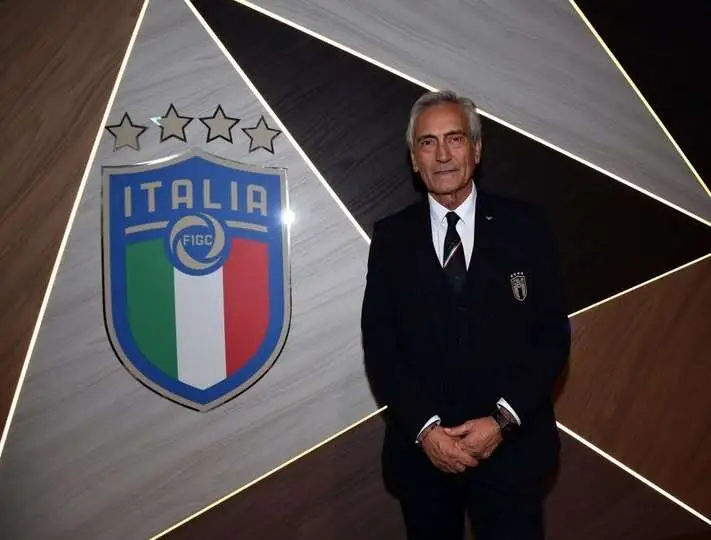
- Gabriele Gravina resigns as head of Italy's football association (FIGC) following World Cup failure.
- Former goalkeeper Gianluigi Buffon also resigns as delegation head.
- Italy faces potential loss of Euro 2032 hosting rights due to inadequate football infrastructure.
- FIGC to hold presidential election on June 22.
Italy's football association (FIGC) is reeling from a devastating blow after the country's failure to qualify for the World Cup for the third consecutive time. The four-time world champions suffered a heart-wrenching 4-1 penalty shootout defeat to Bosnia-Herzegovina on Tuesday, marking the latest in a string of disappointments for the Italian national team. The consequences of this failure have been swift and severe, with the resignation of Gabriele Gravina, the head of the FIGC.
Gravina, 72, took the reins in October 2018, following the departure of Carlo Tavecchio after Italy's failure to beat Sweden in a World Cup play-off. Despite his tenure being marked by the country's Euro 2020 triumph, Gravina's inability to steer the national team to the World Cup has raised serious questions about his leadership. In a statement, the FIGC announced that a vote to elect a new president will be held on June 22, with former Italian Olympic Committee head Giovanni Malago emerging as a leading candidate to take over.
Gravina's Resignation: A Sign of Accountability?
Gravina's decision to step down is seen as a symbol of accountability within the FIGC. In a statement, he acknowledged that the team's failure to qualify for the World Cup was a major setback, and that he felt responsible for the outcome. The move is likely to be seen as a positive step by fans and the wider football community, who have grown increasingly frustrated with the country's lack of progress under Gravina's leadership.
However, Gravina's resignation also raises questions about the broader issues within the FIGC. The country's football association has been criticized for its lack of investment in youth development, inadequate infrastructure, and poor leadership. These issues have been exacerbated by the team's failure to qualify for the World Cup, and it remains to be seen whether the new leadership will be able to address these concerns.
Buffon's Resignation: A Symbol of Disappointment
Former goalkeeper Gianluigi Buffon, who was working closely with the national team, has also resigned as delegation head. Buffon, 48, was part of Italy's 2006 World Cup-winning side and had been a key figure in the team's efforts to qualify for the World Cup. His resignation is a significant blow to the team, and is likely to be seen as a symbol of disappointment and frustration.
Buffon's decision to step down is also a testament to his commitment to the team and his desire to see change. In a statement, he acknowledged that the team's failure to qualify for the World Cup was a major setback, and that he felt it was time to pass the baton to a new generation of leaders.
Italy's Football Infrastructure: A Major Concern
Italy's football infrastructure is a major concern, with the country facing potential penalties for its failure to upgrade its stadiums. The country is set to co-host the European Championship in 2032 with Turkey, but its lack of modern stadiums has drawn criticism from UEFA President Aleksander Ceferin. In a statement, Ceferin warned that Italy could lose its hosting rights unless the country upgrades its infrastructure by October.
Italy's failure to invest in its football infrastructure has been a major issue for years, with many clubs struggling to upgrade their grounds due to disputes with public authorities. The country's football federation has until October to put forward five stadiums to UEFA to host Euro 2032 matches. The pressure is on the new leadership to address this issue and ensure that Italy's football infrastructure is up to par.
What This Means
The consequences of Italy's World Cup failure are far-reaching, and will have significant implications for the country's football association. The resignation of Gravina and Buffon is a sign of accountability, but also raises questions about the broader issues within the FIGC. The country's football infrastructure is a major concern, and the new leadership will need to address this issue if Italy is to have any chance of success in the future.
The FIGC's presidential election on June 22 will be a major turning point for the country's football association. The new leadership will need to be bold and innovative if they are to address the country's football infrastructure and youth development issues. It remains to be seen whether the new leadership will be able to deliver, but one thing is certain: Italy's football association will need to change if the country is to return to its former glory.
Conclusion
Italy's World Cup failure is a major setback for the country's football association, and will have significant implications for the future. The resignation of Gravina and Buffon is a sign of accountability, but also raises questions about the broader issues within the FIGC. The country's football infrastructure is a major concern, and the new leadership will need to address this issue if Italy is to have any chance of success in the future. The FIGC's presidential election on June 22 will be a major turning point for the country's football association, and one that will shape the future of Italian football.


0 Comments
Leave a Comment
No comments yet. Be the first to share your thoughts!