
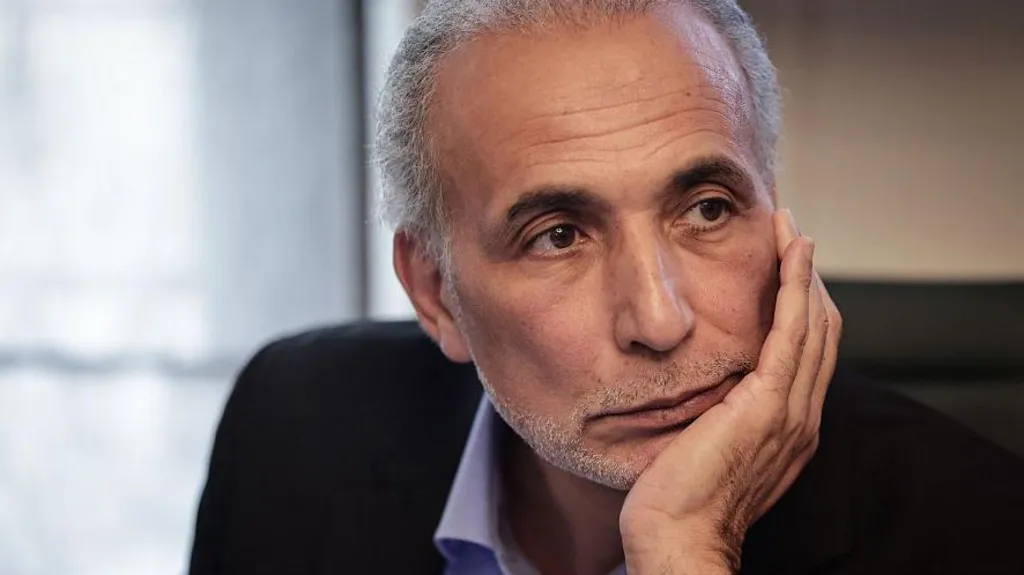
Eii, Ghanafuor! Brace yourselves because the internet is buzzing and 'Jungle News' has the tea piping hot! In a development that has sent shockwaves across the globe, renowned Islamic scholar, Tariq Ramadan, has been handed a hefty 18-year prison sentence by a Paris court. The charge? Raping three women. And if you thought that was enough, hold on – this comes just two years after he was jailed for a separate rape offence in Switzerland. This isn't just news; it's a monumental moment echoing the global cries for justice!
Who Exactly Is Tariq Ramadan, and Why Is This Such a Big Deal?
For those who might be asking, 'who dat?', let's break it down. Tariq Ramadan, 63, is no ordinary name. He's been a prominent figure in the academic and religious world, a former professor of Islamic studies at the prestigious St Antony's College in Oxford. More significantly, he's the grandson of Hassan al-Banna, who founded the Muslim Brotherhood – a hugely influential transnational Sunni Islamist organization. Imagine the intellectual and spiritual authority he commanded! For years, he was seen as a leading voice, a bridge between Western and Islamic cultures. This isn't just a fall from grace; it's a dramatic plunge from the pinnacle, shaking countless believers and admirers.
The Unfolding Saga: #MeToo and the Quest for Justice
The French rape case first exploded into public consciousness in 2017. This was right around the time the powerful #MeToo movement was gaining incredible momentum worldwide, giving a voice to countless survivors of sexual abuse and harassment. Two of the three brave women came forward during this period, choosing to speak their truth against a man of immense influence. It takes incredible courage to stand up to power, especially when the accused is a figure as revered as Ramadan.
The details are grim. One woman accused him of rape in a Lyon hotel in 2009. The Swiss case, meanwhile, involved allegations of rape in a Geneva hotel in 2008. These aren't isolated incidents, but part of a disturbing pattern that has finally caught up with the scholar.
'Nine Years of Suffering and Struggle': The Victims Speak
While Ramadan himself did not attend the trial in Paris (more on that later), the voices of his accusers rang loud and clear. Leaving the court, Henda Ayari, one of the three women, spoke directly to reporters. Her words hit hard: 'The judges had believed her,' and she spoke of 'nine years of suffering and struggle' since she first dared to file a complaint. Nine years, chale! That's a lifetime of trauma and fighting for your truth.
Ayari's thoughts weren't just for herself. She explicitly mentioned thinking of 'all the other victims: of the victims who had the courage to file a complaint like me, but also of those who could not summon up the strength, and those who had withdrawn their complaint because of threats and reprisals.' Her statement is a stark reminder of the immense psychological and social hurdles survivors face when seeking justice against powerful figures. It’s a testament to the sheer resilience required to see such a process through.
Ramadan's Defense: A 'Farce' and a Call for a New Trial
On his part, Tariq Ramadan has consistently denied all charges, maintaining that the allegations are part of a slander campaign. His lawyers even labeled the Paris trial a 'farce,' claiming he couldn't attend because he's undergoing treatment in Geneva for multiple sclerosis. According to them, it was his health, not a lack of will, that kept him away. He even reacted to the sentence, telling Le Parisien newspaper, 'I will not let this decision stand,' and called for 'a new trial, a trial with both parties present.'
However, the court was not swayed. Judge Corinne Goetzmann stated that an arrest warrant had been issued for Ramadan. The twist? Switzerland, where he resides, doesn't have an extradition treaty with France. This means while he's been sentenced and faces a permanent ban from French territory, getting him physically into a French jail cell presents a legal hurdle. Justice can be complicated, no joke!
Why Does This Matter to Ghanaians? Beyond the Borders.
You might be thinking, 'this happened in Europe, why should I care?' But hold up! This story resonates deeply with Ghanaians for several reasons. Firstly, we live in an interconnected world. A prominent religious scholar, revered globally, falling from grace in such a spectacular fashion sparks conversations about moral authority, hypocrisy, and accountability, irrespective of borders. Ghanaians are keenly aware of the moral standing of public figures, especially those in religious leadership. The idea that someone can preach one thing and allegedly practice another is a discussion starter from Accra to Tamale.
Secondly, the echoes of the #MeToo movement are strong here too. While it might manifest differently, the struggle for victims of sexual assault to be heard and believed, especially when their abusers are powerful, is a universal one. This verdict offers a glimmer of hope that even the most influential can be held accountable. It fuels conversations on social media about who we trust, who we elevate, and the importance of creating safe spaces for survivors to speak out.
Lastly, the legal complexities – the 'trial in absentia,' the extradition issues – highlight the challenges of international justice. It gets Ghanaians talking about how our own justice system works, the rights of the accused, and the ultimate pursuit of truth and fairness. The chatterbox on Ghanaian social media platforms is already buzzing with opinions, debates, and solidarity for the victims.
A Powerful Message: The Roar of #MeToo Continues
The judge's words, 'Consenting to sex does not imply consenting to any sexual act whatsoever,' are a powerful affirmation of bodily autonomy and a clear rejection of any notion that a person's initial consent to intimacy means an open license for abuse. This statement alone is a victory for women everywhere.
This saga serves as a crucial reminder: no one is above the law. The #MeToo movement isn't a passing fad; it's a fundamental shift in how societies view sexual assault and harassment. Tariq Ramadan's sentencing, even with the ongoing extradition challenges, is a monumental step forward in ensuring that justice, however slow, can prevail for survivors worldwide. We'll be keeping our ears to the ground for any further developments, because 'Jungle News' always brings you the real talk!


0 Comments
Leave a Comment
No comments yet. Be the first to share your thoughts!