
Key Takeaways
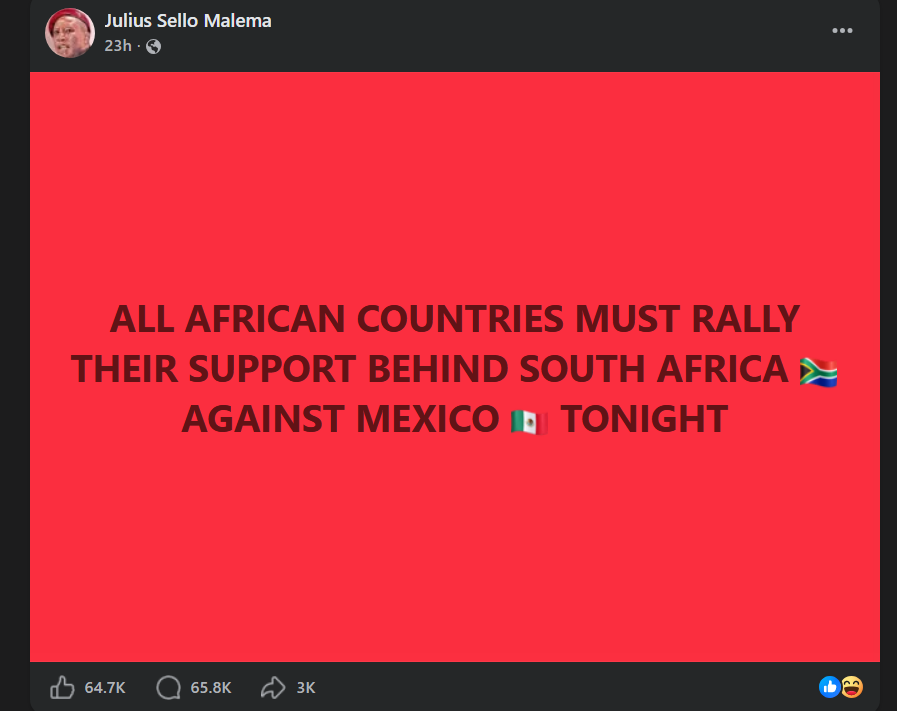
- Julius Malema's call for African unity behind South Africa in the 2026 World Cup was met with widespread criticism and ridicule.
- The post received over 65,000 reactions, 66,000 comments, and over 3,000 shares, with most comments expressing revulsion.
- The Bafana Bafana team lost the match 2:0 and also had two first-choice players expelled from the game.
Julius Malema's post, which aimed to rally African countries behind South Africa as they took on Mexico in the 2026 World Cup, has been met with a mixed response, but mostly criticism and ridicule. The post, which used capital letters to emphasize the importance of African unity, received a significant number of reactions, comments, and shares on social media platforms.
However, a closer look at the comments reveals a more concerning trend. Many users took to social media to express their outrage and disappointment at Malema's post, with some even going as far as to celebrate South Africa's loss as a form of punishment for their perceived xenophobia and lack of unity.
African Unity: A Complex Issue
The concept of African unity has been a long-standing issue on the continent. While many leaders and organizations have called for greater unity and cooperation, the reality on the ground has been far more complex. From border disputes to economic rivalries, the complexities of African unity have been well-documented.
In recent years, there have been several high-profile instances of xenophobia and racism in South Africa, which have strained relations with other African countries. The current situation is a stark reminder of the challenges that lie ahead in achieving true African unity.
The 2026 World Cup is seen as an opportunity for South Africa to demonstrate its commitment to African unity, but the reaction to Malema's post has cast a harsh light on the challenges that lie ahead.
Background & Context
The 2026 World Cup is set to be co-hosted by the United States, Canada, and Mexico, with South Africa scheduled to play their opening match against Mexico. The tournament is seen as a major opportunity for African countries to come together and showcase their football talents.
However, the reaction to Malema's post has highlighted the complexities of African unity and the challenges that lie ahead. From border disputes to economic rivalries, the complexities of African unity have been well-documented.
In recent years, there have been several high-profile instances of xenophobia and racism in South Africa, which have strained relations with other African countries. The current situation is a stark reminder of the challenges that lie ahead in achieving true African unity.
Why This Matters
The reaction to Malema's post has significant implications for African unity and the 2026 World Cup. By highlighting the complexities of African unity, the post has brought attention to the challenges that lie ahead in achieving true unity.
The 2026 World Cup is seen as a major opportunity for African countries to come together and showcase their football talents. However, the reaction to Malema's post has cast a harsh light on the challenges that lie ahead.
The outcome of the match and the reaction to Malema's post will have significant implications for African unity and the 2026 World Cup. As the tournament progresses, it will be interesting to see how African countries respond to the challenges of unity and cooperation.
Image Source: https://www.myjoyonline.com/wp-content/uploads/2026/06/Julius-Malema-jumped.png



0 Comments
Leave a Comment
No comments yet. Be the first to share your thoughts!