
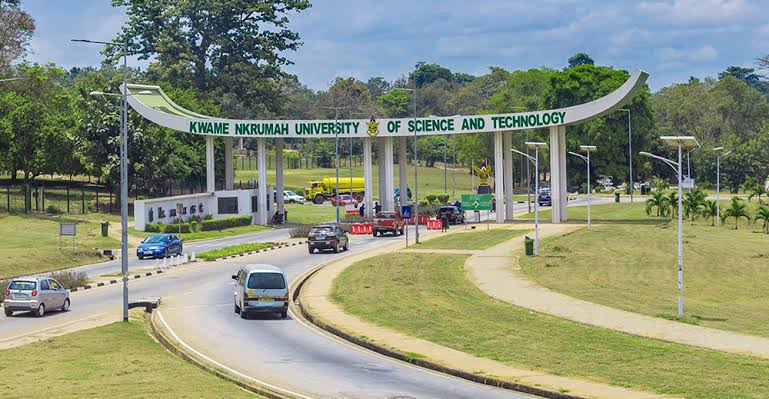
The Kwame Nkrumah University of Science and Technology (KNUST) has officially drawn a hard line in the sand regarding campus security, student discipline, and the preservation of academic peace. In a decisive and sweeping move, the university's management has permanently banned five formerly dismissed students from entering or loitering within any part of the university campus. The individuals have been declared "persona non grata," a severe institutional classification that legally bars them from accessing the university's premises under any circumstances. This development highlights a growing administrative intolerance for post-dismissal misconduct and underscores the university’s unwavering commitment to ensuring a safe, secure, and uninterrupted academic environment for its current students and staff members.
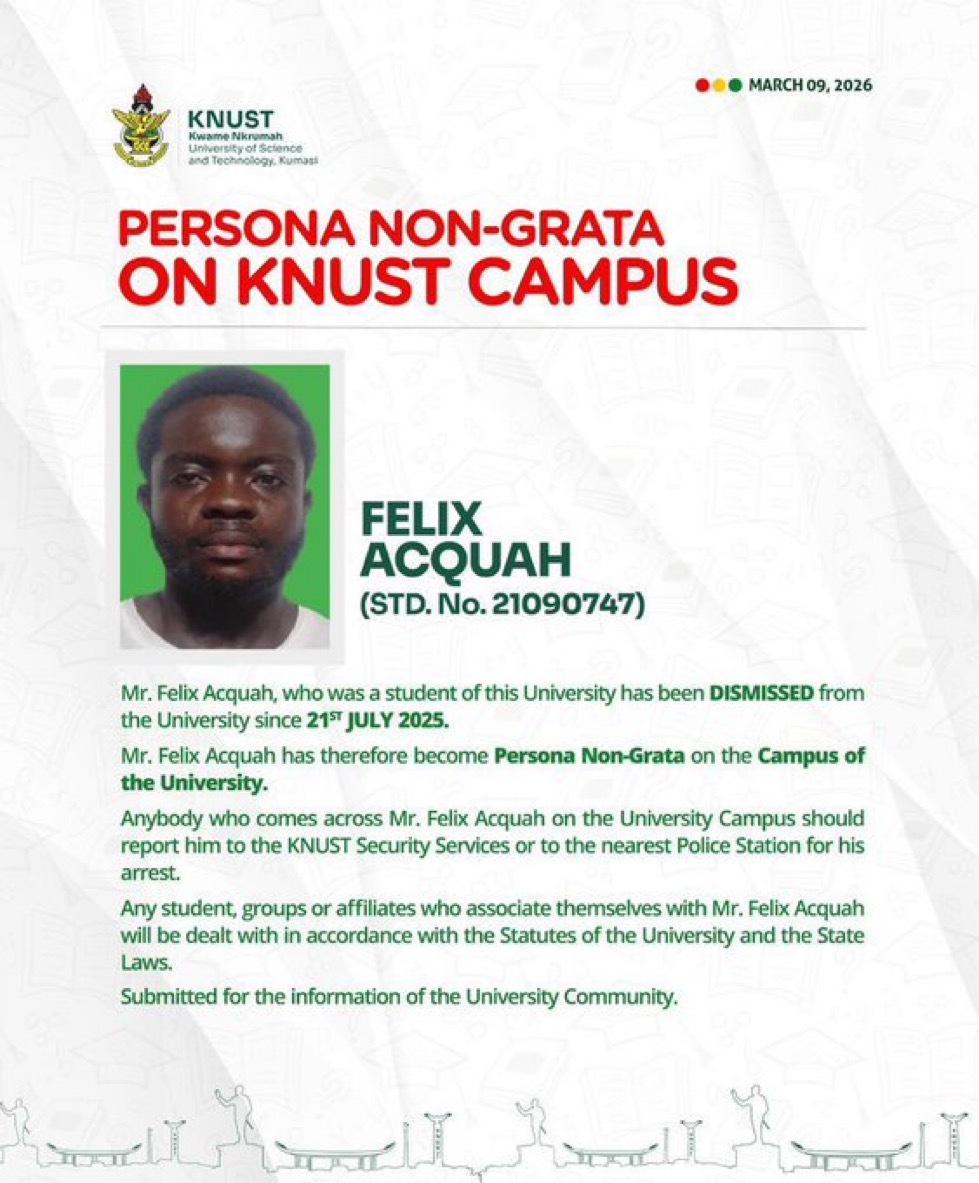
The five individuals at the center of this strict directive have been identified by the university as Francis Tutu Atuahene, Roland Botwe Nsiah, John Kelvin Kane, Felix Acquah, and Bernard Boadi. According to official university records, all five men were formally dismissed from the institution on July 21, 2025, following a series of disciplinary hearings that determined they had engaged in gross misconduct. Under standard university protocols, a dismissal strips an individual of all student privileges, including the right to reside in university-approved hostels, access academic facilities, or participate in any campus-related activities.
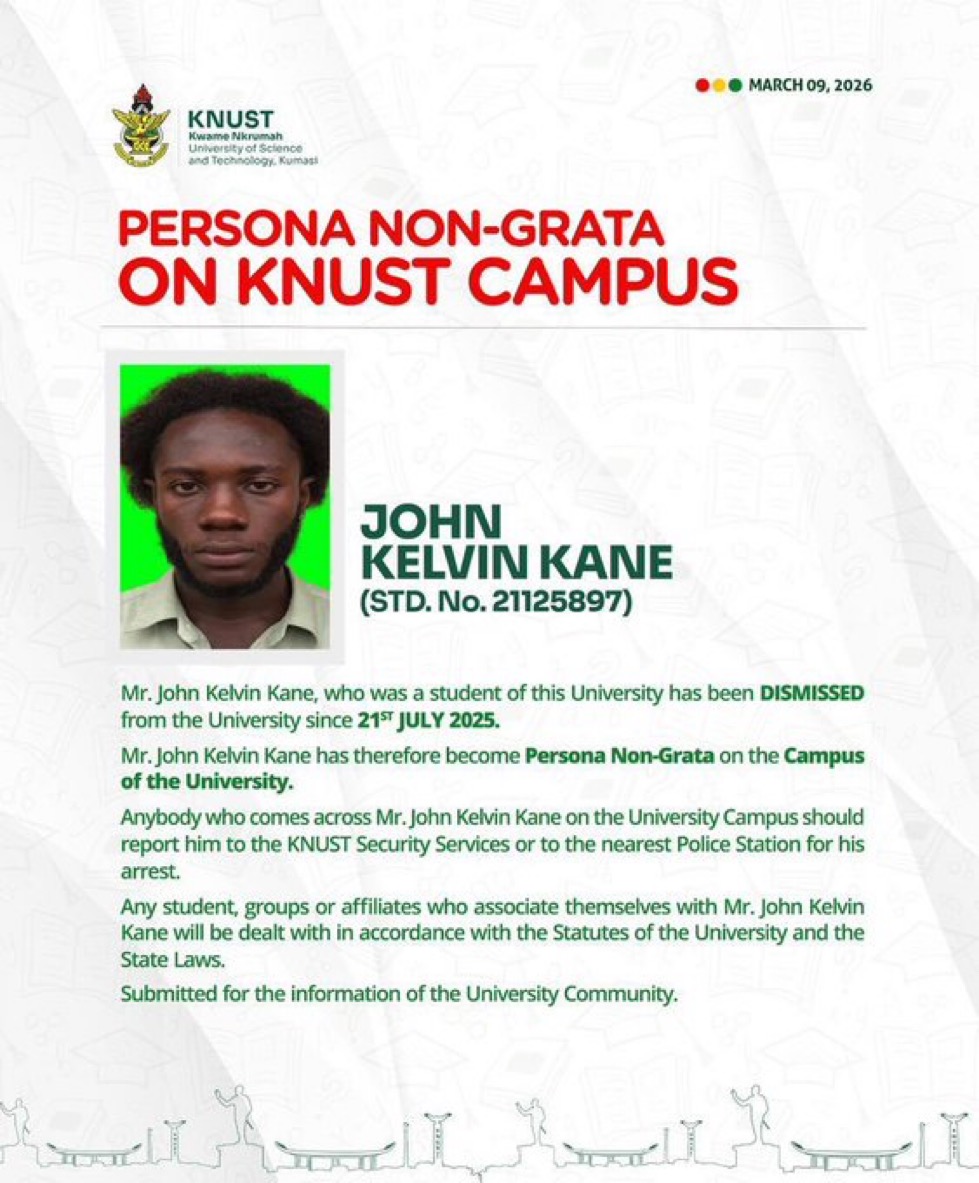
However, reports indicate that despite losing their studentship almost a year ago, these individuals have continually disregarded their expulsion, persistently returning to the university grounds and embedding themselves within the student population.
The core issue driving this recent ban is the nature of their activities upon returning to the campus. University authorities noted that the continuous presence of these dismissed individuals was not merely a case of harmless trespassing, but rather an active disruption to the peace and orderly operations of the institution. They have been accused of loitering around academic and residential areas, raising profound concerns regarding the general welfare and physical security of the bona fide student body. In a highly specific instance cited by the university's management, one of the banned individuals, Francis Tutu Atuahene, was observed moving erratically from one traditional hall of residence to another. Management stated that his unauthorized hall-hopping was deliberately causing "trouble and confusion" among residents—a pattern of volatile behavior that continued long after his official dismissal had taken effect.
To enforce this ban, the university has escalated the matter beyond a simple administrative warning. A formal statement issued by the University Relations Office, signed by Deputy Registrar Dr. Daniel Norris Bekoe on behalf of the Registrar, delivered a stark ultimatum to the banned individuals and a clear directive to the campus community. The statement explicitly mandated the KNUST Security Services to be on high alert. Furthermore, the university has empowered both its internal security apparatus and the local police force to enact an "arrest on sight" order should any of the five men be spotted within the geographical boundaries of the KNUST campus. This immediate threat of arrest and subsequent legal prosecution for trespassing serves as a potent deterrent, signaling that the university will not hesitate to use the full force of the law to protect its borders.
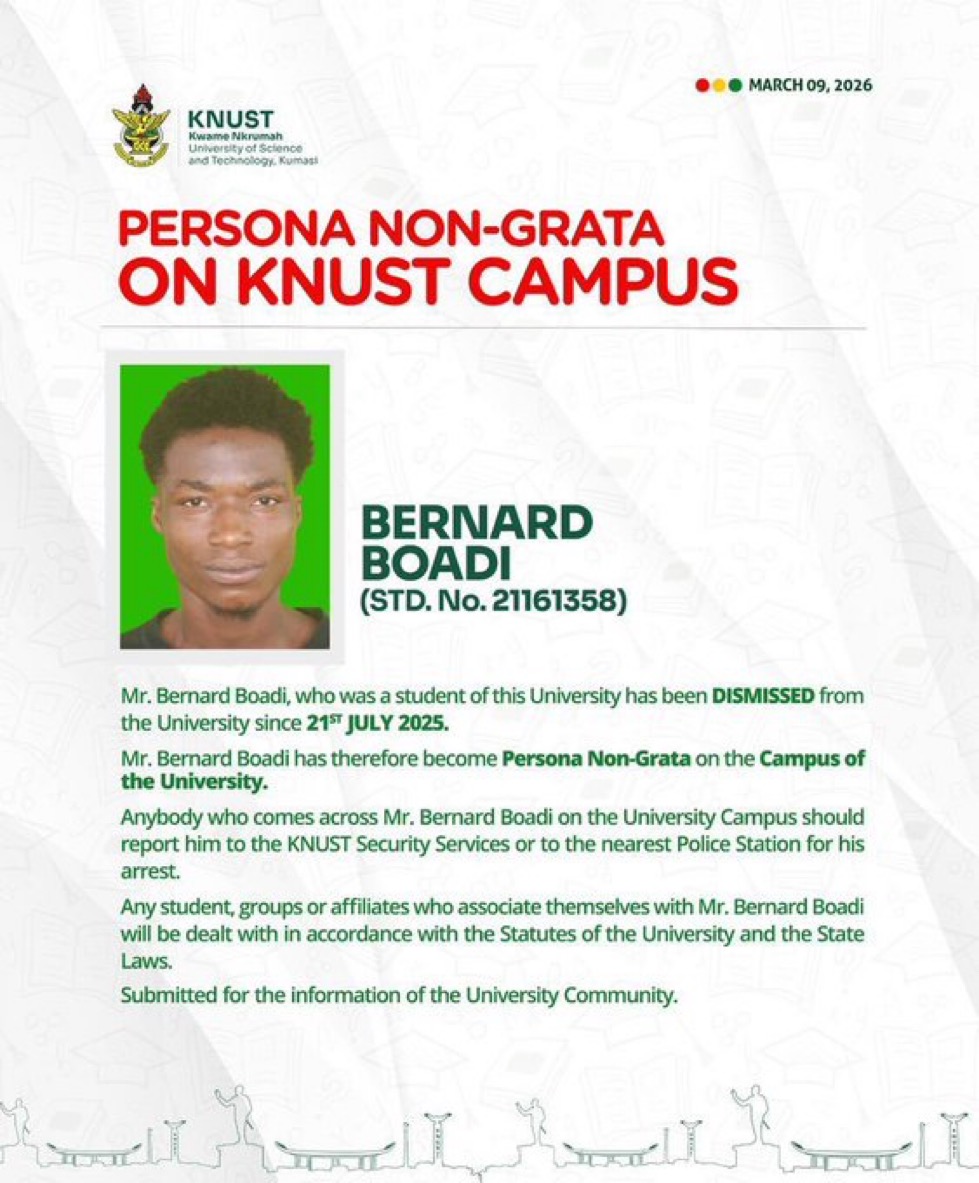
This drastic measure by the KNUST management is indicative of a wider, more systemic challenge facing major tertiary institutions across Ghana: the management of expelled or dismissed students who refuse to sever ties with campus life. Alarmingly, this current directive represents the second time in less than twelve months that KNUST management has been forced to issue a mass "persona non grata" declaration against former students who unlawfully access the campus post-dismissal. The recurring nature of this issue suggests that traditional dismissal letters are no longer sufficient to deter unruly elements. Consequently, university administrations are increasingly relying on public bans, law enforcement partnerships, and community vigilance to enforce their disciplinary actions.
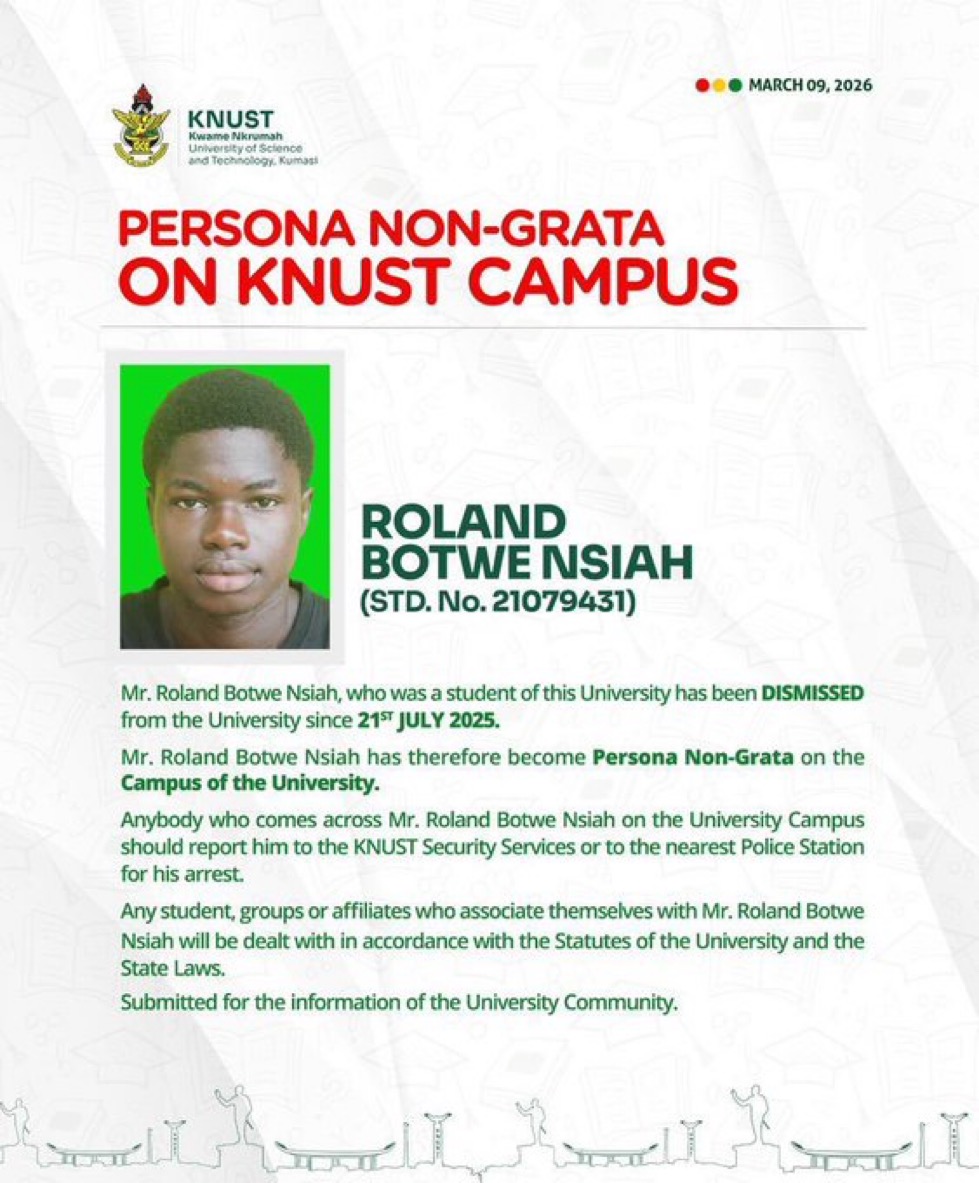
The presence of unauthorized individuals on a university campus poses a multifaceted risk. Beyond the immediate threat of physical altercations or the instigation of unrest within the residential halls, there is a significant psychological toll on the student body. Students require a tranquil environment to focus on demanding academic schedules, research projects, and examinations. When individuals with a known history of misconduct are allowed to roam freely, it compromises the perceived safety of the environment, leading to anxiety and a breakdown in community trust. By publicly naming and banning these individuals, KNUST is attempting to restore that trust and reassure parents, stakeholders, and the students themselves that their safety is the institution's highest operational priority.
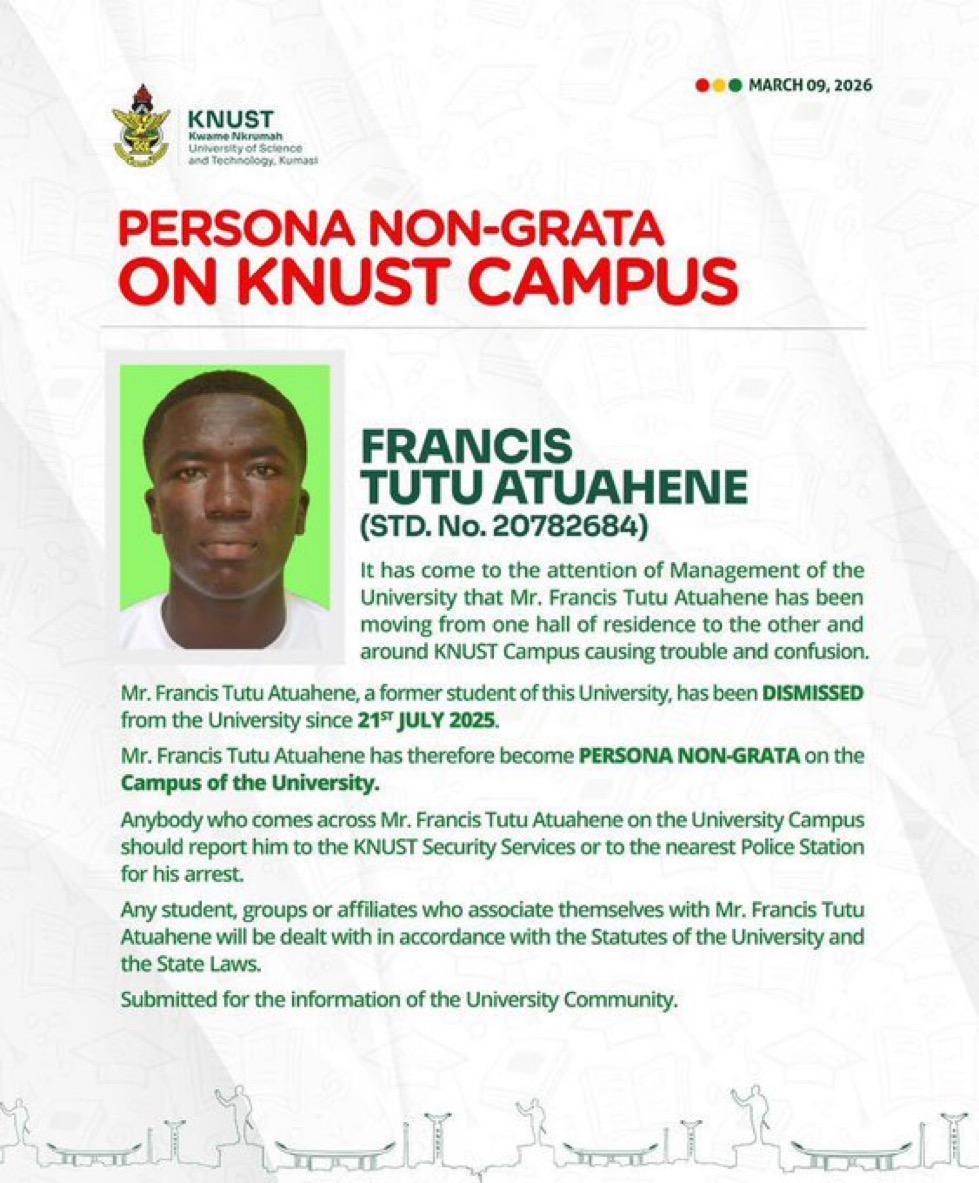
In the wake of this announcement, the KNUST administration has issued a broad appeal to all active students, teaching staff, and campus residents to remain highly vigilant. The successful enforcement of this ban relies heavily on community cooperation. Management has urged anyone who spots Francis Tutu Atuahene, Roland Botwe Nsiah, John Kelvin Kane, Felix Acquah, or Bernard Boadi on the premises to immediately report their presence to the KNUST Security Services or the nearest police station. The university reaffirmed its baseline commitment to enforcing strict regulations, maintaining operational discipline, and fostering an academically conducive environment that seamlessly supports teaching, learning, advanced research, and community engagement without the threat of external disruption.





0 Comments
Leave a Comment
No comments yet. Be the first to share your thoughts!