
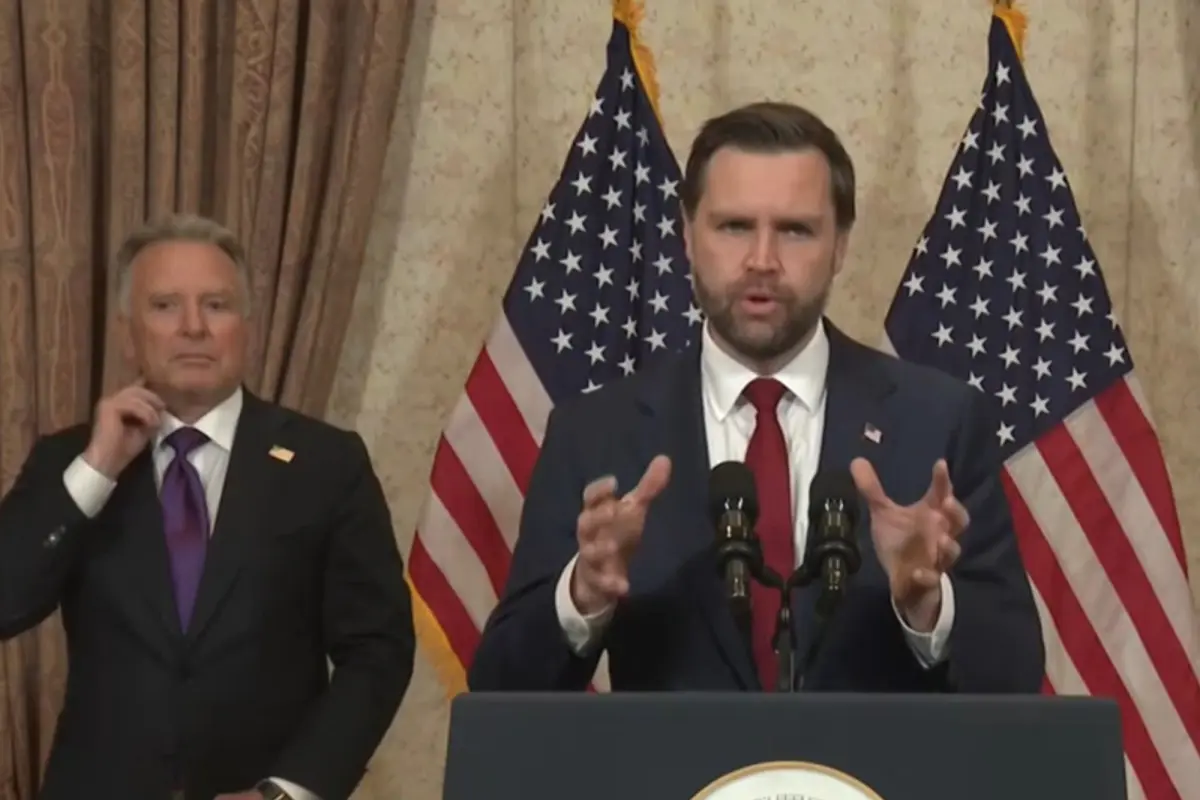
- US Vice President JD Vance announced that peace talks with Iran have failed, with no agreement reached on a six-week war in the Middle East.
- The US had been pushing for Iran to give up its nuclear ambitions, but Tehran refused to comply, leaving the future of the conflict uncertain.
- The failed talks raise concerns about the potential for renewed violence in the region, with analysts warning that the cease-fire may now collapse.
Vice President JD Vance delivered the disappointing update after 21 hours of grueling negotiations in Pakistan, where he met with Iranian officials to try and broker a peace deal. The US had been pushing for Iran to give up its nuclear ambitions, but Tehran refused to comply, leaving the future of the conflict uncertain.
In a statement, Vance blamed Iran's refusal to accept the US terms for the failure of the talks, saying that the country had "chosen not to accept our terms." He added that the US had made significant concessions during the negotiations, but Iran had insisted on maintaining its nuclear program.
Background: The Conflict in the Middle East
The conflict in the Middle East has been ongoing for six weeks, with the US and Iran engaged in a bitter dispute over issues such as the Strait of Hormuz, uranium enrichment, and ballistic missile development. The US has been pushing for Iran to give up its nuclear ambitions, while Iran has insisted on maintaining its sovereignty and right to develop its nuclear program.
The conflict has resulted in significant losses on both sides, with many civilians caught in the crossfire. The US has imposed sanctions on Iran in an effort to pressure the country into complying with its demands, but Iran has refused to back down.
The Nuclear Issue: A Major Sticking Point
The nuclear issue has been a major sticking point in the negotiations between the US and Iran. The US has been pushing for Iran to give up its nuclear ambitions, but Tehran has insisted on maintaining its nuclear program. Vance said that the US had made significant concessions during the negotiations, but Iran had refused to accept the US terms.
Analysts say that the failure of the talks raises concerns about the potential for renewed violence in the region. Andrea Stricker, deputy director and research fellow for Foundation for Defending Democracy's Nonproliferation Program, told The Post that she wasn't surprised that the nuclear issue was at the heart of the failed talks, adding that she believes the cease-fire will now "collapse."
The Future of the Conflict: Uncertain
The future of the conflict in the Middle East is now uncertain, with many analysts warning that the failure of the talks raises concerns about the potential for renewed violence in the region. Vance said that the US will now "see if the Iranians accept" the US final and best offer, but it remains to be seen whether Iran will agree to the terms.
The conflict has resulted in significant losses on both sides, with many civilians caught in the crossfire. The US has imposed sanctions on Iran in an effort to pressure the country into complying with its demands, but Iran has refused to back down.
What This Means
The failure of the talks between the US and Iran raises concerns about the potential for renewed violence in the region. Analysts warn that the cease-fire may now collapse, leading to further conflict and instability in the Middle East.
The nuclear issue has been a major sticking point in the negotiations, with the US pushing for Iran to give up its nuclear ambitions. However, Tehran has refused to comply, leaving the future of the conflict uncertain.
The conflict in the Middle East has significant implications for global security and stability. The region is home to many strategic waterways and trade routes, and any conflict in the area has the potential to affect global energy markets and trade.
The US has been pushing for Iran to comply with its demands, but Tehran has refused to back down. The failure of the talks raises concerns about the potential for renewed violence in the region, and analysts warn that the cease-fire may now collapse.
The future of the conflict in the Middle East is now uncertain, with many analysts warning that the failure of the talks raises concerns about the potential for renewed violence in the region.
In conclusion, the failure of the talks between the US and Iran raises concerns about the potential for renewed violence in the region. Analysts warn that the cease-fire may now collapse, leading to further conflict and instability in the Middle East.



0 Comments
Leave a Comment
No comments yet. Be the first to share your thoughts!