
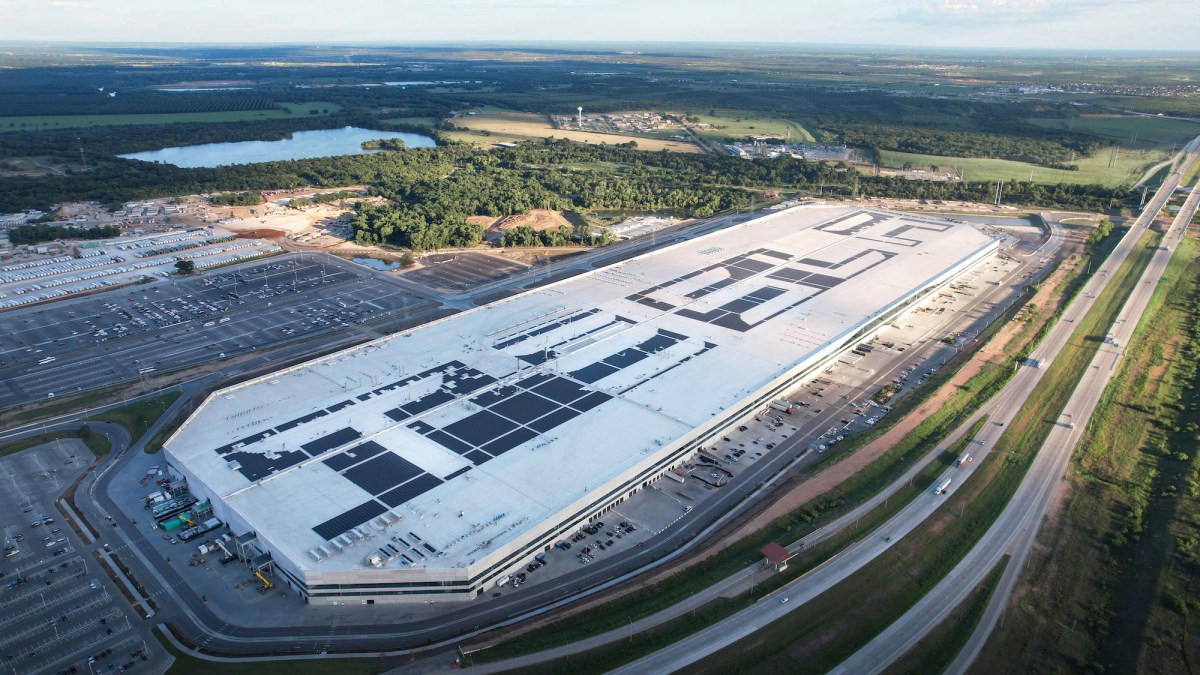
- Tesla's workforce at its Austin, Texas factory dropped from 21,191 in 2024 to 16,506 in 2025.
- This decline is part of the company's second consecutive year of sales decline.
- The move comes despite the company's global workforce growth.
- Tesla's investment in the Austin factory has exceeded $6.3 billion to date.
Tesla's recent financial woes have sent shockwaves through the tech industry, and the company's Austin factory is the latest casualty. A compliance report obtained by the Austin American-Statesman reveals that the factory's workforce has shrunk dramatically over the past year, marking the second consecutive year of declining sales for the electric vehicle giant.
The report shows that Tesla's workforce at the Austin factory dropped from 21,191 employees in 2024 to 16,506 in 2025, a decline of 22%. This staggering drop is in contrast to the company's global workforce growth, which increased from 125,665 employees in 2024 to 134,785 employees in 2025, according to filings with the U.S. Securities and Exchange Commission.
Austin Factory: A Hub of Economic Activity
Tesla's Austin factory has become one of the largest employers in the Austin area since its opening in 2022. The company's CEO, Elon Musk, relocated Tesla's headquarters to the factory in 2021, before it opened. This strategic move has not only brought in significant investment but also created thousands of jobs for locals.
The factory's impact on the local economy is undeniable, with Tesla investing over $6.3 billion in the facility to date. This investment has not only created jobs but also boosted economic growth in the region. However, the recent decline in workforce is a concerning trend that may have far-reaching consequences for the local economy.
What's Behind the Decline?
While it's unclear which teams were most affected by the decline, industry experts speculate that the move may be a response to Tesla's declining sales. The company's sales have been under pressure in recent years, with the global electric vehicle market experiencing a slowdown. Tesla's inability to maintain its market share has led to a decline in sales, which in turn has resulted in a reduction in workforce at the Austin factory.
Analysts point out that Tesla's struggles are not unique to the Austin factory. The company's global sales have been under pressure, and the recent decline in workforce is a symptom of a larger problem. The company's failure to innovate and adapt to changing market conditions has left it vulnerable to competition.
The Future of Tesla's Austin Factory
The decline in workforce at the Austin factory is a cause for concern, not just for Tesla but also for the local economy. The factory's impact on the region has been significant, and a decline in workforce may have far-reaching consequences. Industry experts warn that the company's failure to adapt to changing market conditions may lead to further decline in sales and workforce.
Tesla's recent financial woes have sent shockwaves through the tech industry, and the company's Austin factory is the latest casualty. While the company's global workforce growth is a positive trend, the decline in workforce at the Austin factory is a concerning trend that may have far-reaching consequences for the local economy.
What This Means
The decline in workforce at Tesla's Austin factory is a symptom of a larger problem. The company's failure to innovate and adapt to changing market conditions has left it vulnerable to competition. As the global electric vehicle market continues to evolve, Tesla must adapt to stay ahead of the curve. The company's failure to do so may lead to further decline in sales and workforce, with far-reaching consequences for the local economy.
The recent decline in workforce at the Austin factory is a wake-up call for Tesla to rethink its strategy and adapt to changing market conditions. The company's failure to innovate and adapt may lead to further decline in sales and workforce, with far-reaching consequences for the local economy. As the tech industry continues to evolve, Tesla must stay ahead of the curve to remain relevant.
The decline in workforce at Tesla's Austin factory is a reminder that even the most successful companies can face challenges. As the global electric vehicle market continues to evolve, Tesla must adapt to stay ahead of the curve. The company's failure to do so may lead to further decline in sales and workforce, with far-reaching consequences for the local economy.





0 Comments
Leave a Comment
No comments yet. Be the first to share your thoughts!