
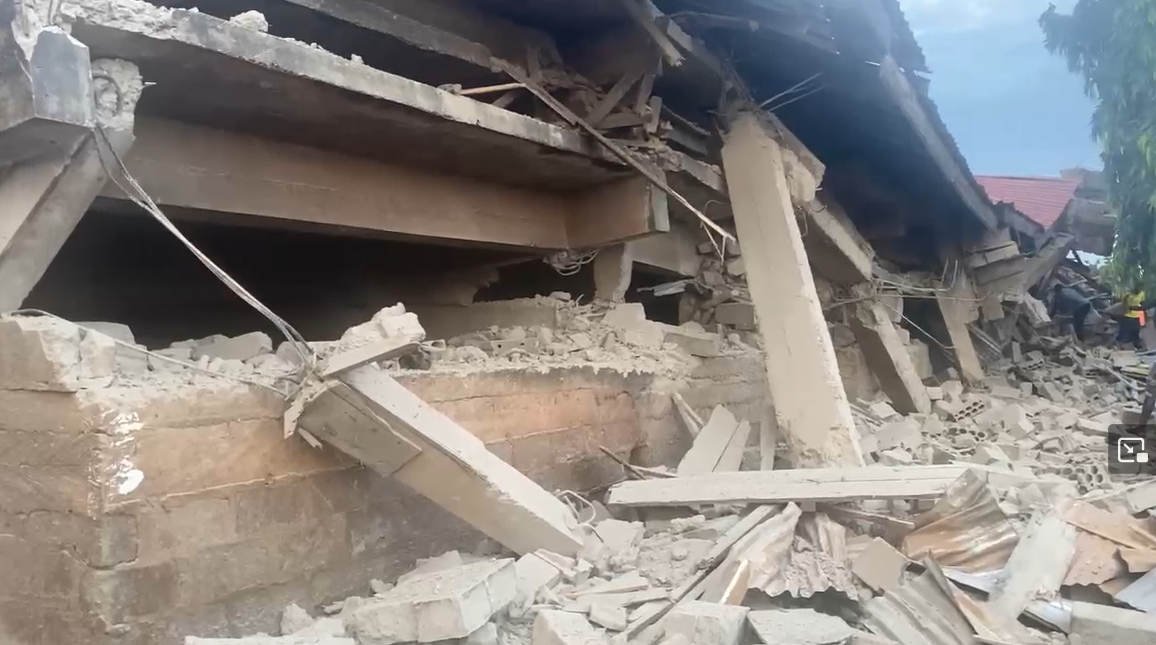
Tragedy struck Accra New Town earlier today as an uncompleted three-storey building collapsed, resulting in the confirmed deaths of two individuals. The incident, which occurred within the premises of the Accra New Town Experimental Basic School and also served as a Sunday worship site, has prompted a massive overnight rescue operation by emergency services. As of late evening, 14 people have been successfully pulled from the rubble, but fears remain high that several others are still trapped.
Michael Kpakpo Allotey, the Mayor of Accra, officially confirmed the fatalities while overseeing the intensified rescue efforts. Witnesses and emergency personnel have reported hearing cries for help from beneath the debris, underscoring the critical urgency of the ongoing operations. Personnel from the Ghana Police Service, the National Disaster Management Organisation (NADMO), and the Ghana National Fire Service have deployed floodlights and heavy equipment, working tirelessly through the night in a race against time to save lives.
Key Highlights
- Two fatalities have been confirmed, with 14 individuals rescued following a building collapse in Accra New Town.
- Emergency services are conducting intensive overnight rescue operations, with more individuals feared trapped under the debris.
- The collapsed structure, an uncompleted three-storey building, served as part of the Accra New Town Experimental Basic School premises and a Sunday worship site.
- Authorities have initiated investigations into the cause of the collapse, emphasizing the urgency of current rescue efforts.
The Incident and Immediate Response
The collapse occurred at an unspecified time earlier in the day, turning a familiar community space into a scene of disaster. The initial moments following the collapse were characterized by chaos and heroic self-help. Residents and bystanders, with no formal training or specialized equipment, immediately sprang into action. Using their bare hands, shovels, and other rudimentary tools, they bravely began sifting through the rubble, managing to extricate several victims before professional emergency services arrived.
Their swift, albeit rudimentary, intervention played a crucial role in the early stages, highlighting the community's immediate response to adversity. Upon the arrival of official responders, the scene quickly transformed into a coordinated emergency zone. The Ghana Police Service secured the area, while NADMO personnel and the Fire Service took charge of the complex rescue operations, deploying specialized search and rescue teams.
Challenges of Night Operations and Unclear Causes
Operating through the night presents significant challenges, including reduced visibility, fatigue among rescuers, and the inherent dangers of working amidst unstable debris. Despite these hurdles, the commitment to reaching potential survivors remains unwavering. Floodlights illuminate the site, allowing operations to continue with precision and vigilance, driven by the desperate calls for help emanating from the collapsed structure.
The exact cause of the building's collapse remains unclear and is subject to immediate investigation. However, such incidents in rapidly urbanizing areas often point to a complex interplay of factors. These can include structural integrity issues, the use of substandard construction materials, inadequate supervision during construction, and potential deviations from approved building plans. The fact that it was an “uncompleted” structure raises questions about its usage prior to certification.
Accra New Town: A Glimpse into Urban Challenges
Accra New Town is a densely populated residential and commercial area within Ghana's capital, Accra. Like many older, evolving urban centers, it experiences significant pressure for development. The area is characterized by a mix of old and new structures, often built in close proximity, and sometimes under conditions that may not fully adhere to stringent modern building codes. The dual use of the collapsed structure—as part of a school and a place of worship—highlights the multi-functional nature of properties in such communities, where space is often at a premium.
The incident not only causes immediate physical harm but also has a profound psychological impact on the community. For students and their families, as well as the congregation who regularly gathered at the site, the collapse represents a significant trauma and disruption. The location within a school compound is particularly concerning, raising questions about the safety and suitability of surrounding structures and land use.
A Recurring Narrative: Ghana's Building Safety Concerns
Building collapses, unfortunately, are not an isolated phenomenon in Ghana, painting a concerning picture of recurring challenges in the construction sector. Over the past decades, the nation has witnessed several high-profile incidents that have claimed lives and destroyed property. One of the most remembered is the 2012 Melcom Shopping Mall collapse in Accra, which led to numerous fatalities and injuries. That incident, like many others, sparked national outrage and pledges for stricter enforcement of building regulations.
Despite these past tragedies and subsequent calls for reform, incidents continue to occur, albeit with varying scales of impact. These recurring events underscore systemic issues, ranging from the integrity of building materials to the competence of construction personnel and the effectiveness of regulatory oversight. Each collapse serves as a grim reminder of the critical need for a robust and uncompromising approach to building safety and adherence to established codes.
Regulatory Framework and Enforcement Deficiencies
Ghana possesses a comprehensive framework of building codes and regulations, overseen by various government agencies at both national and local levels. District Assemblies, through their Physical Planning Departments, are responsible for issuing building permits and ensuring compliance with zoning laws and structural standards. Institutions like the Ghana Institution of Engineers (GhIE) and the Ghana Institute of Architects (GIA) set professional standards and advocate for best practices.
However, the challenge often lies in the enforcement of these regulations. Factors such as corruption, insufficient staffing in regulatory bodies, lack of resources for regular inspections, and a culture of impunity among some developers can undermine the effectiveness of the system. Unqualified contractors, the use of sub-standard materials to cut costs, and the bypassing of crucial safety checks are persistent issues that often emerge as root causes in post-collapse investigations. The phenomenon of 'uncompleted' structures being used for habitation or commercial purposes before final certification also poses a significant risk.
The Path Forward: Prioritizing Safety and Accountability
The tragedy in Accra New Town must serve as yet another urgent call for a comprehensive re-evaluation and reinforcement of Ghana's building safety protocols. This necessitates not only stricter enforcement of existing laws but also a proactive approach to prevent future disasters. Key measures include increasing the capacity and funding for regulatory bodies, regular and unannounced site inspections, and imposing severe penalties on individuals and companies that flout building codes.
Furthermore, there is a critical need for public awareness campaigns to educate property owners, developers, and the general populace about the importance of engaging qualified professionals and demanding adherence to safety standards. Encouraging whistleblowing mechanisms for reporting suspicious construction practices can also play a vital role. Ultimately, a multi-faceted approach involving legislative reform, stringent enforcement, professional accountability, and community vigilance is essential to safeguard lives and prevent the recurrence of such heart-wrenching incidents in Ghana's rapidly evolving urban landscape.
Conclusion
As rescue teams continue their painstaking efforts through the night in Accra New Town, the nation watches with bated breath, hoping for more survivors to be pulled from the debris. The confirmed fatalities serve as a stark reminder of the ever-present dangers posed by structural failures in urban environments. While the immediate focus remains on saving lives, this incident will undoubtedly reignite crucial conversations about building integrity, regulatory compliance, and the collective responsibility to ensure the safety and well-being of all Ghanaians.



0 Comments
Leave a Comment
No comments yet. Be the first to share your thoughts!