
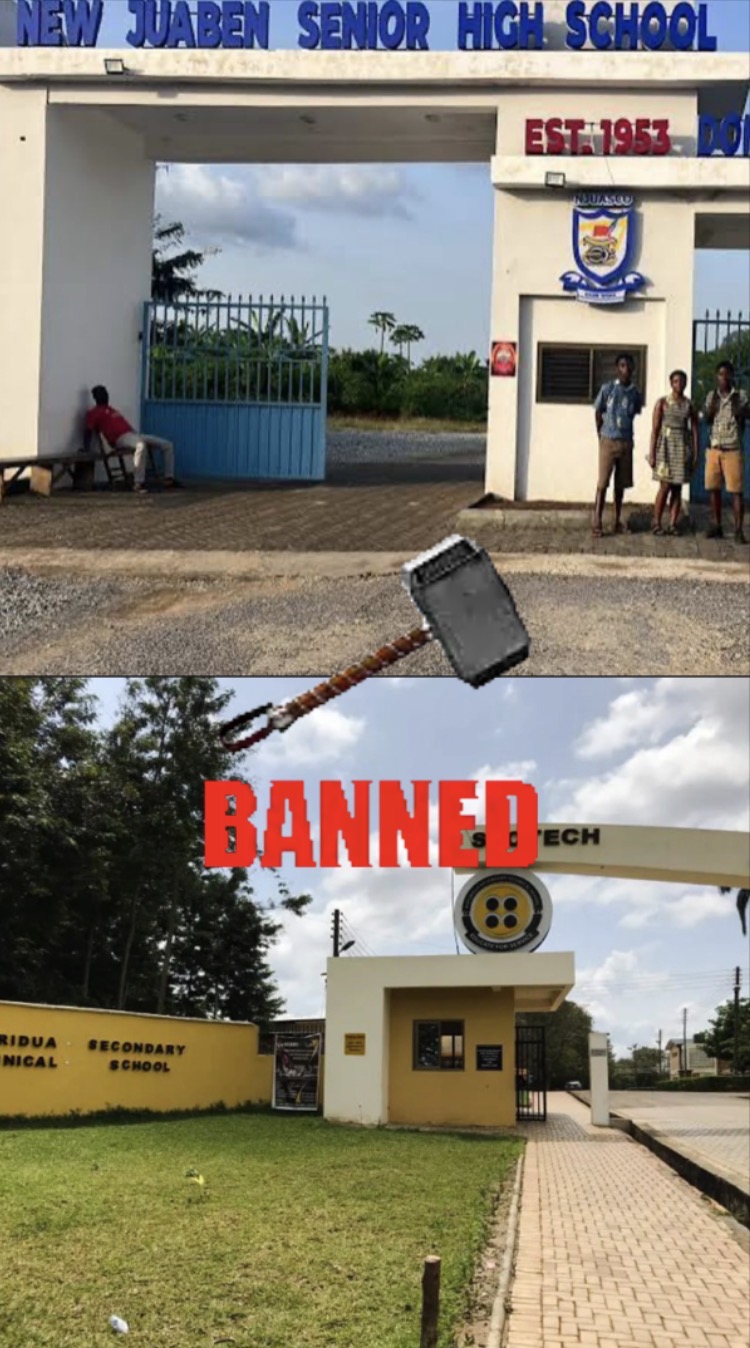
The Ghana Education Service (GES) in the Eastern Region has officially imposed a rigorous two-year ban on three prominent senior high schools following a series of violent incidents that marred the recent Regional Super Zonal Sports Competition. The affected institutions—Koforidua Senior High Technical School (SECTECH), New Juaben Senior High School (NJUASCO), and New Nsutam Senior High Technical School (NUTECH)—have been barred from all sporting and co-curricular activities. The directive, signed by the Eastern Regional Director of Education, Mrs. Ivy Asantewa Owusu, takes effect immediately and signals a zero-tolerance approach to the rising tide of student hooliganism across the country.
The sanctions are a direct consequence of "grave incidents of violence and clashes" that occurred before, during, and after the regional games held at the Koforidua Youth Resource Centre between February 4 and February 6, 2026. Reports from the competition grounds described chaotic scenes, including a stabbing incident involving a student from SECTECH who was allegedly attacked by rivals just 200 meters from the venue while out for lunch. Even more disturbing were the allegations of a gang rape involving a student from a nearby school, an act that has led to the arrest and ongoing prosecution of two underage suspects and one former student. These events have sparked a national debate on the security protocols and the moral conduct of students during high-profile inter-school events.
Under the terms of the two-year suspension, the three schools are strictly prohibited from organizing, participating in, or even spectating at any inter-school sporting events. This ban extends beyond the field to include all co-curricular activities such as quizzes, debates, cadet programs, and entertainment shows at the school, zonal, and regional levels. In addition to the long-term ban, each of the three schools has been slapped with a fine of GH¢500 and will be held responsible for the full cost of any property damage or injuries sustained during the disturbances, pending a final assessment by a special disciplinary committee.
The Eastern Regional Directorate cited Section 2.17 of the GES Code of Conduct, which specifically addresses physical and psychological violence, as the legal basis for the move. Furthermore, the decision aligns with the Eastern Region Schools and Colleges Sports Association (ERSCSA) Code of Discipline, particularly Article VII on disturbances and Article VIII on punishment for hooliganism. The GES statement was blunt in its assessment, noting that students from these institutions engaged in unacceptable acts that directly contradict the fundamental rules of discipline expected in Ghanaian schools.
This crackdown in the Eastern Region mirrors a similar crisis in the Central Region, where all zonal inter-school sporting activities were recently suspended following a brutal assault on a student at the Agona Swedru athletics games. The recurring theme of violence at these festivals has led to calls from parents, alumni, and social media commentators for an overhaul of the current "Super Zonal" format. Many argue that the intense rivalry between schools like SECTECH and NJUASCO has outgrown the current security arrangements, turning what should be a celebration of talent into a high-risk environment for students and staff alike.
As the two-year ban begins, the focus for SECTECH, NJUASCO, and NUTECH must shift toward internal reform and the restoration of their institutional reputations. The GES has indicated that while the ban is a punitive measure, it is also intended to serve as a "cooling-off" period to allow school managements to address the root causes of student radicalization. For the student bodies of these schools, the loss of a two-year window to showcase their sporting and academic talents in competitive arenas is a heavy price to pay for the actions of a violent few.






0 Comments
Leave a Comment
No comments yet. Be the first to share your thoughts!