
Hold onto your plantain chips, Ghana! Our nation has just made a monumental move on the global stage, one that has the world buzzing and our ancestors cheering. The United Nations General Assembly, thanks to Ghana's bold leadership, has officially declared slavery and the transatlantic slave trade as one of humanity's gravest injustices, rekindling fiery calls for reparations!
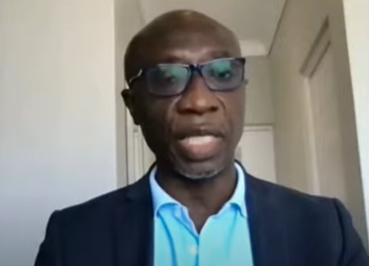
This isn't just another resolution, charlie. It's a landmark moment that has reignited the long-standing debate about historical justice. But before we all start calculating our cheques, a legal eagle from the University of Ghana, Professor Kwadwo Appiagyei-Atua, is here to give us the real chale wote on what this means, and the bumpy road ahead.
Ghana Takes the Lead: A Moment of Pure Akwaaba Pride!
Can we just take a moment? Ghana, our beloved Motherland, spearheaded this groundbreaking resolution. Imagine the pride surging through the veins of every Ghanaian, both home and abroad! This isn't just about history; it's about reclaiming our narrative, standing firm, and demanding that the world acknowledges the immense suffering and lasting damage caused by centuries of brutal enslavement.
For a nation that embraced the 'Year of Return' and 'Beyond the Return', inviting the diaspora back home, this move resonates deeply. It's a testament to our commitment to justice and a powerful reminder that the struggles of our forebears will not be forgotten. Social media is already alight with Ghanaians sharing their pride, discussing the implications, and asking, 'Is this finally it? Are we about to get what's owed?'
The Professor Breaks It Down: A Crucial First Step, But Hold Your Horses!
Speaking on Joy FM’s Super Morning Show, Professor Appiagyei-Atua, a revered expert in International Law and Human Rights, didn't mince words. He called the resolution 'very significant', explaining that it successfully brings back this 'crime of such abominable proportions' to the global spotlight. For far too long, the horrific history of slavery has been downplayed, ignored, or worse, denied. But not anymore!
The Professor emphasized that this renewed prominence ensures that the story resurfaces, and that the crimes committed against our ancestors cannot be buried. It forces a conversation about justice, about finding ways to ensure that reparations are given to those who deserve it, their victims, and their descendants. This isn't just about money; it's about acknowledgement, healing, and addressing the systemic inequalities that are direct legacies of slavery.
The 'But': Why Getting Our Due Won't Be Easy
Now, here's where we need to pump the brakes a little, according to Professor Appiagyei-Atua. While monumental, this UN resolution is not legally binding. And that, my friends, is the catch. The professor pointed out that countries expected to provide compensation, particularly major global powers, are unlikely to cooperate without legal compulsion.
'They will not cooperate because it is not legally binding on them,' he stated bluntly. He further explained that even when international agreements *are* legally binding, enforcement remains a huge challenge. 'If they refuse to comply, there is nothing you can do against them because of the power they hold on the international plane.' It’s a sobering reality check, reminding us that the fight for justice is often a marathon, not a sprint.
Beyond Governments: Who ELSE Owes Up?
The conversation around reparations often focuses solely on states. But Professor Appiagyei-Atua broadened the scope, urging us to look beyond national governments. He reminded us that 'it's not only colonial countries' that benefited from this heinous trade. Many private institutions, companies, banks, and even insurance companies were deeply entangled in the business of treating human beings as mere commodities. Imagine! Some of these institutions are still thriving today.
He also highlighted the historical role of religious institutions, specifically mentioning the Catholic Church, in shaping doctrines like 'terra nullius' (nobody's land) and 'conquest'. These ideologies were cruelly used to justify claiming lands and subjugating people, often under the guise of spreading Christianity. This adds another complex layer to the reparations debate, pointing fingers at powerful entities often shielded from such scrutiny.
The African Way Forward: Unity is Key!
Despite the hurdles, Professor Appiagyei-Atua remains optimistic, offering a strategic path forward. He believes the resolution provides a solid foundation for further action, especially if African countries collaborate closely with other nations affected by slavery. 'What I think we need to do is the AU, working with the Caribbean countries, working with people in the diaspora… to have a joint project where they look at reparations in a critical way,' he advised.
This call for a united front is powerful. By pooling resources, sharing strategies, and speaking with one voice, the affected nations and communities can exert stronger pressure on the international community and those institutions that benefited from the slave trade. It’s a vision of pan-African and diaspora solidarity, turning a moral victory into tangible action.
Money Talks: Linking Reparations to Trade
One of the most intriguing suggestions from Prof. Appiagyei-Atua involves a practical, economic approach. He proposed linking reparations discussions to modern economic engagements. Think about it: if we're entering into trade agreements with nations or companies that historically benefited from slavery, why can't reparations be part of the negotiation?
'If we want to enter into trade agreements… we say that we need to connect that to some reparation or some compensation,' he posited. This is a game-changer! It shifts the conversation from simply appealing to moral conscience to leveraging economic power. It gives African nations a tangible bargaining chip, potentially making the pursuit of reparations a condition for lucrative partnerships. It’s a bold move that could redefine international trade dynamics.
The Road Ahead: Keep Pushing, Keep Fighting!
So, where does this leave us? The UN resolution, spearheaded by Ghana, is a monumental first step. It has pulled the issue of slavery reparations back from the sidelines and placed it firmly on the global agenda. As Professor Appiagyei-Atua wisely put it, 'Like I said, it is not binding… but it brings the issue back and gives us a basis to continue pushing.'
The fight for justice, acknowledgement, and equitable compensation for the historical injustices of slavery is far from over. It will require continued advocacy, strategic alliances, and a persistent, unified voice from Africa and the diaspora. But with Ghana leading the charge and scholars like Professor Appiagyei-Atua providing clear pathways, the hope for true reparations burns brighter than ever before. Let's keep this conversation alive, Ghana. Our history, our future, depends on it!



0 Comments
Leave a Comment
No comments yet. Be the first to share your thoughts!