
Key Takeaways
- Millions of people across the US East Coast are experiencing a prolonged heatwave, with temperatures expected to reach and stay at 38C (100F) for several days.
- The heat index could reach as high as 115F in cities like Washington DC, Philadelphia, and New York over the 4 July weekend.
- The heatwave is raising concerns ahead of President Donald Trump's 4 July celebration and multiple World Cup matches taking place outdoors.
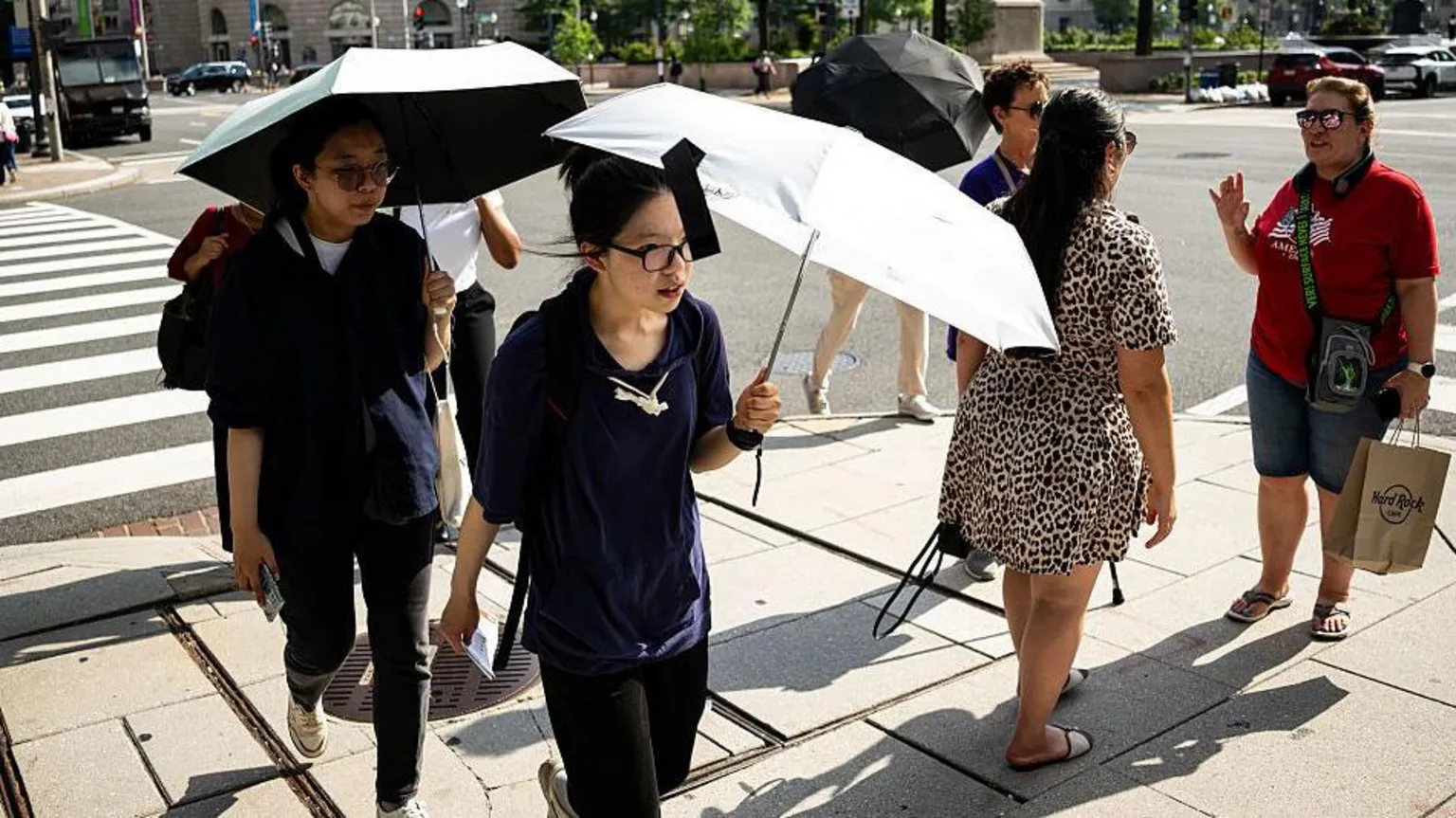
The US East Coast is bracing for a prolonged heatwave, with temperatures expected to reach and stay at 38C (100F) for several days. The National Weather Service has warned of extreme heat warnings, with the heat index - a measure of how hot it feels based on temperature and humidity - set to reach as high as 115F in cities like Washington DC, Philadelphia, and New York over the 4 July weekend.
The heatwave is raising concerns ahead of President Donald Trump's 4 July celebration and multiple World Cup matches taking place outdoors. The stifling heat has been blasting the Midwest and is intensifying into the Northeast and mid-Atlantic states on Thursday and Friday.
Background & Context
The heatwave is part of a larger pattern of extreme heat events across the globe. Europe has been experiencing an unprecedented spell of early summer heat, with record highs across the continent. This is particularly concerning given that heatwaves have become more frequent, more intense, and last longer due to human-induced climate change.
The world has already warmed by about 1.1C since the industrial era began, and temperatures will continue to rise unless governments around the world make steep cuts to emissions. This means that heatwaves like the one currently affecting the US East Coast are likely to become more frequent and severe in the coming years.
Why This Matters
The prolonged heatwave has significant implications for public health, particularly for vulnerable populations such as the elderly and young children. The heat index values set to reach 115F in the coming days will make conditions feel even more oppressive, and the lack of overnight relief will exacerbate the heat-related health risks.
The heatwave also has broader implications for the economy and daily life. The stifling heat will disrupt outdoor events and activities, and the heat dome that is driving the heatwave is expected to persist for several days, leading to power outages and other infrastructure challenges.
Looking Ahead
Temperatures in the Northeast will drop a couple of degrees on 4 July with the threat of severe thunderstorms. However, temperatures will still be well above average, and the heatwave is expected to persist until the weekend. As the heatwave continues to impact the US East Coast, it is essential to prioritize public health and safety, particularly for vulnerable populations.
The prolonged heatwave is a stark reminder of the need for governments and individuals to take action to address climate change. By making steep cuts to emissions and investing in climate-resilient infrastructure, we can mitigate the impacts of extreme heat events like the one currently affecting the US East Coast.
Image Source: https://www.myjoyonline.com/wp-content/uploads/2026/07/image-307.png






0 Comments
Leave a Comment
No comments yet. Be the first to share your thoughts!