
Key Takeaways
- Artificial Intelligence (AI) is fundamentally dependent on human ingenuity and programming.
- Ai lacks key attributes such as consciousness, morality, empathy, and creativity in the fullest sense.
- The future belongs to the human-AI hybrid workforce, where the machine enhances human potential rather than competes with it.
The debate over Artificial Intelligence replacing humans has dominated discussions in boardrooms, classrooms, and policy arenas. However, a critical fact is often overlooked: AI is conceived, coded, and curated by humans. As Elon Musk noted, “AI doesn't have a mind of its own—it's what we feed into it.”
This paper aims to reframe the conversation around AI, not as AI versus humans, but as AI by humans and for humans. I argue that AI will only replace individuals unwilling or unable to evolve with changing technology, not those who actively adapt and lead.
The Human Fingerprint on AI
At its core, AI is an extension of human logic and language. Every neural network, machine-learning model, and data-processing system is built on frameworks written by programmers, researchers, and engineers. According to Fei-Fei Li, co-director of the Stanford Human-Centered AI Institute, “AI reflects the values and data of the people who build it.”
This inherent human authorship is what makes AI a tool rather than a threat. It cannot think or innovate independently beyond the parameters set by its creators. While machine learning allows for pattern recognition and optimization, the ethical judgment, emotional intelligence, and contextual understanding that define humanity are beyond the scope of current AI.
Historical Evidence: Disruption, Not Replacement
Technological revolutions are not new. The Industrial Revolution replaced some jobs but gave rise to entirely new industries. The internet did not wipe out jobs, it transformed them. In fact, a World Economic Forum (WEF) report in 2020 forecasted that while 85 million jobs may be displaced by AI by 2025, 97 million new roles may emerge that are more adapted to the division of labor between humans, machines, and algorithms.
The same WEF report emphasized that skills like creativity, resilience, critical thinking, and emotional intelligence, deeply human traits, will only grow in demand. The evolution is thus not about AI replacing humans, but about humans evolving into new roles that leverage AI as a tool.
Real-World Examples: People Who Adapt Win
Industry leaders such as Dr. Eric Topol of the Cleveland Clinic and experts in AI-driven journalism have noted the benefits of integrating AI into their work. By embracing AI, professionals can enhance their capabilities and remain relevant in an ever-changing landscape.
For instance, in the healthcare sector, AI-assisted radiologists can improve patient outcomes significantly. Similarly, journalists who use AI tools can draft content faster and reach wider audiences, while teachers who adapt AI-driven technologies become more effective.
The Cognitive Gap: Human Versus Machine
AI lacks key attributes such as consciousness, morality, empathy, and creativity in the fullest sense. According to the late Stephen Hawking, “Success in creating AI would be the biggest event in human history… but it might also be the last, unless we learn how to avoid the risks.”
Moreover, AI systems remain prone to bias, hallucinations, and data contamination, all of which require human oversight. The infamous case of Microsoft’s Tay chatbot turning racist within 24 hours online serves as a clear warning: AI is only as ethical and intelligent as the data and guidance it receives from humans.
Who Gets Replaced? The Choice Factor
The harsh truth is not that AI will replace humans, but that it will replace roles, not souls. Those who choose not to learn new skills, stay rigid in outdated methods, or ignore emerging tools will find themselves replaced, not by AI per se, but by humans who use AI better.
In the words of Jack Ma, founder of Alibaba, “We should teach our kids to be creative and independent thinkers… machines are better at remembering, but humans are better at dreaming.”
Conclusion: Programmers Cannot Be Replaced by Their Code
AI is a mirror, not a mind. It reflects the intelligence and limitations of its programmers. As long as humans are the creators, curators, and conscience of AI, they remain irreplaceable. The real threat is not AI itself, but apathy towards progress.
This paper affirms that AI won’t replace humans, but it will replace those who refuse to work with it. The future belongs to the human-AI hybrid workforce, where the machine enhances human potential rather than competes with it.
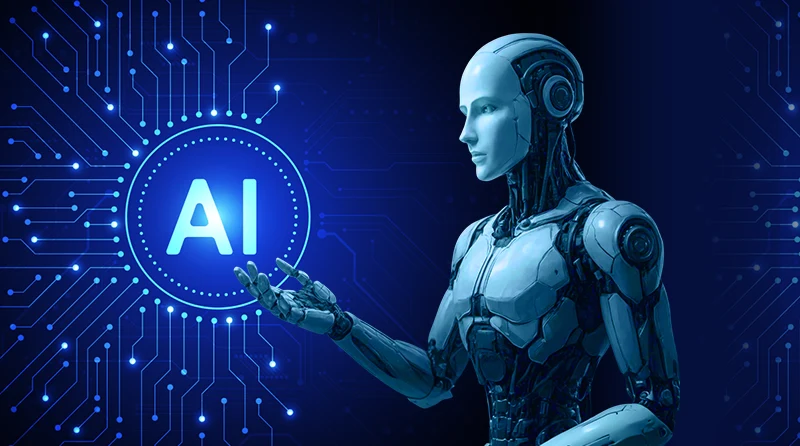
Image Source: https://www.myjoyonline.com/wp-content/uploads/2026/03/Artificial-Intelligence-.webp



0 Comments
Leave a Comment
No comments yet. Be the first to share your thoughts!