
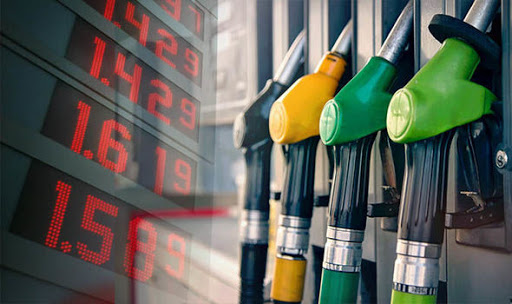
Consumers across Ghana are facing a sharp increase in fuel prices effective today, March 1, 2026, as the first pricing window of the month opens under a cloud of global energy instability. The Chamber of Petroleum Consumers (COPEC) had earlier projected a marginal rise, but a sudden and dramatic escalation in Middle Eastern tensions—specifically a total blockade of the Strait of Hormuz—has sent international crude oil prices spiraling past the $91 per barrel mark. This "maritime standoff," involving a strategic alliance of global naval powers, has effectively choked off 22% of the world's energy supply, leaving local Oil Marketing Companies (OMCs) with little choice but to adjust their pump prices upward.
According to the latest data from COPEC, petrol is expected to see an increase of approximately 3.59%, with prices at the pump likely to range between GH¢11.80 and GH¢13.00 per litre. Diesel is following a similar upward trajectory, projected to rise by 1.52%, selling between GH¢12.73 and GH¢14.00 per litre. These hikes come despite a very slight appreciation of the Ghana Cedi (0.24%) against the US Dollar, which was unfortunately not strong enough to offset the massive spike in international Free On Board (FOB) costs. For many Ghanaian households, the only silver lining is a projected 1.57% decline in Liquefied Petroleum Gas (LPG) prices, providing some minor relief for domestic cooking costs.
The "Iron Triangle" blockade—a term used by COPEC Executive Secretary Duncan Amoah to describe the coordinated naval efforts of Iran, Russia, and China—has created a state of emergency in global energy markets. With the Strait of Hormuz being the primary artery for global oil flow, the impact on non-oil-producing nations like Ghana is immediate. Market leaders like GOIL and Star Oil, which had previously anchored prices near the National Petroleum Authority (NPA) floor to provide relief, are now under immense pressure to realign their pricing to avoid operating at a loss.
For the average Ghanaian commuter and commercial driver, this price jump translates to an immediate increase in the cost of living. Transport unions are already hinting at potential fare adjustments to accommodate the higher operational costs. "The gains we saw in January and early February are being wiped out by global events beyond our control," one commercial driver at the Circle GPRTU station remarked. The government, through the Ministry of Energy, has urged OMCs to exercise restraint to avoid over-burdening the public, but with global crude at $91, the margin for "restraint" is becoming dangerously thin.
As the second pricing window of the year unfolds, all eyes remain on the diplomatic efforts to resolve the maritime standoff in the Middle East. If the blockade persists, analysts warn that the "marginal" increases seen today could be just the beginning of a much larger inflationary wave. For now, motorists are advised to "fuel up" at stations still offering discounted rates before the full impact of the $91-per-barrel reality hits every pump across the nation.



0 Comments
Leave a Comment
No comments yet. Be the first to share your thoughts!