
Key Takeaways
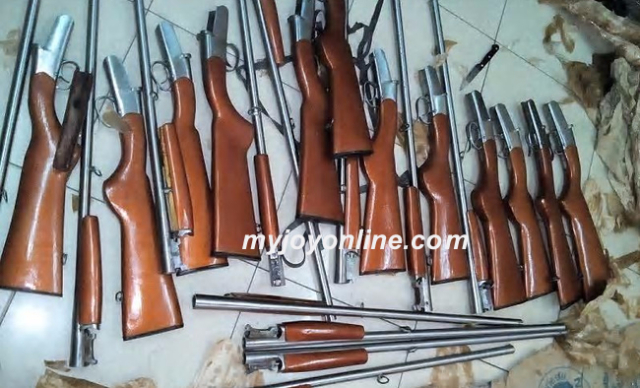
- The government of Ghana has revoked or suspended all existing civilian firearm licences, sparking concerns from civil society organisations.
- The CSOs argue that the policy lacks a clear operational framework, raising questions about the capacity of state institutions to implement the directive.
- The groups have proposed a phased regional audit of firearm licences, publication of a national implementation protocol, and establishment of certified regional firearms training centres.
Ghana's civil society organisations have expressed concerns over the government's decision to revoke or suspend all existing civilian firearm licences, citing confusion, logistical bottlenecks, and legal uncertainty.
The decision, announced by the Minister for the Interior, Muntaka Mohammed-Mubarak, aims to introduce stricter compliance requirements, including mental health screening, drug testing, and practical firearms training.
Background & Context
Ghana's firearms regulatory framework is outdated and fragmented, failing to address modern challenges such as digital firearms databases, ballistic tracing, and private security expansion.
The country is a signatory to ECOWAS and United Nations arms control frameworks, which require the implementation of stricter gun control measures.
In 2020, Ghana conducted a gun amnesty programme, which saw thousands of weapons voluntarily surrendered or regularised. However, the recent directive has raised concerns about the lack of clarity and transparency in the policy-making process.
Public Education and Trust Concerns
The CSOs have criticised the government's inadequate public communication surrounding the directive, arguing that a policy of such magnitude requires nationwide civic education through radio, television, district engagements, and multilingual outreach.
The lack of clarity could undermine public trust, especially following the recent gun amnesty programme, which saw thousands of weapons voluntarily surrendered or regularised.
The CSOs have urged the government to prioritise long-delayed legislative reforms, noting that a new arms bill currently under consideration could modernise Ghana's firearms regulatory framework.
Proposals for Reform
The CSOs have proposed a phased regional audit of firearm licences, publication of a national implementation protocol, and establishment of certified regional firearms training centres beyond Accra.
They have also called for joint public education by security agencies, civil society groups, and regulatory bodies before full enforcement begins.
The CSOs have urged intensified enforcement against illegal arms trafficking, unlicensed weapons manufacturing, and misuse of firearms in chieftaincy disputes, political activities, and violent crimes.
Looking Ahead
The CSOs remain available to support government and security agencies in developing a more 'transparent, predictable, and modern' firearms regulatory system.
The government has been urged to address the concerns raised by the CSOs and ensure that the policy is implemented in a fair and transparent manner.
Image Source: https://www.myjoyonline.com/wp-content/uploads/2023/06/Guns.jpg




0 Comments
Leave a Comment
No comments yet. Be the first to share your thoughts!