
Key Takeaways
- WHO declares Ebola outbreak in DR Congo and Uganda a public health emergency of international concern.
- There have been 600 suspected cases and 139 suspected deaths.
- WHO assesses the risk of the epidemic as high at the national and regional levels and low at the global level.
The World Health Organization (WHO) has warned that it could take up to nine months before a vaccine against the Bundibugyo species of Ebola is ready, as the outbreak in the Democratic Republic of Congo (DR Congo) and Uganda continues to spread.
The WHO has declared the outbreak a public health emergency of international concern, with 600 suspected cases and 139 suspected deaths reported so far.
Background & Context
EBOLA was first discovered in 1976 in what is now DR Congo and is thought to have spread from bats. There are four species of Ebola known to cause disease in humans, including Zaire, which DR Congo has dealt with on numerous occasions.
The Bundibugyo species, which has not been seen for more than a decade, brings its own difficulties as there are fewer tools to stop it. Although less deadly than other Ebola species, the rarity of Bundibugyo means it is harder to treat.
Outbreak Situation
The outbreak in DR Congo has spread to its eastern Ituri province and North Kivu province, with 51 cases confirmed. Two cases have also been confirmed in Uganda's capital, Kampala, both of whom had traveled from DR Congo. One of the two confirmed cases in Uganda has died.
Local health workers say some facilities are being overwhelmed, with personal protective equipment starting to arrive but still not enough to ensure adequate protection.
WHO's Response
The WHO has prioritized the development of a vaccine against the Bundibugyo species, with two possible candidate vaccines currently being developed. However, neither has gone through clinical trials yet.
WHO advisor Dr Vasee Moorthy said that it would likely take six to nine months for one of the possible vaccines to be ready, while the second possible vaccine based on the AstraZeneca platform is currently being manufactured but has no animal data to support its effectiveness.
Market Impact
The outbreak has led to criticism from the US that the WHO was 'a little late' in identifying the outbreak, with WHO chief Dr Tedros Adhanom Ghebreyesus responding that these comments might have been caused by a lack of understanding.
The outbreak has also highlighted the challenges of dealing with the virus in a complex setting such as eastern DR Congo, where years of conflict have added difficulties in dealing with the virus.
Looking Ahead
The WHO has emphasized the need for continued vigilance and cooperation to curb the spread of the virus.
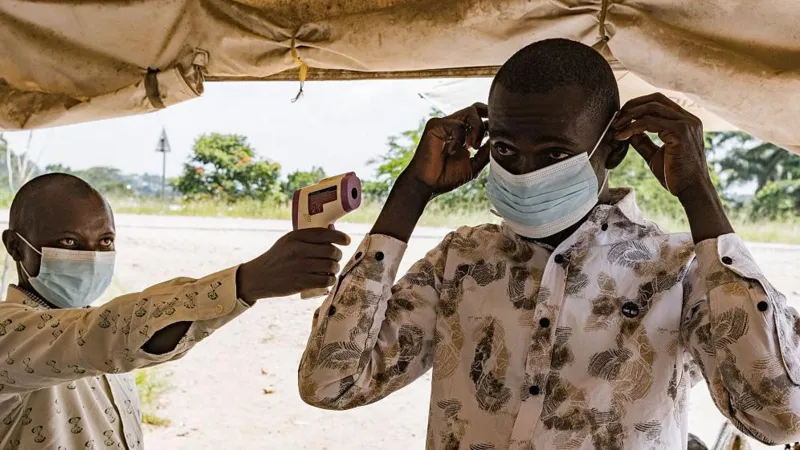
In the meantime, people in the affected areas are taking precautions, such as not shaking hands and observing social distancing measures, to reduce the risk of transmission.
Image Source: https://www.myjoyonline.com/wp-content/uploads/2026/05/e216d3b0-5436-11f1-97ae-1b4b9bb4c9eb.jpg.webp


0 Comments
Leave a Comment
No comments yet. Be the first to share your thoughts!