
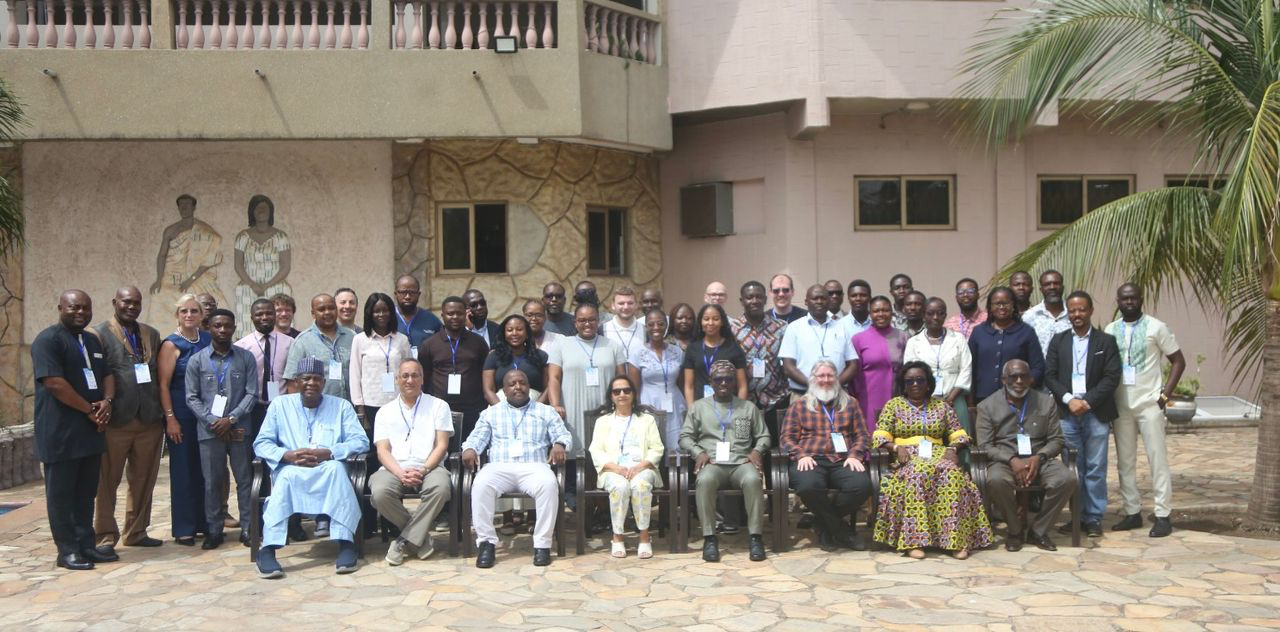
- The Ghana Atomic Energy Commission (GAEC) hosted a high-level international training workshop under the Supra-African Physics Partnership for Health Innovation and Radiotherapy Expansion (SAPPHIRE) Project.
- The workshop aimed to strengthen radiotherapy capacity across Africa through advanced technical training, knowledge exchange, and international collaboration.
- Over 40 participants from Africa, Europe, and North America attended the workshop, which was held from 13 to 18 April 2026 at the Mensvic Hotel in Accra.
- The SAPPHIRE Project is a two-year initiative funded by the United Kingdom's Science and Technology Facilities Council (STFC) under UK Research and Innovation (UKRI) and led by Professor Manjit Dosanjh, University of Oxford.
The workshop, which served as a platform for building human resource capacity and enhancing technical expertise in radiotherapy, brought together leading experts and participants from Ghana, South Africa, Nigeria, Kenya, Rwanda, Uganda, the United Kingdom, Canada, and the United States.
According to the Acting Director-General of GAEC, Professor Francis Hasford, reliable cancer treatment depends not only on equipment availability but also on the presence of skilled medical physicists, engineers, and technical professionals who can operate and maintain complex systems effectively.
Background: Cancer Care Delivery in Africa
Major challenges in cancer care delivery in Africa include shortages of skilled medical physicists and engineers, limited access to advanced radiotherapy technologies, and recurrent breakdowns of medical linear accelerators (LINACs) critical for cancer treatment.
The SAPPHIRE Project addresses these challenges through its two-year initiative, which aims to strengthen radiotherapy capacity across Africa through advanced technical training, knowledge exchange, and international collaboration.
International Collaboration and Capacity Building
The workshop served as a platform for building human resource capacity and enhancing technical expertise in radiotherapy, with participants including medical physicists, clinicians, engineers, and researchers from Ghana, South Africa, Nigeria, Kenya, Rwanda, Uganda, the United Kingdom, Canada, and the United States.
According to Professor Hasford, international collaborations are crucial for technology transfer, research cooperation, and shared learning between African institutions and global leaders in accelerator science and medical physics.
The SAPPHIRE Project aligns with Ghana's national cancer control strategy and broader continental goals to ensure equitable access to life-saving radiotherapy services.
Hands-on Training and Practical Sessions
The workshop featured an intensive programme combining lectures, practical sessions, and field-based learning, with training areas including clinical radiotherapy principles and patient-centred treatment planning, LINAC design, operation, and maintenance, and radiotherapy dosimetry and quality assurance.
Participants also engaged in hands-on engineering and simulation-based training using specialised software (SIMAC), with continued access provided beyond the workshop.
These sessions enhanced understanding of accelerator subsystems and their impact on treatment accuracy, safety, and reliability.
Looking Ahead
The SAPPHIRE Project has provided a framework for technology transfer, research cooperation, and shared learning between African institutions and global leaders in accelerator science and medical physics.
As the project continues, it is expected to strengthen radiotherapy capacity across Africa, improving access to life-saving radiotherapy services and enhancing cancer care delivery in the region.





0 Comments
Leave a Comment
No comments yet. Be the first to share your thoughts!