
Key Takeaways
- Ghana's financial regulators are undergoing a five-day training programme in Malaysia to deepen the country's non-interest banking sector.
- The training focuses on Fintech, mobile money, digital loans, and online insurance to make banking accessible to everyone, including the unbanked.
- The delegation will bring insights and a roadmap for implementing Fintech-driven non-interest banking upon return to Ghana.
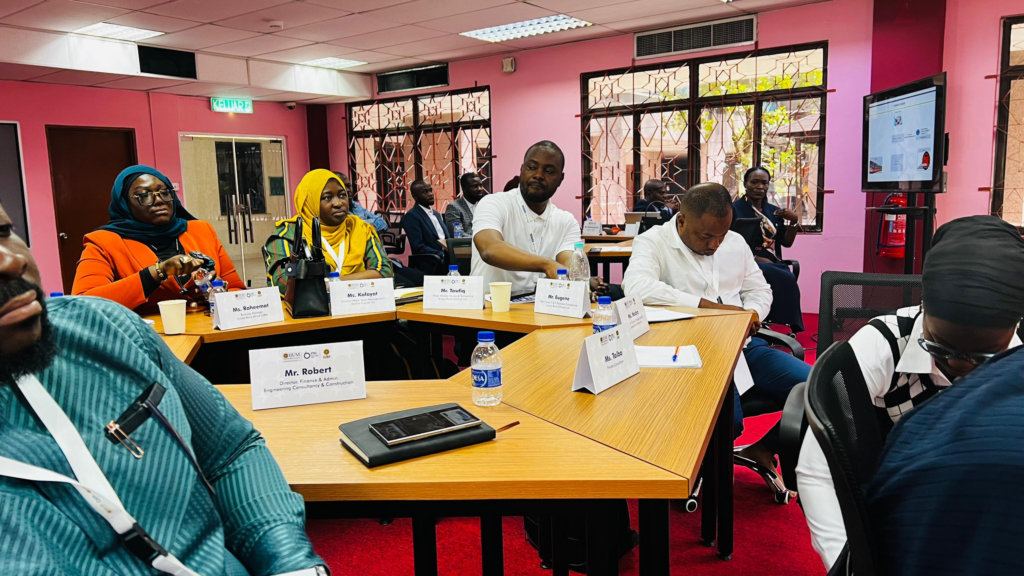
Ghana's financial regulators are currently in Malaysia for a five-day training programme aimed at deepening the country's non-interest banking sector. The delegation, which includes top officials from the Bank of Ghana (BoG), the Securities and Exchange Commission (SEC) and the National Insurance Commission (NIC), is being hosted by the Islamic Finance Research Institute of Ghana (IFRIG) in Kuala Lumpur.
The mission is to study Malaysia's success story in non-interest banking, insurance, and capital markets and bring those lessons back home. On day three of the training, the focus shifted to something increasingly critical for Ghana's financial future: Fintech.
What Is Fintech?
Fintech—short for financial technology—refers to the use of software, apps, and algorithms to deliver financial services faster, cheaper, and more conveniently. This includes mobile money, digital loans, and online insurance, which are increasingly essential in a country like Ghana where mobile money usage is already widespread.
For a country like Ghana, Fintech represents the next step in making banking accessible to everyone, including the millions still unbanked. Experts are telling Ghana that embracing digital finance is crucial to letting markets prosper and helping African markets grow faster.
Malaysia as a Role Model
Malaysia is widely recognised as a global leader in Non-Interest finance. The country has built a strong regulatory framework, a skilled workforce, and a thriving ecosystem for both traditional and digital Non-Interest banking. For Ghana, which is working to deepen its own non-interest banking sector, Malaysia offers a proven model to learn from.
The training is part of Ghana's broader efforts to expand financial inclusion and offer more choices to consumers. Non-interest banking—which operates without charging interest—appeals to many Ghanaians for both religious and ethical reasons. By combining these principles with Fintech, Ghana could reach more people in rural and underserved areas, offer faster and cheaper financial services, attract investment from international Islamic finance institutions, and build a more inclusive financial system.
Challenges Ahead
The challenge now will be for regulators to create the right policies—policies that encourage innovation while protecting consumers. The delegation is expected to return to Ghana with practical insights and a roadmap for implementing Fintech-driven non-interest banking.
With the lessons from Malaysia applied well, Ghanaians could soon see a banking system that is faster, fairer, and more accessible—all from the palm of their hand.
Looking Ahead
The training programme is a significant step towards deepening Ghana's non-interest banking sector and promoting financial inclusion. As the country looks east to shape its financial future, the key will be in creating policies that balance innovation with consumer protection.
The outcome of this training programme will be crucial in determining the future of banking in Ghana. With the right policies and regulations in place, Ghana could become a leader in Fintech-driven non-interest banking and provide a model for other African countries to follow.
Image Source: https://www.myjoyonline.com/wp-content/uploads/2026/06/image-3362-1024x576.png




0 Comments
Leave a Comment
No comments yet. Be the first to share your thoughts!