
Key Takeaways
- The Republic of Uncommon Sense's hospital became overcrowded, with nurses counting available corners and chairs receiving medical promotions.
- Instead of addressing the issue, the hospital suspended the person who informed them that the place was full.
- This approach raises concerns about the prioritization of healthcare over political optics.
- The article emphasizes the need for a national conversation about healthcare capacity and the importance of transparency in addressing healthcare issues.
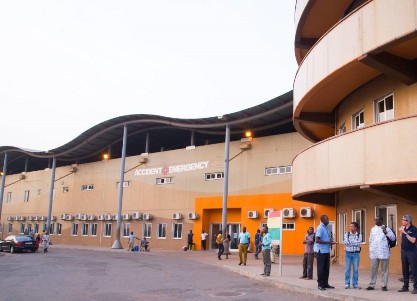
Ghana's healthcare system is at a breaking point, with hospitals overwhelmed and patients waiting outside for treatment. A recent incident at a hospital in the Republic of Uncommon Sense highlights the severity of the crisis.
The hospital, designed to accommodate 37 patients, found itself trying to care for more than sixty individuals, with nurses resorting to counting available corners and chairs being promoted to medical positions. In a bizarre move, the hospital suspended the person who informed them that the place was full, rather than addressing the underlying issue.
Background & Context
Ghana's healthcare system has long struggled with capacity constraints, with many hospitals operating at or above capacity. This has led to delays in treatment, increased wait times, and a heightened risk of hospital-acquired infections.
The current crisis is not unique to this hospital, but rather a symptom of a larger problem. Ghana's healthcare spending as a percentage of GDP is among the lowest in the world, making it challenging for the sector to attract and retain skilled professionals.
The government has made efforts to address the issue, including the introduction of a new national health insurance scheme and the construction of new hospitals. However, more needs to be done to address the underlying issues and provide quality care to all citizens.
Why This Matters
The recent incident at the hospital raises concerns about the prioritization of healthcare over political optics. By suspending the person who informed them that the place was full, the hospital sent a message that revealing capacity constraints is more problematic than the constraints themselves.
This approach is not only misguided but also dangerous. It undermines the public's trust in healthcare professionals and creates a culture of silence around healthcare issues. When professionals are afraid to speak honestly about capacity constraints, shortages, and failures, the public loses its most valuable early warning system.
A nation cannot repair what it refuses to acknowledge. It is time for a national conversation about healthcare capacity and the importance of transparency in addressing healthcare issues. Only then can we ensure that every Ghanaian has access to quality healthcare when they need it.
Looking Ahead
The future of Ghana's healthcare system depends on the government's willingness to address the underlying issues and provide quality care to all citizens. It is time for a comprehensive plan to address capacity constraints, improve healthcare infrastructure, and increase healthcare spending.
The public must also play its part by demanding transparency and accountability from healthcare professionals and the government. Only then can we ensure that every Ghanaian has access to quality healthcare when they need it.
Image Source: https://www.myjoyonline.com/wp-content/uploads/2026/06/KATH_Emergency.jpg





0 Comments
Leave a Comment
No comments yet. Be the first to share your thoughts!