
Key Takeaways
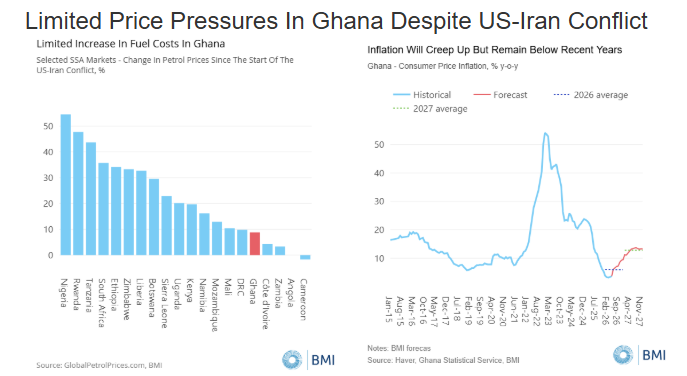
- Ghana's inflation is projected to average 12.8% in 2027, up from 6.0% in 2026, according to Fitch Solutions.
- The upward trend in inflation will weigh heavily on household purchasing power and private consumption.
- The expected increase in inflation is attributed to several factors, including the tighter-than-expected monetary policy stance by the US Federal Reserve and adverse weather conditions.
Ghana's inflation rate is set to surge in the coming years, with Fitch Solutions predicting an average of 12.8% in 2027, a significant jump from the 6.0% recorded in 2026. This upward trend will have a profound impact on household purchasing power and private consumption.
The UK-based firm attributes the expected increase in inflation to several key factors, including the tighter-than-expected monetary policy stance by the US Federal Reserve. This move is expected to weigh on global gold prices and, by extension, Ghana's export earnings.
Background & Context
Ghana has experienced a relatively low inflation environment in recent years, with the inflation rate averaging around 3.5% in 2025. However, the country's economy is vulnerable to external shocks, including changes in global commodity prices and weather patterns.
The sharp revaluation of the cedi in early 2025 has helped contain imported price pressures, but this favorable base effect is expected to fade in the coming months. Additionally, the El Niño weather phenomenon is likely to emerge in the second half of 2026, reducing rainfall and raising temperatures, and adding to food price pressures.
Why This Matters
The projected increase in inflation will have far-reaching consequences for Ghana's economy, including a reduction in household purchasing power and private consumption. This, in turn, will impact the country's broader economic activity, particularly in the second half of 2026 and 2027.
The adverse weather conditions are also expected to constrain cocoa production and place additional strain on electricity generation, further exacerbating the inflationary pressures.
Looking Ahead
The Ghanaian government and central bank will need to take proactive measures to mitigate the impact of the projected increase in inflation. This may include adjusting monetary policy to address the upward trend in prices and implementing policies to boost agricultural production and reduce food price pressures.
Investors and businesses operating in Ghana will also need to be aware of the changing economic landscape and adjust their strategies accordingly to minimize the risks associated with the projected increase in inflation.
Image Source: https://www.myjoyonline.com/wp-content/uploads/2026/06/Screenshot-2026-06-23-055758.png




0 Comments
Leave a Comment
No comments yet. Be the first to share your thoughts!