
Key Takeaways
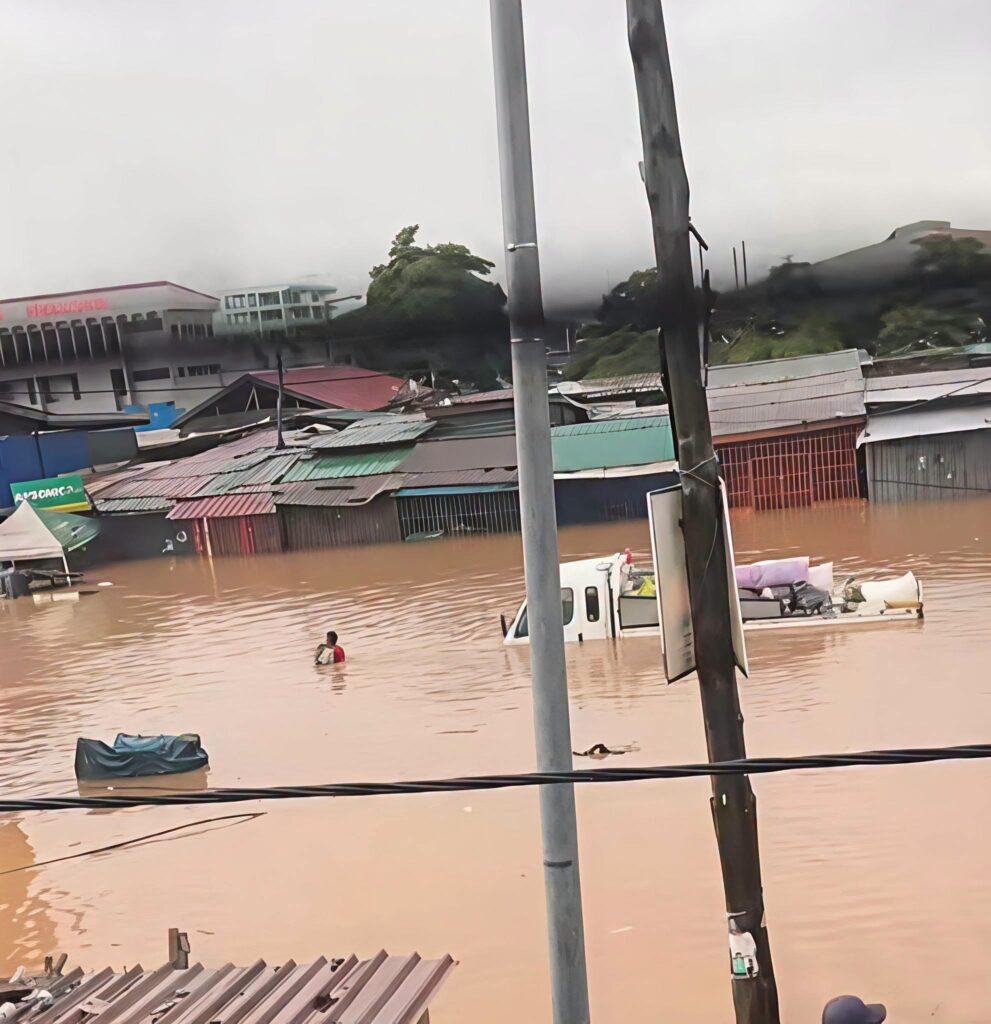
- Heavy flooding has affected Accra, Tema, and surrounding communities, prompting emergency response measures from the government.
- The Minister for Works, Housing and Water Resources, Kenneth Gilbert Adjei, has called on the public to cooperate in efforts to reduce the impact of future floods.
- The government is working with various stakeholders to implement emergency interventions, including the deployment of emergency response teams and the distribution of relief items.
The government has stepped up emergency response measures following widespread flooding in Accra, Tema, and surrounding communities. The Minister for Works, Housing and Water Resources, Kenneth Gilbert Adjei, has called on the public to cooperate in efforts to reduce the impact of future floods.
The Minister led a tour of flood-affected areas with President John Dramani Mahama and members of the Anti-Flood Task Force to assess the extent of the devastation and evaluate long-term remedial measures. He expressed government's sympathies to individuals and families affected by the floods and assured victims of continued support through relief, recovery, and reconstruction efforts.
Background & Context
Flooding in Accra and surrounding areas is a recurring issue, with climate change contributing to the intensity of rainfall and human activities such as encroachment on waterways and indiscriminate dumping of refuse into drains exacerbating the situation.
The Ghana Hydrological Authority, in collaboration with other stakeholders, has been working to implement measures to mitigate the effects of flooding, including the expansion of drainage infrastructure and the strengthening of early warning systems.
However, the recent flooding has highlighted the need for a more concerted effort to address the issue, with the government and other stakeholders working together to implement emergency interventions and long-term remedial measures.
Emergency Response Measures
The government has implemented emergency response measures, including the deployment of emergency response teams, the evacuation of residents where necessary, and the distribution of relief items to displaced persons.
The Minister has also disclosed that enforcement operations to remove illegal structures obstructing drains, waterways, and wetlands will be intensified, while government undertakes major drainage rehabilitation works and constructs new drainage channels to improve stormwater flow.
The government is also advancing broader flood mitigation measures, including expanding drainage infrastructure, strengthening early warning systems, restoring wetlands and lagoons, and enforcing development controls in flood-prone areas.
Public Cooperation Urged
The Minister has appealed to the public to support government's efforts by refraining from dumping waste into drains, avoiding construction on waterways, and complying with environmental and planning regulations.
He has also urged residents, especially those living near rivers, lagoons, and drainage channels, to move to higher ground when necessary, avoid driving or walking through floodwaters, and keep children away from flooded areas.
Looking Ahead
The government's emergency response measures and long-term remedial measures aim to reduce the effects of flooding, safeguard lives and livelihoods, and build safer, more resilient communities.
The success of these efforts will depend on the cooperation of the public, who must work together to address the root causes of flooding and mitigate its effects.
Image Source: https://www.adomonline.com/wp-content/uploads/2026/06/Accra-floods-991x1024.jpeg





0 Comments
Leave a Comment
No comments yet. Be the first to share your thoughts!