

Key Highlights
- The High Court in Adenta has dismissed a lawsuit filed by the La Agbawe Stool seeking to destool Michael Okpoti Mensah, also known as Nii Djata, as the Sub-Chief of Oyarifa.
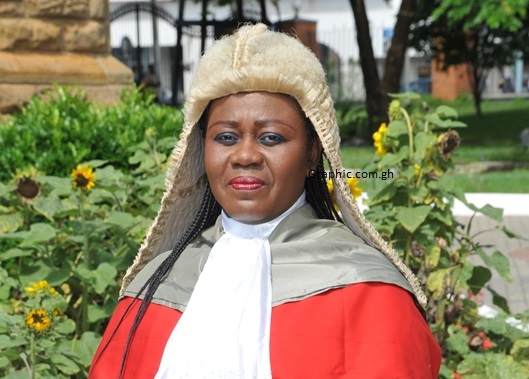
- The court, presided over by Justice Mawuse Bedjrah, ruled that it lacked jurisdiction to hear the matter, citing its classification as a 'cause or matter affecting chieftaincy.'
- This decision followed a successful motion filed by Nii Djata's legal team, arguing that such disputes fall under the purview of traditional councils and houses of chiefs, not the High Court.
- A cost of GH¢5,000 was awarded against the La Agbawe Stool in favor of the Oyarifa Chief.
The High Court in Adenta has unequivocally affirmed the distinct legal framework governing chieftaincy matters in Ghana by dismissing a lawsuit aimed at destooling Michael Okpoti Mensah, also known as Nii Djata, as the Sub-Chief of Oyarifa. The court, presided over by Justice Mawuse Bedjrah, concluded that it lacked the requisite jurisdiction to adjudicate what it deemed a 'cause or matter affecting chieftaincy,' thereby upholding a fundamental principle of Ghana's legal system concerning traditional authority.
This pivotal ruling emerged from a motion filed by the legal representatives of Nii Djata, who is cited as the 1st Defendant in the suit. The motion contended that the nature of the action initiated by the La Agbawe Stool—which sought to challenge the installation of Nii Djata—squarely falls within the domain of chieftaincy disputes. Such disputes, by established legal precedent and statutory provisions, are exclusively handled by specialized traditional institutions, including traditional councils, regional houses of chiefs, and the National House of Chiefs.
The Genesis of the Dispute
The lawsuit was originally initiated by the La Agbawe Stool, represented by Sam Larsey (Head of Nii Owusu We), Daniel Sowah Boye (Head of Otopa We), and Jeffrey Okpoti Adjei (Head of Awua We). They had sued Michael Okpoti Mensah (also known as Nii Sowah Gborgblor/Nii Djata) as the 1st Defendant and Joseph Mensah Odzenma (aka Nii Mensah Odzenma) as the 2nd Defendant. The core of their complaint centered on challenging the legitimacy of the 1st Defendant's installation as the Sub-Chief of Oyarifa, alleging impropriety in the process.
The Plaintiffs' writ sought declarations and reliefs that would effectively nullify Nii Djata's position. This legal challenge underscored the deep-seated disputes that often arise within traditional structures regarding succession, installation, and destoolment. Such matters, while inherently community-focused, frequently intersect with statutory law, leading to complex legal battles over jurisdiction.
Arguments for Lack of Jurisdiction
Nii Djata, through his counsel Abdul-Gafar Ablorh Abordo, vehemently argued for the dismissal of the lawsuit on the grounds of lack of jurisdiction. Counsel for the 1st Defendant asserted that the writ issued by the Plaintiffs unequivocally demanded 'a determination of cause or matter affecting chieftaincy.' This classification is critical because Ghanaian law delineates specific judicial pathways for such disputes, intentionally removing them from the general jurisdiction of the High Court.
Referencing key statutes, Counsel highlighted Section 117(1) of the Courts Act 1993 (Act 459). This section precisely defines a 'cause or matter affecting chieftaincy' as any 'cause, matter, question, or dispute relating to any nomination, election, selection, installation, or deposition of a person as a chief or the claim of a person to be nominated, elected, selected, installed as a chief.' Abdul-Gafar Ablorh Abordo meticulously demonstrated that the Plaintiffs' reliefs, particularly the primary declaration sought, inherently required the court to investigate the legitimacy of Nii Djata's nomination, election, selection, or installation as a sub-chief.
“The determination of such nomination, installation, etc., has not been vested by law in this Court,” Counsel emphasized, citing the authoritative 'Law of Chieftaincy in Ghana' by Justice S.A. Brobbey (pages 232-233). He further elucidated that the Plaintiffs' own statement of claim, specifically paragraphs 6-33, pleaded matters directly concerning Nii Djata's alleged 'surreptitious installation' and the assertion that his installation was 'null and void.' This, in the Defendant's view, made the matter indisputably a chieftaincy dispute.
The defense also underscored that all other reliefs endorsed on the Writ of Summons were contingent upon the determination of the first relief. Therefore, they could not be entertained in isolation. To buttress his argument, Counsel referred to the Supreme Court case of The Republic vs The High Court General Jurisdiction Division, Ex Parte Nii Agyemang Kesse III and Nii Duodu Nsaki II and 4 Others, Interested Parties 2019 DLSC 6500, which affirmed the specialized nature of chieftaincy adjudication.
The Plaintiffs' Opposition
In opposition to the motion to dismiss, Sharon Quartey, Counsel for the Plaintiffs/Respondents, presented a counter-argument. She relied on their affidavit in opposition, filed on 4th March 2026, and additional legal authorities. Her primary contention was that the Plaintiffs' use of the term 'Sub-chief' did not necessarily denote the kind of chieftaincy contemplated under the Chieftaincy Act 2008 (Act 759), Section 57(5).
Counsel Quartey argued that neither the 'Chief' nor 'Sub-chief' of the Agbawe Family of Oyarifa had ever been registered with the National House of Chiefs, nor had their names appeared in the Chieftaincy Bulletin. She posited that this lack of formal recognition by the statutory bodies meant the dispute was not a chieftaincy matter in the eyes of the law. Furthermore, she highlighted that the Plaintiffs consistently referred to their entity as a 'Family' rather than a 'Stool' in their pleadings, suggesting a distinction from traditional chieftaincy structures.
According to the Plaintiffs' counsel, the term 'Sub-chief' was merely used to signify the headship of their family, acknowledging the presence of a substantive chief and overlord of Oyarifa who was not a party to the suit. To support this interpretation, Counsel cited the authority of Republic vs High Court, Koforidua Ex Parte Bediako II, 1997/1998 GLR, page 488, where the Supreme Court held that the mere appearance of the word 'Chief' in pleadings does not automatically classify a matter as a chieftaincy dispute.
The Court's Deliberation and Ruling
After a thorough review of the submissions, supporting affidavits, and legal precedents presented by both parties, Justice Mawuse Bedjrah rendered her judgment. The presiding judge stated that, having carefully considered all documents and arguments, she was firmly convinced that the matter before the court was indeed 'a matter or cause affecting chieftaincy.'
Consequently, Justice Bedjrah granted the 1st Defendant/Applicant’s motion, dismissing the Plaintiffs’ suit due to lack of jurisdiction. “Accordingly, the suit is dismissed for lack of jurisdiction,” the Court ruled. In addition to the dismissal, a cost of GH¢5,000 was awarded against the Plaintiffs (Respondents) in favor of the 1st Defendant (Applicant), reinforcing the financial implications of pursuing litigation in the wrong forum.
Historical Context and Legal Framework of Chieftaincy in Ghana
The High Court’s decision is not an isolated legal technicality but a reinforcement of a deeply entrenched principle within Ghana's constitutional and legal architecture. Chieftaincy holds a revered and constitutionally protected status in Ghana, as enshrined in Chapter 27 of the 1992 Constitution. Chiefs are not merely traditional leaders; they are integral to local governance, cultural preservation, and dispute resolution at the community level. Their roles often extend to land administration, development initiatives, and upholding customary law.
The legal framework for chieftaincy disputes is meticulously outlined in the Chieftaincy Act 2008 (Act 759) and the Courts Act 1993 (Act 459). These statutes create a specialized hierarchy of judicial bodies for chieftaincy matters: Traditional Councils, Regional Houses of Chiefs, and the National House of Chiefs. These bodies are equipped with the customary knowledge, historical understanding, and legal expertise specific to traditional leadership disputes, which often involve complex genealogical, customary, and historical factors that regular courts may not be best suited to interpret.
The rationale behind excluding the High Court's general jurisdiction from chieftaincy matters is twofold. Firstly, it safeguards the integrity and autonomy of traditional institutions, allowing them to resolve internal disputes according to customary law and established traditions. Secondly, it prevents the ordinary courts, which operate primarily on common law and statutory principles, from becoming entangled in the nuanced and often culturally sensitive intricacies of chieftaincy succession and authority. This demarcation ensures that traditional structures retain their authority and that their decisions are respected within their designated legal sphere.
Implications for Chieftaincy Adjudication
This ruling serves as a crucial reminder of the strict jurisdictional boundaries in Ghanaian law, particularly concerning chieftaincy. It reinforces the principle that parties involved in disputes over traditional leadership, whether involving a paramount chief, divisional chief, or sub-chief, must channel their grievances through the established traditional and quasi-judicial hierarchy. Any attempt to circumvent these designated channels by directly approaching the High Court for matters clearly defined as 'causes or matters affecting chieftaincy' is likely to be met with dismissal on jurisdictional grounds.
The decision also highlights the importance of precise legal interpretation, as demonstrated by the contrasting arguments over the term 'Sub-chief' and its recognition under the Chieftaincy Act. The court's ruling indicates that even if a traditional leader is not formally registered with the National House of Chiefs, the essence of the dispute—whether it pertains to nomination, installation, or destoolment—can still classify it as a chieftaincy matter, thereby attracting the specialized jurisdiction.
Next Steps for the La Agbawe Stool
Following this dismissal, the La Agbawe Stool now faces a critical juncture. Their options may include appealing the High Court’s jurisdictional ruling to a higher court, such as the Court of Appeal, to challenge the interpretation of what constitutes a 'cause or matter affecting chieftaincy' in this specific context. Alternatively, they might be compelled to reconsider their strategy and initiate their action within the appropriate traditional judicial forum, starting with the relevant Traditional Council, which has the primary jurisdiction over such local chieftaincy disputes.
Regardless of the path chosen, this High Court judgment underscores the enduring importance of understanding and adhering to the nuanced legal landscape of chieftaincy in Ghana. It serves as a significant affirmation of the constitutional provisions safeguarding traditional institutions and their specialized mechanisms for dispute resolution.



0 Comments
Leave a Comment
No comments yet. Be the first to share your thoughts!