
Key Highlights
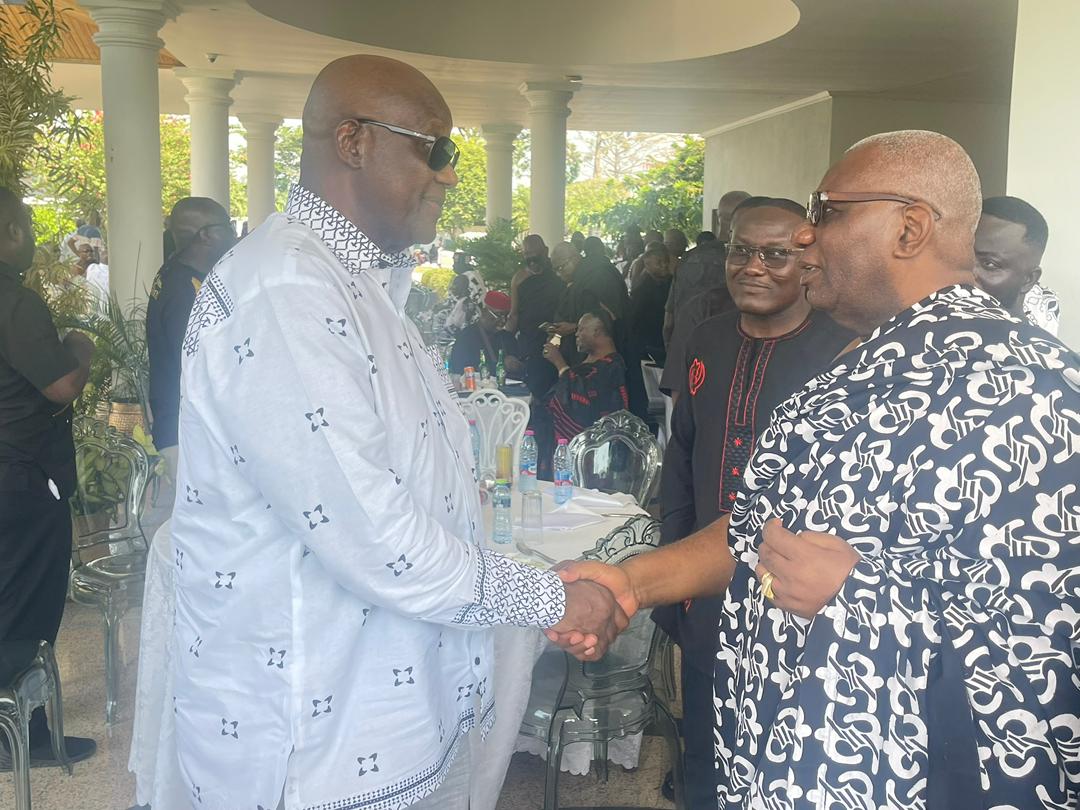
- Former National Chairman Paul Awentami Afoko, seeking re-election, interacted cordially with other New Patriotic Party (NPP) national executive aspirants at a funeral in Jamasi, Ashanti Region.
- The gathering, marking the final funeral rites for the late Obaapa Elizabeth Owusu Kwaaso, mother of former Chief of Staff Kwadwo Okyere Mpiani, served as an informal platform for high-profile party figures.
- Prominent aspirants including Boakye Agyarko, John Boadu, Edward Akwasi Boateng, and Stephen Asamoah Boateng engaged in friendly exchanges, with observers noting a positive shift towards unity.
- The presence of former President John Agyekum Kufuor and President Nana Addo Dankwa Akufo-Addo underscored the significance of the convergence, highlighting an emphasis on party cohesion ahead of crucial internal elections.
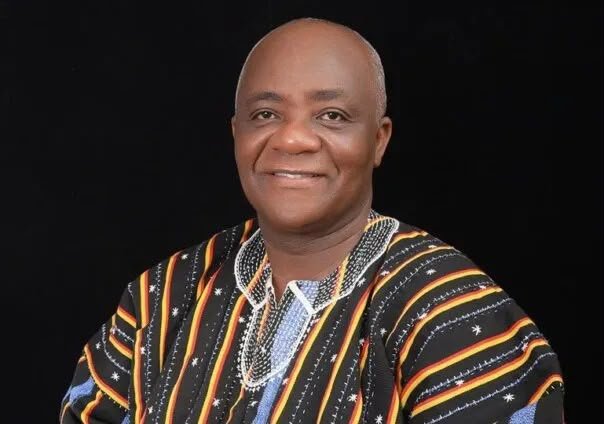
JAMASI, ASHANTI REGION – A convergence of prominent New Patriotic Party (NPP) figures, including several aspirants for the party’s National Chairmanship, at Jamasi in the Ashanti Region has sparked discussions regarding potential shifts in intra-party dynamics. The occasion, a solemn one, was the final funeral rites for the late Obaapa Elizabeth Owusu Kwaaso, mother of former Chief of Staff Kwadwo Okyere Mpiani. Notably, former National Chairman Paul Awentami Afoko, who is actively pursuing a return to the party’s top executive position, was seen engaging in cordial interactions with his fellow contenders, setting a tone of unity that resonated with onlookers and party faithful.
The gathering drew a significant number of high-profile personalities, underscoring the political and social importance of such traditional events in Ghana. Among those present were former Energy Minister Boakye Agyarko, former National Organiser John Boadu, Ghanaian diplomat Edward Akwasi Boateng, and former Minister for Chieftaincy and Religious Affairs Stephen Asamoah Boateng. All these individuals have publicly declared their intentions to contest for the coveted National Chairmanship role, making their collective presence and public display of camaraderie particularly noteworthy.
Beyond the aspirants, the event was graced by the venerable presence of former President John Agyekum Kufuor and the sitting President, Nana Addo Dankwa Akufo-Addo. Mr. Afoko, in particular, was observed in earnest conversation with both current and former leaders, a sight that many believe holds significant symbolism for a party often perceived to be grappling with internal factions and divisions. The interactions among the aspirants, characterized by shared pleasantries and light moments, drew commendation from attendees, some of whom expressed optimism about a gradual return of desired unity within the party.
The Significance of Paul Afoko's Presence and Interactions
Paul Awentami Afoko's journey within the NPP has been one marked by both ascent and controversy. His election as National Chairman in 2014 was seen as a pivotal moment, positioning him at the helm during a critical period for the party. However, his tenure was abruptly cut short in 2015 when he was controversially suspended indefinitely by the party’s National Executive Committee on grounds of misconduct. This decision triggered a protracted legal battle and led to significant internal divisions, with factions emerging in support of and against his leadership.
His suspension left a lasting imprint on the party's internal politics, contributing to a period of introspection and sometimes overt disunity. For years, Mr. Afoko remained largely out of the mainstream executive discourse, though he never entirely disavowed his commitment to the NPP. His current bid to reclaim the National Chairmanship is therefore viewed with keen interest, not merely as an attempt to return to power, but as a potential bellwether for reconciliation and realignment within the party's hierarchical structures. His visible engagement with his former accusers, fellow aspirants, and top party leadership at Jamasi cannot be understated. It suggests a willingness to bridge past divides and project an image of a cohesive front, crucial for any political party gearing up for future electoral challenges.
The interactions at the funeral underscore a pragmatic approach to political engagement, where personal relationships and collective party interests often transcend historical grievances. For Mr. Afoko, this public display of unity with figures with whom he may have had past disagreements, including those who were part of the executive structures that sanctioned his suspension, represents a significant step towards rebuilding trust and demonstrating his commitment to the party's overarching objectives. It is an implicit acknowledgment that the future of the NPP hinges on its ability to present a united front, particularly as it navigates both internal party elections and national political contests.
NPP National Executive Elections: A Broader Context
The contest for national executive positions within the NPP is always a fiercely fought affair, reflecting the democratic vibrancy within the party, but also occasionally exposing underlying tensions. These elections are crucial as they determine the strategic direction and leadership that will guide the party through upcoming general elections. The National Chairman, in particular, plays a critical role in party organization, mobilization, and communication, serving as the administrative and political head of the party machinery.
With the next general elections on the horizon, the selection of competent and unifying leadership is paramount for the NPP. The array of high-caliber individuals vying for the National Chairmanship — from experienced administrators like Mr. Boadu, to seasoned politicians like Mr. Agyarko and Mr. Asamoah Boateng, and a re-emergent figure like Mr. Afoko — points to a robust internal democratic process. However, the intensity of these contests can sometimes leave lingering scars, making calls for unity and cohesion, such as those observed at Jamasi, all the more vital.
The Ashanti Region, where Jamasi is located, holds particular significance for the NPP. It is widely regarded as the party's electoral stronghold, consistently delivering a substantial number of votes in national elections. Therefore, any event that brings together the party’s leadership and aspirants in this crucial region carries added weight. The messages of unity propagated at such gatherings are not just for internal consumption but also aim to reassure the party's loyal base and project an image of stability and purpose to the wider Ghanaian electorate.
The Role of Traditional Gatherings in Ghanaian Politics
In Ghanaian society, funerals extend beyond mere commemorative events; they serve as significant social and political convergence points. These occasions bring together diverse segments of society, offering unique platforms for informal networking, reconciliation, and sometimes, even subtle political maneuvering. The somber atmosphere often encourages a degree of decorum and mutual respect that might be harder to achieve in formal political settings.
The Jamasi funeral exemplified this cultural phenomenon. It provided an opportune, yet respectful, setting for political rivals to interact, exchange pleasantries, and engage in dialogue that could foster understanding and mend fences. Such informal interactions are often critical in a political landscape where direct confrontation can be counterproductive. The shared grief over the loss of Obaapa Elizabeth Owusu Kwaaso created a common human experience that transcended partisan divisions, allowing for a softening of political postures.
The observers’ remarks about the apparent return of unity within the NPP highlight the public’s yearning for political cohesion. For a party to effectively govern or contend for power, internal strife can be a significant impediment. Therefore, any signs of collaboration and mutual respect, even at an informal event like a funeral, are often welcomed by the electorate as indicators of maturity and readiness for leadership.
Honouring Obaapa Elizabeth Owusu Kwaaso
While the political interactions garnered significant attention, the primary purpose of the gathering was to mourn and celebrate the life of Obaapa Elizabeth Owusu Kwaaso, who passed away at the remarkable age of 103. A matriarch who gave birth to Kwadwo Okyere Mpiani at the age of 18, Obaapa Owusu Kwaaso’s long life was celebrated with a requiem Mass at St Michael’s Catholic Church, Jamasi, before her mortal remains were interred at the family house. Her legacy, particularly through her son’s distinguished service as a former Chief of Staff, undoubtedly contributed to the high attendance and dignified atmosphere of the funeral. The political figures present also took turns to formally greet Mr. Mpiani and express their condolences, acknowledging the profound loss to his family.
Conclusion
The gathering in Jamasi, ostensibly a private occasion of mourning, transformed into a significant public display of political engagement and potential reconciliation within the New Patriotic Party. The sight of Paul Awentami Afoko, a figure whose past leadership was marred by controversy and division, interacting amicably with current and former party leaders, as well as his fellow National Chairmanship aspirants, offers a hopeful sign. It suggests a collective recognition of the imperative for unity as the NPP prepares for crucial internal leadership contests and future national elections. While these interactions are but one step in a potentially long process of genuine cohesion, they represent a powerful symbol of political maturity and a commitment to collective party interests, observed on a solemn occasion that transcended typical political divides.
0 Comments
Leave a Comment
No comments yet. Be the first to share your thoughts!