
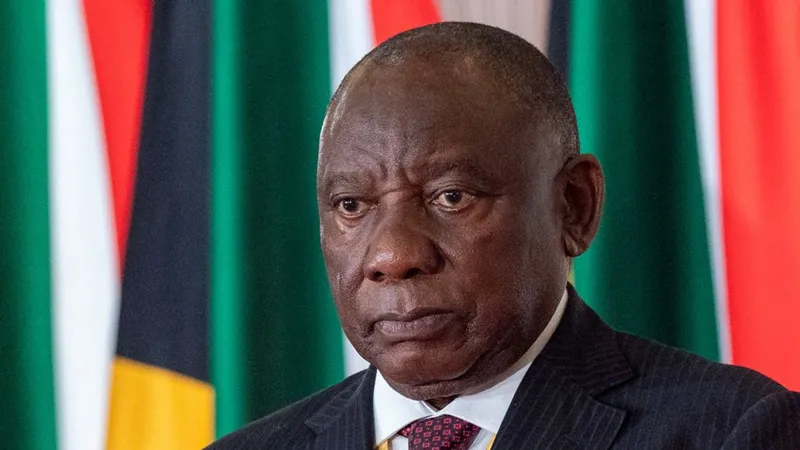
Key Takeaways
- Cyril Ramaphosa, South Africa's president, is facing impeachment proceedings over a scandal known as 'Farmgate', which involves allegations of theft and corruption.
- Ramaphosa is accused of hiding a theft of $580,000 from his private farm in 2020 and violating exchange control laws.
- The president's ANC party has lost its majority in parliament, making it more difficult for him to maintain his position.
Ramaphosa's presidency is under threat as a coalition government faces a constitutional crisis. The 'Farmgate' scandal, which started with a break-in at the president's farm, has escalated into an impeachment process that could see Ramaphosa removed from office.
The scandal began in 2020 when thieves broke into Ramaphosa's farm and stole $580,000 in US dollar bills. The incident was initially downplayed by the president, but it resurfaced in 2022 when the country's former spy chief, Arthur Fraser, accused Ramaphosa of hiding the theft from the police and tax authorities.
Background & Context
The 'Farmgate' scandal is not the first time Ramaphosa has faced allegations of corruption. In 2016, he faced criticism for his ties to a wealthy business friend, Patrice Motsepe, who had allegedly benefited from Ramaphosa's influence in the mining industry.
South Africa's politics have been marred by corruption and scandals in recent years. The country's former president, Jacob Zuma, was impeached in 2016 over allegations of corruption and abuse of power.
Why This Matters
The 'Farmgate' scandal has significant implications for Ramaphosa's presidency and the ANC party's reputation. If Ramaphosa is impeached, it could lead to a leadership crisis within the ANC and potentially destabilize the coalition government.
The scandal also highlights the need for greater transparency and accountability in South Africa's government. The country's citizens have been calling for action against corruption and mismanagement, and the 'Farmgate' scandal has brought attention to the need for reform.
The Impeachment Process
The impeachment process in South Africa is complex and involves several steps. First, a complaint is lodged with the National Assembly, which then establishes an independent panel to investigate the allegations.
The panel's report is then presented to the National Assembly, which votes on whether to proceed with impeachment. If two-thirds of the MPs vote in favor, the president is removed from office.
Looking Ahead
The outcome of the impeachment process is uncertain, but it is likely to have significant consequences for Ramaphosa's presidency and the ANC party. The scandal has highlighted the need for greater transparency and accountability in South Africa's government, and it could lead to a leadership crisis within the ANC.
The 'Farmgate' scandal is a reminder that corruption and mismanagement can have far-reaching consequences for a country's politics and economy. As South Africa navigates this crisis, it is essential to prioritize transparency, accountability, and good governance.
Image Source: https://www.myjoyonline.com/wp-content/uploads/2026/05/a6248f50-5922-11f1-8b8c-6d33e1d5abb6.jpg.webp




0 Comments
Leave a Comment
No comments yet. Be the first to share your thoughts!