- Ghana led a monumental resolution at the United Nations General Assembly, declaring the Transatlantic Slave Trade as the 'gravest crime against humanity' and demanding reparatory justice.
- Despite overwhelming global support, powerful nations like the United States, Israel, and Argentina shockingly voted against the resolution, with many others abstaining.
- Their opposition, disguised as legal complexities, exposes a deep-seated reluctance to confront historical accountability and pay long-overdue reparations.
- This pivotal moment forces Africa to rethink its global alliances, emphasizing self-dignity and a deliberate pivot towards the Global South for genuine partnership.
It’s a feeling that burns deep within every Ghanaian youth who understands history – a righteous anger, not blind fury, but the kind sparked by witnessing repeated hypocrisy masquerading as principle. Once again, the so-called
Global North has brazenly revealed its moral inconsistencies, its selective memory, and its profound discomfort with uncomfortable truths, all hidden behind the convenient jargon of law and diplomacy.
Ghana’s resolution at the
United Nations was no spur-of-the-moment outburst. It was a calculated, morally potent intervention, firmly rooted in undeniable history, raw truth, and the unyielding quest for justice. By boldly calling on the world to acknowledge the barbaric
Transatlantic Trafficking of Enslaved Africans and racialized chattel slavery as the most egregious crime ever committed against humanity, and by demanding serious engagement with reparatory justice,
Ghana courageously forced the international community to confront a brutal truth it has long tried to bury, delay, or outright ignore.
The Shocking Vote: Who Dared to Say NO?
The response from certain quarters has been nothing short of scandalous. On March 25, 2026, the
United Nations General Assembly adopted Ghana’s groundbreaking resolution with an overwhelming majority of nations supporting it. Yet, in a move that sent shockwaves through the diaspora and across the continent, the
United States,
Israel, and
Argentina shamelessly voted against it. Many other nations opted for the cowardly path of abstention, sidestepping accountability under the guise of diplomatic neutrality.
Their justification? The
United States argued that crimes against humanity cannot and should not be ranked, and that reparations for acts predating modern international law raise insurmountable legal complexities. On the surface, this might sound like a principled legal stance. But dig deeper, and you’ll realize it's neither principled nor remotely convincing. It’s a classic move from the playbook of evasion.
The Great Deception: "Crimes Cannot Be Ranked"
The claim that crimes cannot be ranked is a house of cards that collapses under the weight of both law and basic logic. Every single legal system on Earth ranks crimes. That's precisely why a petty theft is never punished with the same severity as a brutal murder, and murder is not equated with genocide. Even within international criminal law, there are clear distinctions between categories of atrocity based on their scale, intent, brutality, and devastating long-term consequences. Our entire framework of sentencing, historical judgment, and collective memory relies on these critical distinctions.
To suddenly insist that crimes against humanity must all exist on a flat moral plane is not legal sophistication; it is a transparent attempt at avoidance. It’s a convenient smokescreen designed to escape responsibility. Once this flimsy argument is exposed, the real, uncomfortable question becomes unavoidable: What happens when we honestly assess the
Transatlantic Slave Trade using those very criteria of scale, intent, brutality, and long-term consequences?
The Uncomfortable Truth: Unpacking The Gravest Crime
The answer, though uncomfortable, is crystal clear. The
Transatlantic Slave Trade was not a mere historical event. It was a centuries-long, meticulously organized global system that forcibly displaced over twelve million
Africans, reducing human beings to inheritable property, and cementing a racial ideology that shamefully continues to shape the modern world. It was a monstrous enterprise financed, insured, and protected by powerful states and commercial interests of the
Global North. It was not incidental; it was structural, systemic, and foundational.
More importantly, its catastrophic consequences did not vanish with abolition. They evolved. This brutal system laid the economic bedrock of modern global capitalism, restructured entire continents, and produced enduring patterns of staggering inequality that remain glaringly visible today in wealth distribution, political power, and social hierarchy. In this profound sense, the
Transatlantic Slave Trade was not only destructive in its time; it was actively generative of long-term global imbalance. No other historical atrocity combines this terrifying scale, this excruciating duration, this level of economic exploitation, this dehumanizing racialization, and these devastating intergenerational consequences in quite the same way.
A Legacy That Haunts Us Today
For us, the youth of
Ghana and
Africa, these aren’t just dusty historical facts. This is the living legacy that shapes our present reality. The economic disparities, the underdevelopment, the systemic biases we still face are direct descendants of this unparalleled crime. Our ancestors' stolen labour, their dignity stripped, their futures violently erased, built the very foundations of the wealth and power enjoyed by nations that now refuse to acknowledge their culpability. This isn't ancient history; it's a wound that festers, demanding healing and justice.
False Equivalencies: The Holocaust & Rwandan Genocide
It’s at this juncture that critics often resort to introducing the
Holocaust as a counterweight, subtly suggesting that recognizing the
Transatlantic Slave Trade in this unique way somehow diminishes the singular horror of that event. This argument fundamentally fails. The
Holocaust remains one of the most systematic and brutal campaigns of extermination in human history, resulting in the murder of approximately six million
Jews within a relatively short period between 1933 and 1945. Its intent and execution must never, ever be minimized.
But acknowledging that profound truth does not demand intellectual paralysis or moral exclusivity. A mature moral framework necessitates comparative clarity, not selective silence. Even beyond the
Holocaust, history records other catastrophic episodes, such as the
Rwandan Genocide, where roughly eight hundred thousand people were slaughtered in a mere hundred days. That tragedy starkly demonstrates the terrifying speed and intensity of organized human violence. Yet, intensity alone cannot be the sole measure of historical gravity. Duration, systemization, economic purpose, and lasting global impact must also be considered with equal weight.
When these factors are assessed holistically, the distinct, unparalleled nature of the
Transatlantic Slave Trade becomes undeniable. It was slower but infinitely wider, less concentrated in time but far more prolonged, and uniquely structured to reproduce itself across generations. It did not merely kill; it transformed human beings into commodities, systematically dismantled thriving civilizations, and permanently reordered the global system. Its enduring afterlife continues to shape the lived realities of millions of people of
African descent across the globe today. That, my friends, is what makes
Ghana’s claim not only defensible but absolutely necessary.
The Glaring Inconsistency: Unveiling the Hypocrisy
Against this stark backdrop, the positions taken by the opposing states reveal a deeper, more troubling inconsistency. When a state like
Israel, established in 1948 and profoundly shaped by the historical memory of the
Holocaust, resists such a vital recognition, it raises fundamental questions about the universality of justice. Recognition of one historical injustice can never become the pretext for denying another. Justice, if it is to mean anything at all, must be applied consistently, across the board.
Likewise,
Argentina’s position is deeply troubling, given its own historical record of racial erasure and violence against populations of
African descent. And for those who abstained, hiding behind the polite language of diplomacy, the reality is painfully clear: what is presented as neutrality is almost always a thinly veiled reflection of discomfort with accountability. It's a refusal to stand on the right side of history.
Reparations: Too Complex or Just Unwilling?
The debate over reparations further exposes this infuriating reluctance. Critics argue that reparations are simply too complex to calculate, that responsibility is too diffused across history, and that alleged
African participation in the trade complicates any claim. Yet, these arguments do not withstand even the slightest scrutiny. While local intermediaries regrettably existed, they did not design, finance, globalize, or sustain the transoceanic system. The primary architects and ultimate beneficiaries were unequivocally European powers and their extensive economic extensions.
Crucially, complexity has *never* prevented action where there was genuine political will.
Germany, for instance, developed comprehensive compensation frameworks and has paid substantial reparations in connection with the
Holocaust. The principle has already been accepted, validated, and implemented. What is glaringly absent now is not legal possibility, but pure moral courage and the political will to do what is right. It’s a call for justice, not charity.
The Path Forward: Africa's Moment of Truth
Ultimately,
Ghana’s resolution forces a long-overdue, honest reckoning. This is not about pitting tragedies against each other or diminishing the suffering of any people. It is about naming a historical reality with unflinching clarity and unwavering honesty. There has simply never been a system in human history that has produced such a prolonged, global, and structurally embedded pattern of human suffering as the
Transatlantic Slave Trade.
To recognize that is not to rewrite history; it is to finally tell the unvarnished truth. And as we, the youth of
Africa, move forward, we must watch with the eagle eye of our ancestors. We must critically rethink our alignments, re-evaluate our dependencies, and redefine our place in a world that shamefully continues to deny us full historical justice. If we must partner, then let it be with those whose histories are not written on our backs, with those who understand mutual respect. Let us align deliberately with the
Global South, including emerging powers like
China, whose paths have not been built on our enslavement or the mockery of our very existence.
Because in the end, dignity is not something to be negotiated, and justice, especially for the gravest crimes against humanity, is most certainly not something to be applied selectively. The time for true accountability is now. This powerful message by
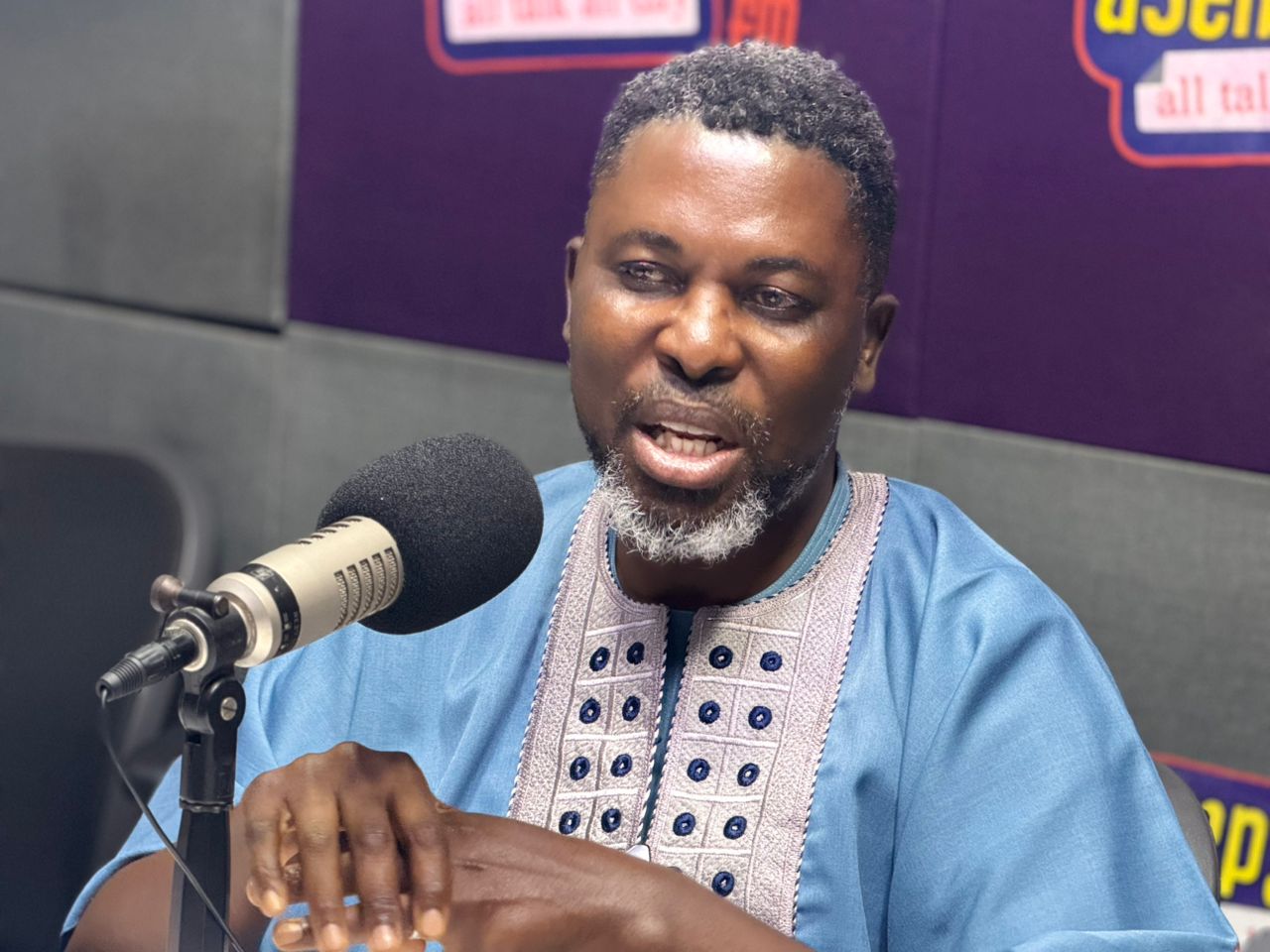
Dr. Manasseh Mawufemor Mintah resonates deeply with every awakened
African soul. The world has been put on notice.




0 Comments
Leave a Comment
No comments yet. Be the first to share your thoughts!