
Key Takeaways
- Professor Isaac Wiafe of the University of Ghana calls for a human-centred approach to artificial intelligence (AI) to address the country's development challenges.
- The AI-first approach prioritizes foreign technologies over local needs, cultural preservation, and community empowerment.
- Ghana needs to develop AI systems that understand local languages, reflect Ghanaian culture, and solve everyday problems.
- The country must invest in local language datasets, train AI experts, and develop efficient AI systems designed for Ghana's unique needs.
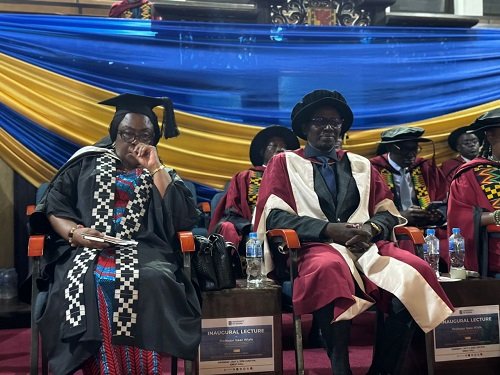
Professor Isaac Wiafe, a renowned computer scientist at the University of Ghana, has emphasized the need for a human-centred approach to artificial intelligence (AI) in addressing the country's development challenges. Delivering his inaugural lecture at the University of Ghana's Great Hall, Prof. Wiafe argued that AI has become one of the most influential technologies worldwide, but its current form offers limited value to Ghana due to its design using foreign priorities, datasets, and assumptions.
According to Prof. Wiafe, AI awareness alone is not enough for development, and technology only becomes useful when it changes decisions, influences behavior, and improves people's lives. He noted that while Ghana's informal sector employs between 70 and 80 percent of the country's workforce, it contributes only about 27 percent of the Gross Domestic Product (GDP), indicating that most workers are not benefiting from AI-driven productivity.
Background & Context
Ghana has made significant strides in embracing technology, including the launch of the Ghana Digital Centre and the promotion of e-government services. However, the country still faces challenges in harnessing the full potential of AI to drive development. The lack of local language datasets, inadequate digital infrastructure, and limited AI expertise are some of the key barriers to the effective adoption of AI in Ghana.
The global AI ecosystem has raised concerns about the risks of digital dependence, weakening local innovation, and increasing inequalities. Countries like Ghana must play a greater role in developing AI systems that reflect their languages, cultures, and development priorities instead of relying entirely on technologies created elsewhere.
Why This Matters
The adoption of a human-centred AI approach in Ghana has significant implications for the country's development trajectory. By prioritizing local needs, indigenous knowledge, cultural preservation, and community empowerment, Ghana can unlock the full potential of AI to drive inclusive national development.
The proposed measures by Prof. Wiafe, including building a national data infrastructure, investing in local language datasets, and training AI experts, are crucial steps towards developing AI systems that address the country's unique challenges.
Looking Ahead
The University of Ghana has already made significant strides in AI research and innovation, with researchers developing AI tools such as speech technologies for Ghanaian languages, health chatbots, and digital platforms designed to support persons with disabilities. However, more needs to be done to ensure that Ghana's development priorities are reflected in the design and implementation of AI systems.
The call by Prof. Wiafe for a human-centred approach to AI resonates with the need for a more inclusive and equitable digital transformation in Ghana. By working together, universities, research institutions, policymakers, and the private sector can develop AI solutions that improve agriculture, healthcare, education, business, and services for persons with disabilities.
Image Source: https://ghanaiantimes.com.gh/wp-content/uploads/2026/07/WhatsApp-Image-2026-07-06-at-13.17.25.jpeg




0 Comments
Leave a Comment
No comments yet. Be the first to share your thoughts!