
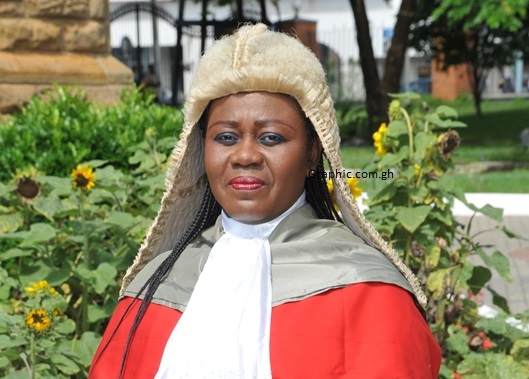
Key Takeaways
- MP John Darko describes removal proceedings against Chief Justice Gertrude Torkornoo as inherently political.
- The case, though framed in legal terms, has a strong political undertone, according to Darko.
- ECOWAS Community Court of Justice dismissed all seven claims filed by former Chief Justice Gertrude Torkornoo against the Republic of Ghana.
Member of Parliament for Suame, John Darko, has added his voice to the ongoing debate surrounding the removal proceedings against Chief Justice Gertrude Torkornoo. Speaking on Newsfile on Saturday, June 27, Mr Darko expressed his opinion that the process leading to Torkornoo's removal was inherently political.
According to Darko, the case, though initially framed as a legal issue, soon evolved into a matter driven by political considerations. He argued that the underlying dynamics of the case, including constitutional and human rights questions, cannot be separated from politics.
Background & Context
The removal of a Chief Justice is a significant event in the governance of any country. It often sends a signal to the judiciary, the executive, and the legislature about the balance of power and the limits of each branch. In Ghana, the process is governed by the 1992 Constitution, which outlines the procedure for the removal of a Chief Justice.
However, the removal of Chief Justice Gertrude Torkornoo has been shrouded in controversy. The ECOWAS Community Court of Justice recently dismissed all seven claims filed by Torkornoo against the Republic of Ghana, further fuelling the debate about the legitimacy of the removal process.
In Ghana, the process for removing a Chief Justice is complex and involves several stages. It begins with a petition to the President, who then refers the petition to the Council of State for advice. The Council of State, in turn, submits its advice to the President, who then makes a decision. If the President decides to remove the Chief Justice, the decision is then sent to Parliament for ratification.
Why This Matters
The removal of Chief Justice Torkornoo has significant implications for the judiciary and the country as a whole. It raises questions about the independence of the judiciary and the rule of law in Ghana. It also highlights the need for transparency and accountability in the governance of the country.
The debate surrounding the removal of Chief Justice Torkornoo has sparked a national conversation about the role of the judiciary in Ghana's democracy. It has also raised concerns about the potential for political interference in the judiciary and the consequences for the rule of law.
Looking Ahead
The debate surrounding the removal of Chief Justice Torkornoo is unlikely to end anytime soon. With the ECOWAS Community Court of Justice dismissing all seven claims filed by Torkornoo, the focus will now shift to the domestic courts. The Ghanaian courts will have to grapple with the complex questions surrounding the removal of a Chief Justice and the implications for the judiciary and the country as a whole.
The removal of Chief Justice Torkornoo has significant implications for the governance of Ghana. It highlights the need for transparency and accountability in the governance of the country and the importance of upholding the rule of law. As the debate continues, one thing is clear: the removal of Chief Justice Torkornoo is a significant event in Ghana's history, and its implications will be felt for years to come.
Image Source: https://www.myjoyonline.com/wp-content/uploads/2025/04/gertrude_torkonoo.jpg



0 Comments
Leave a Comment
No comments yet. Be the first to share your thoughts!