
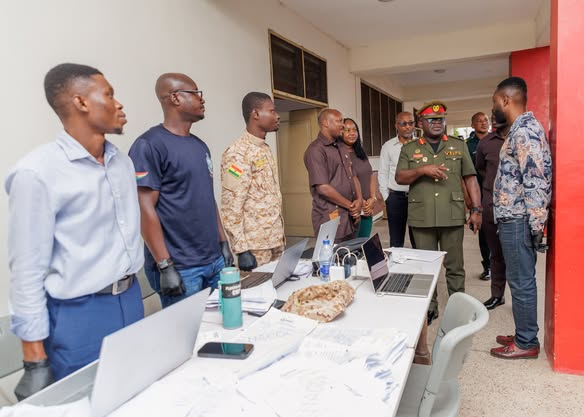
- NACOC Director-General, Brigadier General Maxwell Obuba Mantey, and his Deputy, Lawyer Alexander Twum-Barimah, toured two drug testing centres in Accra.
- The visit marked a significant shift in Ghana's approach to recruiting security personnel, with a greater emphasis on behavioural and health standards.
- The nationwide exercise aims to ensure that individuals entering the security services are free from substance abuse and can uphold high standards of discipline and professionalism.
Ghana's security services have a long history of prioritizing the well-being and discipline of its personnel. However, recent efforts to enhance the recruitment process have taken a significant leap forward with the integration of drug testing into the medical screening phase. This bold move is a testament to the Narcotics Control Commission's (NACOC) commitment to creating a more disciplined and dependable security service.
During the tour, NACOC's leadership engaged with medical officers, trainers, and administrative staff to better understand the procedures and protocols guiding the testing process. This hands-on approach allowed them to gain first-hand insight into how the exercise is being carried out, a crucial step in ensuring transparency and public confidence in the process.
Background: Ghana's Approach to Security Service Recruitment
Ghana's security services have traditionally placed a strong emphasis on physical fitness and academic ability when recruiting new personnel. However, with the increasing awareness of the importance of maintaining high standards of discipline and professionalism, the country has taken a significant step towards adopting a more holistic approach. This shift in focus is reflective of the Commission's vision for a security service that is not only capable of upholding the law but also embodying the values of a responsible and accountable institution.
The integration of drug testing into the recruitment process is a crucial aspect of this new approach. By conducting comprehensive screening to detect controlled substances in applicants, NACOC aims to ensure that individuals entering the security services are free from substance abuse. This not only enhances the overall quality of the security personnel but also reinforces the country's commitment to maintaining a safe and healthy working environment.
Key Highlights from the Tour
At the Ghana National Police Training School, the NACOC leadership observed testing procedures and interacted with recruits undergoing medical assessments. This move was aimed at strengthening transparency and public confidence in the process, a key priority for the Commission. During the tour, officials explained that the drug testing involves comprehensive screening to detect controlled substances in applicants, being conducted in line with strict medical and ethical standards to ensure fairness and accuracy.
The Deputy Director-General, Lawyer Alexander Twum-Barimah, expressed his satisfaction with the progress made so far, stating that the exercise is being conducted in a transparent and fair manner. He emphasized that the Commission's involvement reflects a shift in Ghana's approach to recruiting security personnel, placing greater emphasis on behavioural and health standards.
A New Era for Ghana's Security Service Recruitment
As the exercise continues across the country, NACOC is confident that integrating drug testing into recruitment will help build a more disciplined and dependable security service. This bold move is set to enhance the overall quality of the security personnel, ensuring that they are capable of upholding high standards of discipline and professionalism. The future looks bright for Ghana's security services, as the country takes a proactive approach to ensuring a drug-free and accountable institution.
What This Means
The integration of drug testing into the recruitment process marks a significant shift in Ghana's approach to security service recruitment. This bold move is a testament to the Commission's commitment to creating a more disciplined and dependable security service. As the exercise continues, it is essential to monitor the progress and assess its impact on the overall quality of the security personnel. By doing so, Ghana can ensure that its security services remain a beacon of hope and accountability for its citizens.
Ultimately, this new approach to recruitment is a step in the right direction for Ghana's security services. As the country continues to navigate the complexities of maintaining law and order, it is crucial to prioritize the well-being and discipline of its personnel. By doing so, Ghana can create a security service that is not only capable of upholding the law but also embodying the values of a responsible and accountable institution.






0 Comments
Leave a Comment
No comments yet. Be the first to share your thoughts!